
Years ago, Upper Campus Sustainability Coordinator Crystal Davis proposed a solution to the high school’s pest problem which involved no toxins, but employed natural predators instead.
“Sometimes we have to manage animals as they interact with us,” she said. “We have a responsibility to look for a way of doing that, that has the fewest unintended consequences.”
Though delayed by the Thomas Fire and the pandemic, Ms. Davis’ project was finally initiated last month.
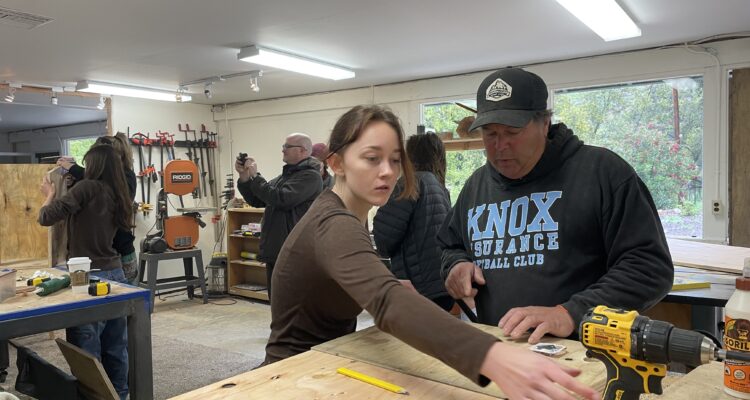
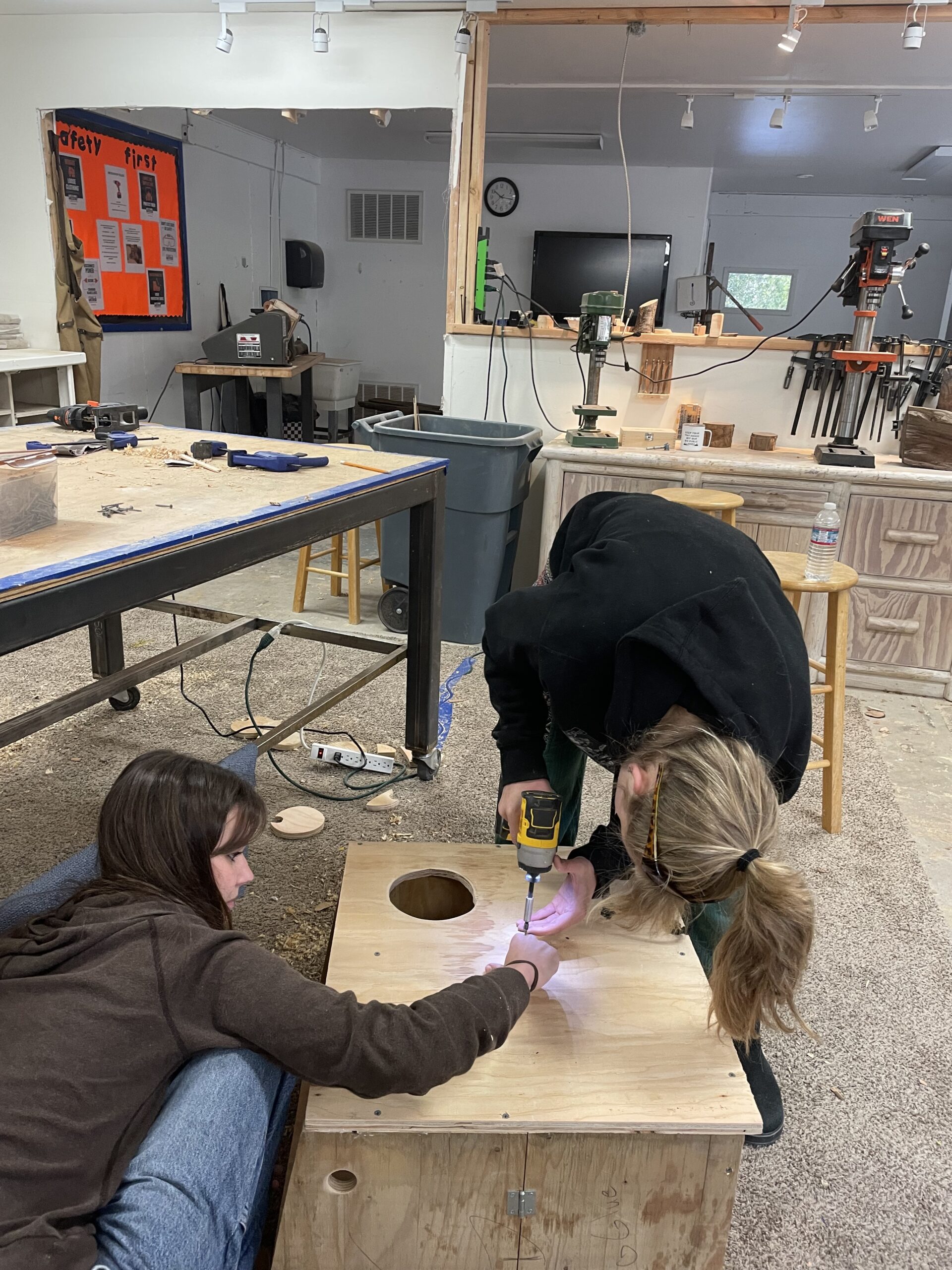
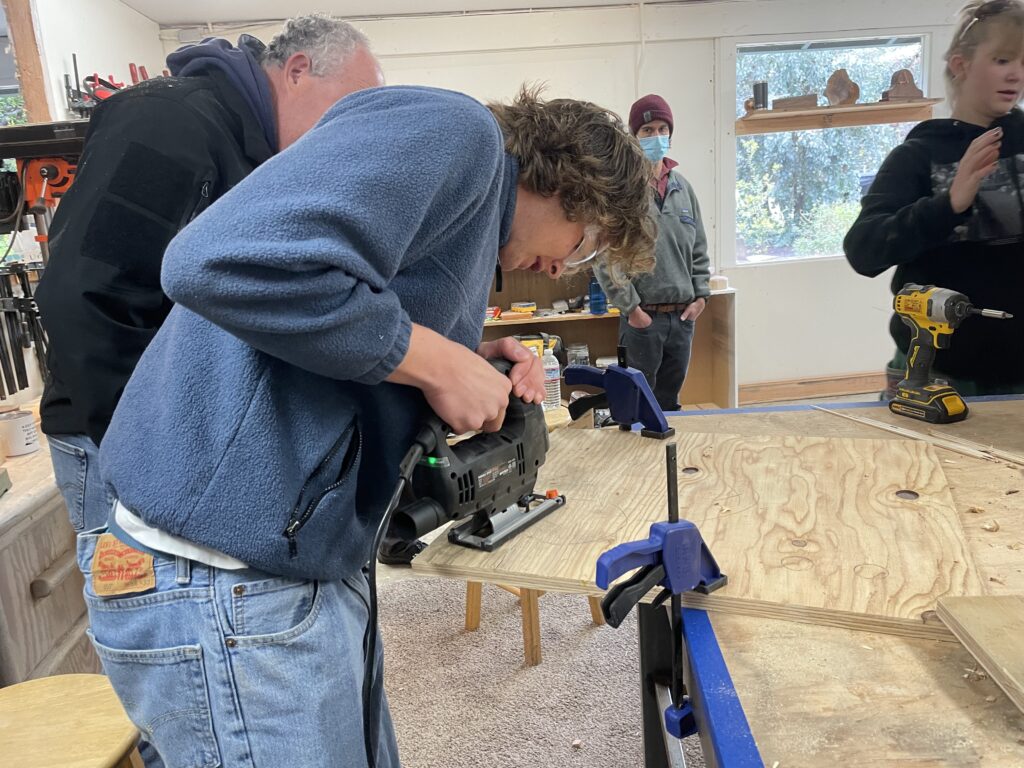
While OVS sophomores and juniors were occupied taking the PSAT/SAT, the senior class was responsible for the construction of some six predator boxes, overseen by math and woodshop teacher Doug Colborn and some other staff members.
Participant Caleb Carver said he really enjoyed himself.
“It was fun to put things together, and use wood and drills and whatnot,” he said.
The fact that the boxes were handmade felt special to Caleb. He, along with the other seniors, signed the completed work with their names, feeling proud to know the class of 2023 would be leaving behind a valuable contribution to OVS.
“It’s cool… to have something our class built,” he explained. “It’s not just something we went out and bought.”.
These predator boxes will provide nest sites for birds of prey like hawks, raptors, and owls, encouraging them to hunt in the surrounding area.
Alongside the box construction, a key component of the project was educating the seniors about why what they were doing was so important. The students were taught about the role of predators in the ecosystem and the historical, as well as current, risks to predator populations.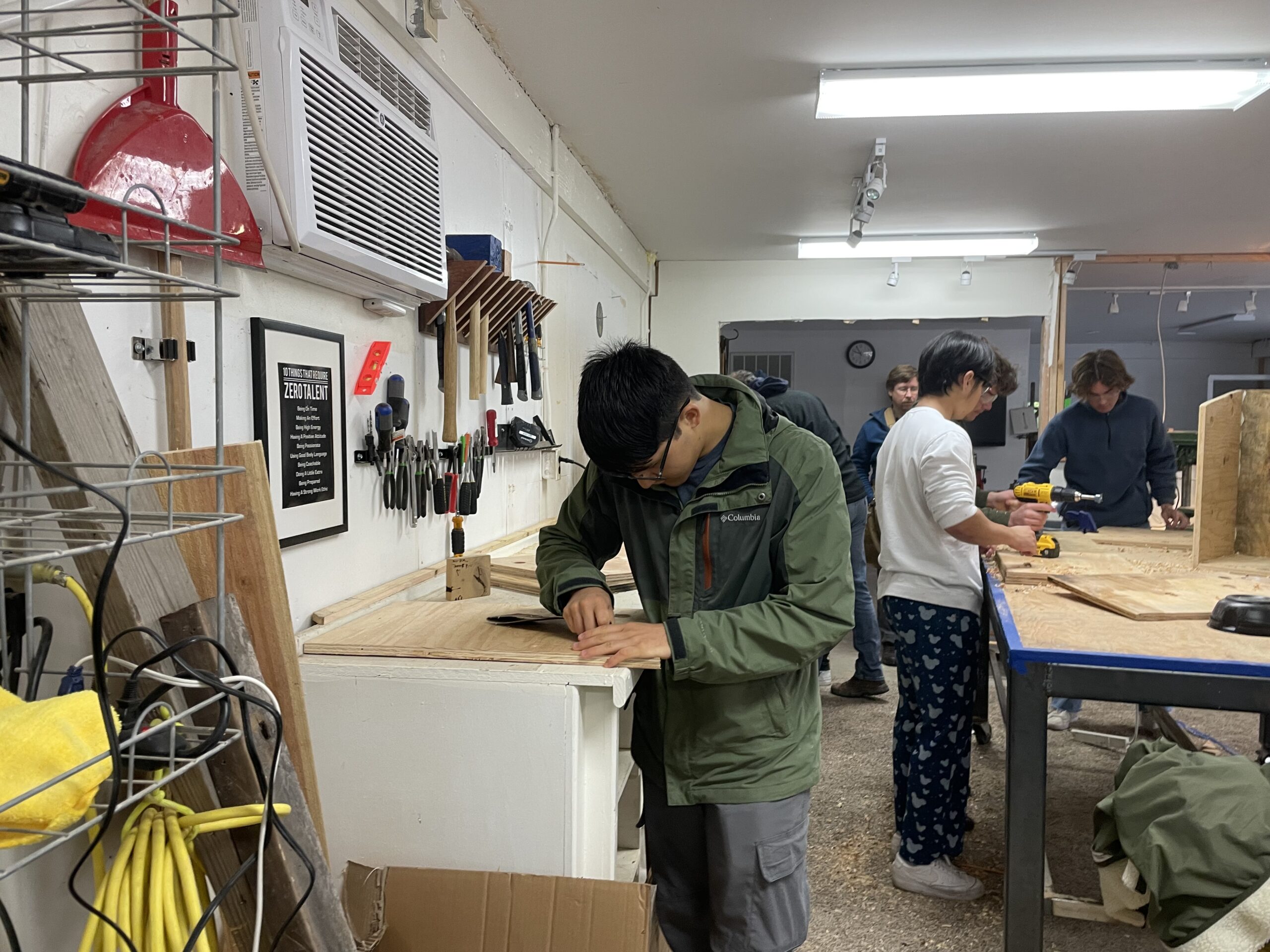
Ms. Davis has worked as a naturalist for a long time, and what has always stuck with her is the precept at the core of conservation, which is “you can never change just one thing.”
“We come up with what seems like a good idea to address what we see as a problem,” she said. “And then we find out sometimes years later, sometimes decades later, that there was a devastating unintended consequence.”
The relationship between pest management and the declining predator population serves as an example of this.
Pests pose a threat both to human health and the foundations of buildings, so rodenticide is often introduced as a solution. However, this poison may not be lethal to the vermin which consume it right away, but cause them to become disoriented.
Predators have no difficulty hunting these easy targets, so ingest and accumulate sub-lethal doses of toxins themselves. As a result, birds of prey die from rodenticide or from diseases they are more susceptible to due to their weakened immune system.
The seniors learned all this information and more, viewing three short films and engaging in discussion around the topic.
“This lesson in conservation is going to go with students and travel with them wherever they go after OVS,” said Ms. Davis.
But this is not the end of the predator boxes – they have been envisioned as part of a long-term legacy project.
After installing the boxes in deliberately chosen spots, the next step will be to develop a system for collecting data and monitoring the success of the boxes. Results that are collected could potentially become a part of the biology, or another class’, curriculum.
“I want this to be something that [the seniors] have invested themselves in and that they can get the rest of the community invested in,” said Ms. Davis.