
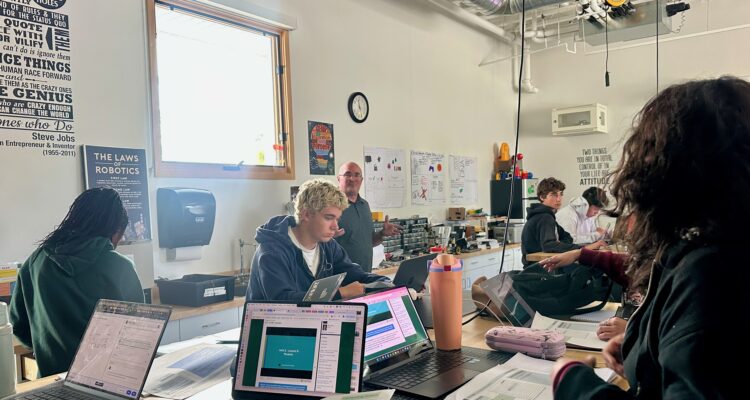
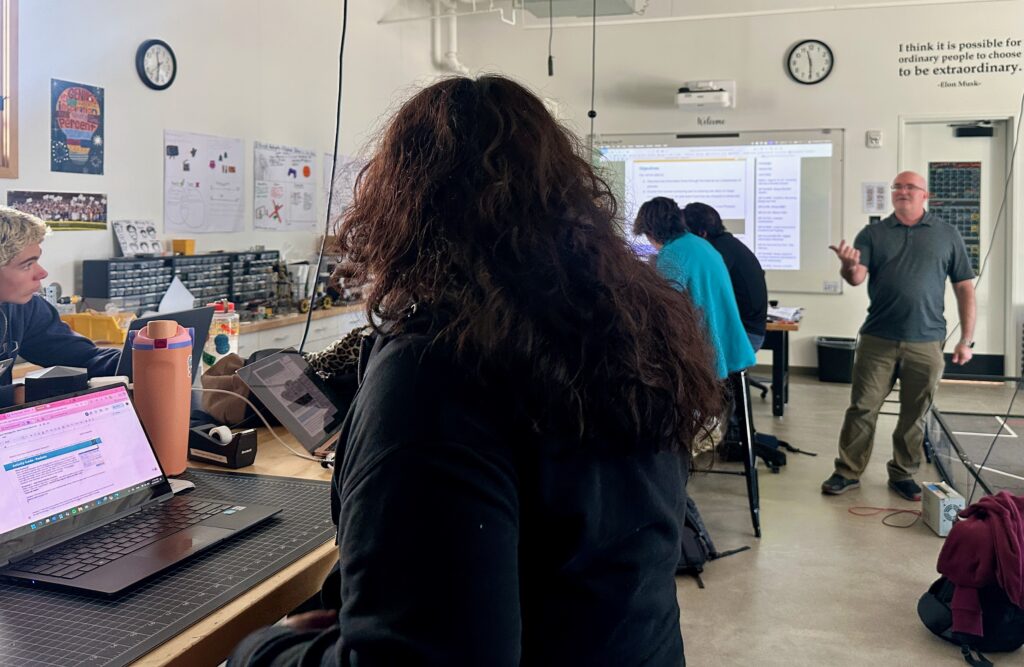
It is the opening minutes of the first class of the day, and already OVS computer science teacher Chris Westcott is deep into his lesson.
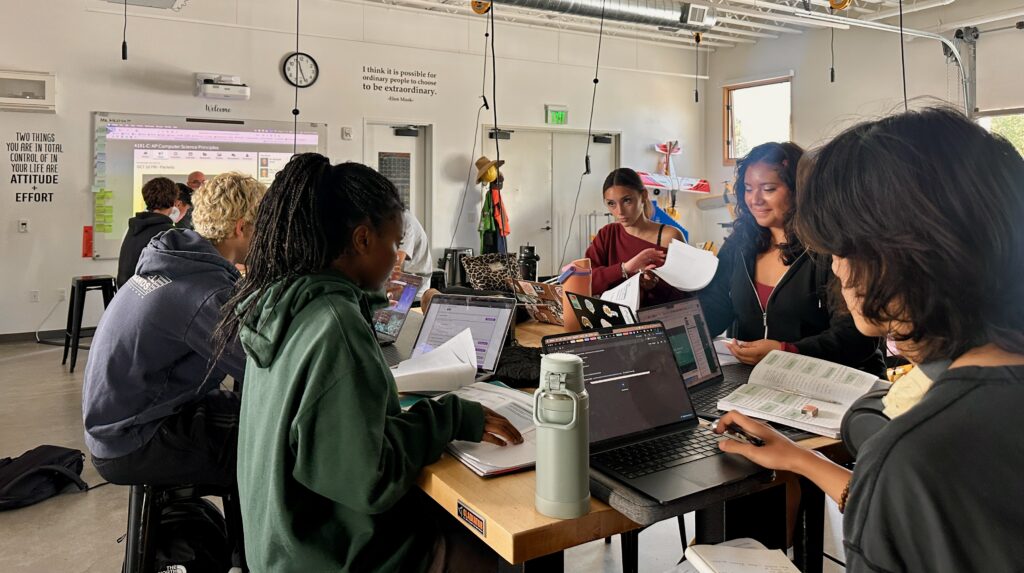
The clickety-clack of computer keys fills the room as students follow along while Mr. Westcott pushes through a workshop on some of the consequential rules of computer coding.
Mr. Westcott teaches his students to code by having them research and test their knowledge through a series of practical, hands-on tasks.
He believes that his students, in order to become prosperous and highly competent computer scientists, need to be committed not only to their own learning but to probing for the deepest understanding of the rapidly changing field.
“If you have that mindset, it can be a lucrative career,” Mr. Westcott said. “But not everyone is willing to do what it takes to be that type of person.”
However, the question of what it takes to be successful in the computer science field is increasingly being viewed through a new lens.
According to a recent episode of the New York Times podcast The Daily, a computer science degree, which once felt like a guaranteed pathway to high-paying jobs and successful futures, is quickly losing its potency.
As the influence of Artificial Intelligence continues to shape the workplace, it has begun to replace software engineering workers, the podcast revealed. Highly skilled coders, who at one time may have felt as if they held the golden ticket to long-lasting, lucrative employment, no longer have any guarantee of a profitable future.
“It’s no longer the golden ticket,” New York Times technology reporter Natasha Singer said in the podcast episode. “It’s the tarnished ticket.”
According to Singer, recent college graduates seeking tech jobs, including work in software engineering, have encountered a significant unemployment spike in recent years.
Among recent college grads aged 22 to 27, Singer said, computer science and computer engineering majors are facing some of the highest unemployment rates — 6.1 percent and 7.5 percent respectively. By contrast, that’s more than twice the unemployment rate among recent graduates holding biology degrees, which is just 3 percent, Singer said.
Last year, according to Singer, more than 170,000 undergraduates majored in computer science in the United States, and many were left with disappointing job prospects as Big Tech has rapidly embraced AI coding tools.
Many students who once thought they were set for life now find themselves back at square one, living at home and applying for jobs that have nothing to do with their skills.
“It’s extremely discouraging,” Singer said of the feeling of many of the computer science college grads she spoke with. “It’s incredibly frustrating. It is soul-crushing. It seems like [their] degree doesn’t matter. Some of [their] skills are now worthless.”
Although it may seem like the end of human involvement in coding, Mr. Westcott is quick to point out that AI can’t replace certain jobs, such as customer relations. Mr. Westcott has hope and believes that people won’t be completely removed from the computer science field.
“AI can help expedite your goals and purposes, but it can’t create goals and purposes for people,” he said. “To get AI to a higher level, you need computer scientists, so I think there will always be a need for computer scientists.”
Although he is optimistic, he still believes that AI is going to leave a significant impact on these students and workers.
“What took 20 computer scientists to do now only needs 10, because they have tools that are more efficient,” Mr. Westcott said.
Senior computer science student Shun Tateno said he isn’t specifically concerned about the rise of AI affecting his own career decisions, but he is worried about how it will affect people’s livelihoods.
“I’m concerned about AI’s influence in terms of future careers,” he said. “If it continues to grow, it could diminish the value of human jobs and careers.”
Another computer science student, senior Finn Marx, is hopeful that AI won’t entirely take over people’s careers.
“AI will aid any job,” Finn said. “For doctors, they can just analyze more things faster, but you’re still going to need a human component.”
Mr. Westcott agrees.
While he acknowledges the struggles AI poses for any field, including computer science, he has great faith that human ingenuity and creativity will always be a necessary resource in the workplace.
“Just like the calculator when it came out, people still need to be able to do math,” Mr. Westcott said. “You still need somebody who can conceptualize what it is that you’re trying to accomplish.”