
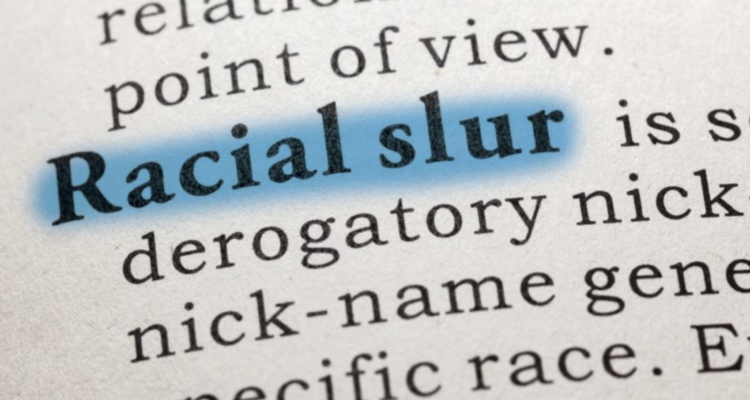
A single word can carry the weight of centuries of violence, hurt, and disgust. There is the old elementary school saying, “sticks and stones may break my bones, but words will never hurt,” but the truth is the use of certain words to discriminate against people can hit much harder than sticks and stones and can hurt much worse than broken bones.
In every language, there are always going to be words that are used to be hurtful and single out an entire community. The question is why? Why is it so normalized in society today, especially within the younger generation?
In a 2017 study done by the RWJF Foundation, they found that 51% of African Americans have personally experienced the use of racial slurs and comments. In another study done by The Trevor Project, they found that 75% of all LGBTQ+ individuals experienced some form of discrimination, and comments regarding their sexual orientation. And these are just two examples of 2 communities who are affected by this.
The problem in today’s society is the overexposure of horrible words in the media that teens consume daily. As teens scroll on their phones, they are perpetually bombarded with these words, whether it’s in someone’s video doing it for likes, in a song, or in a regular conversation.
Ojai Valley School junior, Sara Benitez, provided some input about what exposure to certain things can lead to.
“It’s in the media we see, and people become so used to it, and it’s used so commonly that I don’t think people take it as seriously,” Sara said.
Sara, growing up in Long Island, New York, the daughter of a first-generation El Salvadorian immigrant, has firsthand experience with the overuse of these words.
“Honestly, my whole life growing up, especially on Long Island, it’s very normalized, and it’s awkward the first time you hear it, and eventually you kind of become desensitized to it,” Sara said.
These words stem from the older generations and centuries of historical background, but the younger generations use the words the most out of any other time period.
Part of the reason teens say certain words is also because of the lack of understanding and depth behind what is coming out of their mouths. The issue is, they won’t stop.
Growing up in DC with a white father and a black mother, Laura Bell has dealt directly with the experience of someone using a hurtful word towards her.
“My first true experience of dealing with racism is when some kid came up to me in Saudi Arabia and said, ‘What’s up, my N-Word?,’ ” Laura said.
This experience is one of the most common when growing up in an area where your race is the minority. People think it’s ok, and that it’s a joke, without understanding the damage that it causes.
“I believe that the media has definitely shifted people’s outlook on these slurs, as if you’re hearing, for example, the N-Word multiple times a day as a joke, people are going to start seeing it as a joke, when it’s not,” Laura Bell said.
Another issue is that people don’t have the maturity or the ability to understand that it isn’t funny. When a certain narrative of humor is being shoved down the throat of the young people, eventually, something is going to take hold, as we have been seeing for the past 5 years.
Rumi Way, an OVS senior, shared valuable insight as to why people continue to be ignorant.
“My best friend is black, and all of the local kids think they can say the N-word freely, and people make fun of her for getting mad and calling her dramatic after throwing that word around,” Rumi said.
The problem is that people don’t find issues like these as serious as they actually are.
“I think it gives people a power trip knowing that you can have a heavy effect on someone’s mental health by just using words, and that microaggression of just attacking someone, the being able to justify it by saying it’s just a word, it’s not that big of a deal,” said Rumi.
There are so many things that influence people to do things like this, and it’s too complicated to capture in one singular story. The complex nature of these words is something that can never reach a full understanding or explanation. Words carry a power that is so strong yet invisible.