
Once big and beautiful and now dead and decaying, the whitebark pine trees in Mammoth Lakes have become an ugly and unpleasant sight, a wasteland of timber disregarded by most.
But not by OVS woodshop teacher Ryan Lang.
While driving through the area, Mr. Lang saw those trees dumped and abandoned in a parking lot left for anyone to take and decided to bring them to OVS for a second chance at life.
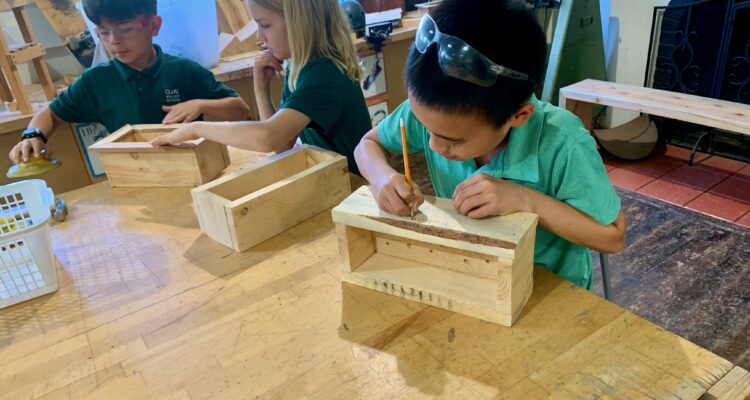
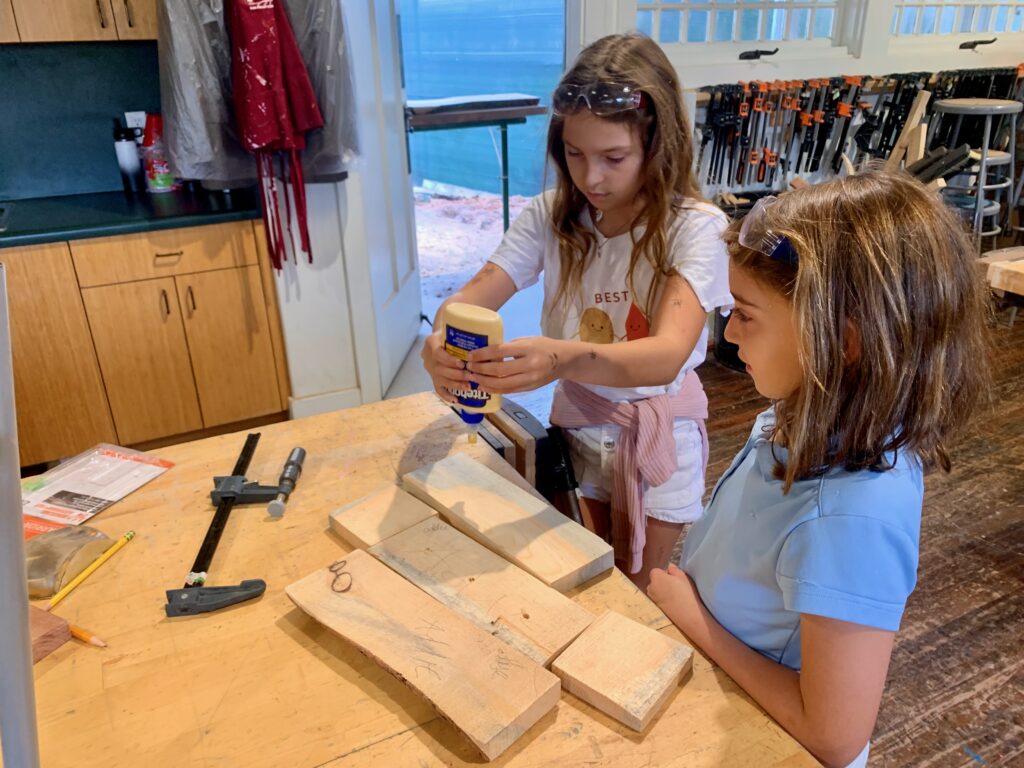
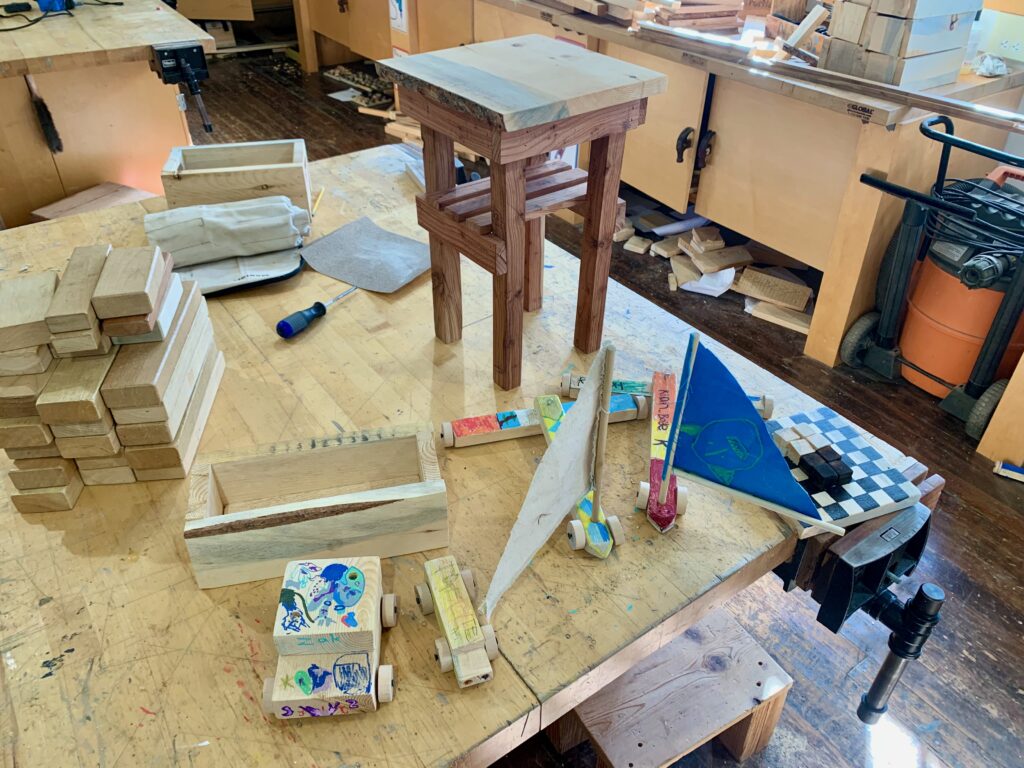
The trees, overrun and destroyed by bark beetles, have been transformed by Lower Campus students into toy cars, boxes and bedside tables.
Currently, fifth grade students are making checkerboards out of the bark beetle-infested wood, which is distinctive because of its blue-colored streaks.. The checkerboard projects are a woodshop favorite because of the different tools and techniques used to make the select pieces.
“We make the black checker pieces out of light wood, but then you burn them with the torch and make them black,” said Moxie Cauffiel-Khalili, a fifth grade student at Lower Campus.
Not only are checkerboards an outcome for these once-doomed trees, but the whole woodshop classroom is filled with projects created from those deserted logs.
“We’ve got everything here,” said Mr. Lang, “Everything in there that has the blue color in it, that’s all the whitebark pine.”
Trees in Mammoth Lakes have been under attack by bark beetles for years, and June Mountain has been undergoing restoration projects specifically because of these pesky and persistent insects. Although all kinds of bugs commonly take over dying trees, bark beetles are much more aggressive, solidifying a tree’s death with their attack.
Climate change is a direct cause of bark beetles’ increasingly high death toll, as the insects thrive in a warmer climate. Not only has a temperature change made the Mammoth trees more susceptible to a bark beetle infestation, but prolonged droughts have caused those trees to weaken and wither.
 Bark beetles pose a threat to the trees surrounding June Mountain, but they could also contribute to a multitude of problems. Organizations such as CalTrout have been working to remove these overtaken and deceased trees in order to strengthen the forest’s habitat and prevent intense wildland fires.
While most of the removed and overlooked trees are taken and used for firewood, Mr. Lang saw an opportunity for these trees to be turned into woodshop projects by primarily elementary school students.
The whitebark pine trees presence in the classroom originated because of Mr. Lang’s personal project of building a house at June Lake.
“I noticed that they had all these logs sitting there in the parking lot of the ski area,” Mr. Lang said, “and every time I would come back to Ojai from up there, I had an empty truck.”
Since then, Mr. Lang has been making trips up to the Mammoth Lakes area to bring back some of those logs for kids in the woodshop, the trees themselves having lots of potential for student-made projects.
The wood has become a staple in the classroom, but its future at OVS is uncertain because of how popular it is for firewood,
“I would like to get more of it, I just don’t know if there is going to be much more,” Mr. Lang said.
 The winter season’s arrival may slow the removal of trees and increase the use of firewood.
Although bark beetles have undoubtedly had a negative impact on the Mammoth environment, Mr. Lang has allowed those trees to exist for a purpose again, helping young students learn how to work with wood.
Those bark beetles trees are helping the OVS woodshop flourish, letting students work with wood they know the origins of. The once overlooked logs have become a student favorite, being the ideal canvas for beginning woodworkers.
“It’s really pretty wood and it smells nice,” Mr Lang said. “And it’s really easy to work with for the kids.”