
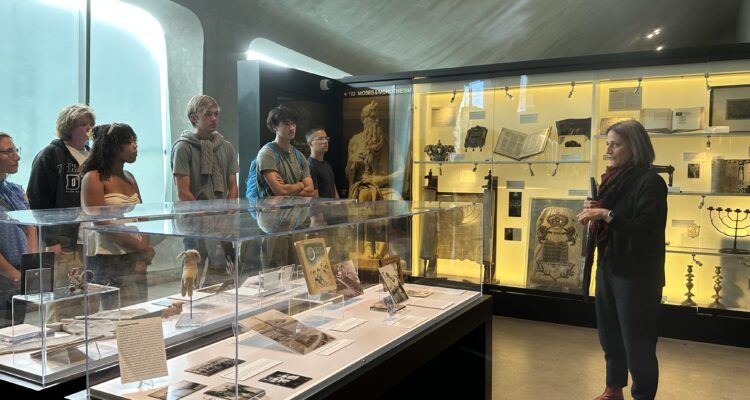
 On the outside, it just seemed like a typical museum. The rooms were spacious, natural light flowed through the windows, and the staff appeared happy and welcoming. Without any prior knowledge, no one would be able to tell the horrors displayed deeper within the Los Angeles Holocaust Museum.
“I think it is something that we can’t forget,” said OVS Senior Donahi Soriano. “It is something that constantly has to be remembered and talked about so that we don’t repeat the same mistakes we’ve made.”
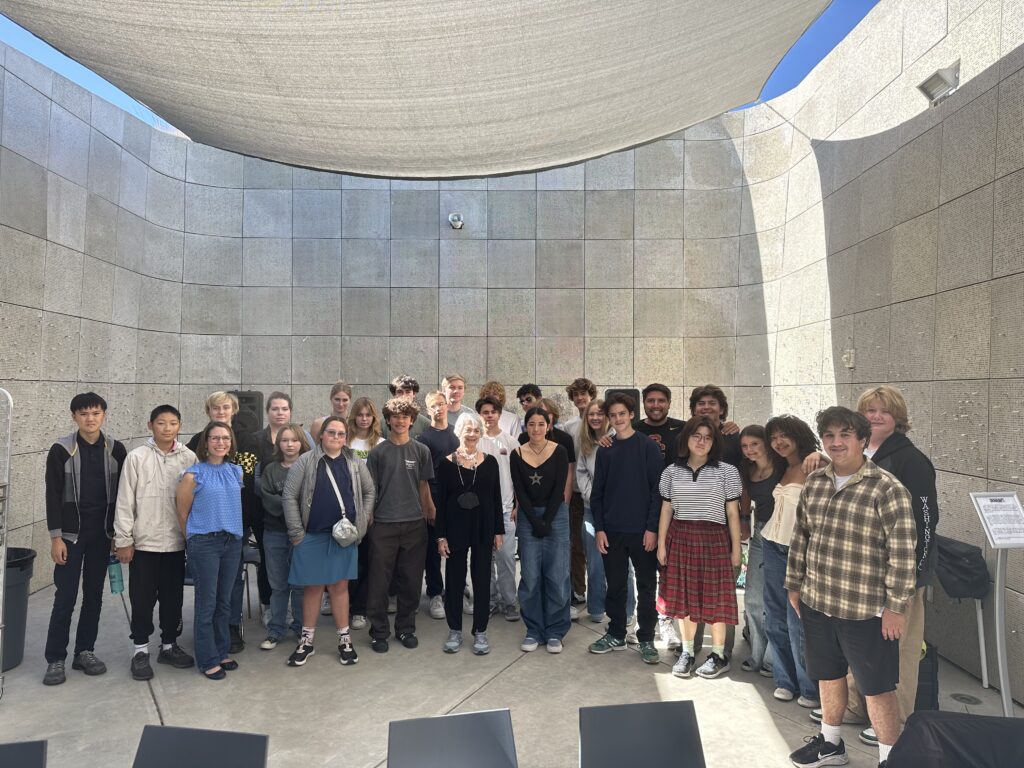
Last month, nine Lower-Campus eighth graders joined 16 Upper-Campus students in visiting the Los Angeles Holocaust Museum. The trip was initially presented by OVS Senior Ben Manning. “It is an important time for kids to learn about what happens when hate runs rampant,” he said.
The trip was exceedingly unique because, due to the older age of many Holocaust survivors, this generation of students is the last that will be able to hear these stories directly from the mouths of those who were personally a part of such a dreadful time in history.
During the visit, the students had the remarkable opportunity to talk to a Holocaust survivor, Eva Nathanson, who shared her story of how she and her family were forced into hiding and horrific living conditions, all not to get caught by Nazi police. Furthermore, she discussed her time in America after the war ended and the adjustments she had to make upon entering an entirely new culture.
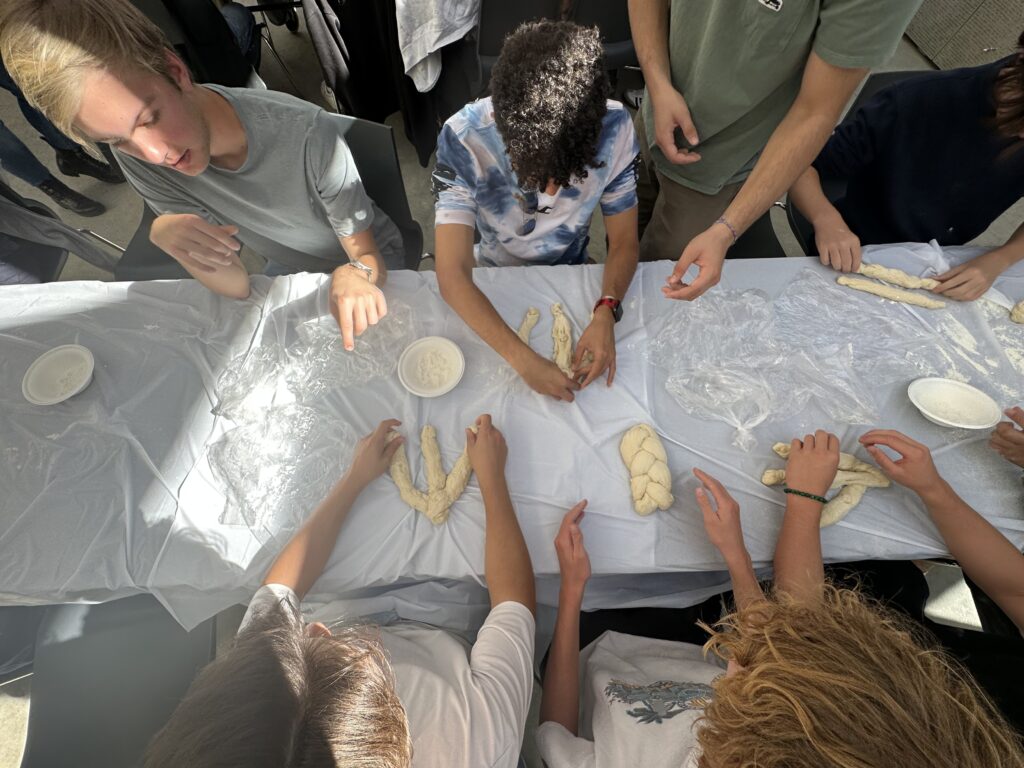
Afterward, they twisted challah, a Jewish bread. Lastly, while that was baking, they split into groups and took a tour of the museum.
Mrs. Nathanson ended her autobiography with a lasting message: Do not forget that the world needs this upcoming generation to change it for the better and not repeat the mistakes of the past.
She ended with the fact that we are all human, therefore giving us no reason to judge people on surface-level things such as race, ethnicity, background, religion, culture, or anything about ourselves that we cannot change. She says the only time she will judge someone is on whether or not they are genuinely a good person.
After meeting with the survivor, the students were given the opportunity to twist some challah. Given a bag of dough, some flour, and minimal instruction, the students enjoyed the surprisingly difficult task of braiding the dough together, especially after the heavy yet informative conversation with Mrs. Nathanson. The bread experience was also educational, however, as they learned about challah and how it is a prominent element in Jewish culture. After being braided, the dough twists were labeled and sent off to bake while the students were sent off to encounter more dark elements of the museum, specifically the tour.
Museum tour guides took three small groups on a tour of the different exhibits and capsules of history. The guides noted that, as the tour progressed, the architecture would drastically change. As the tour went on, the students noted the change in both space and lighting.
The museum was formed with very deliberate architecture. The structure of the museum and the trajectory of the storyline described and depicted at any given moment were reflected in the framework of the building. At first, the tour started in an open space with a significant amount of natural lighting filling the area. However, the deeper in the tour, the more confined, restricted, and dark the physical area became.
In the very darkest parts of the history of the Holocaust, which talked about life in the concentration camps and for runaway Jewish people, there was no natural light, and the rooms became incredibly small. The entire museum was technically built underground, which deliberately mirrored how underground was a place in which a lot of Jews were forced to live and hide during the horrible times of the Holocaust.
When asked to describe how he felt during the tour in three words, Ben remarked, “Helpless, confused, and angry.” Donahi said “Pain, in the rawest form of the word, sadness, and guilt.”
The tour, in particular, the parts deeper in the museum, had a heavy air. Image after image of graphic photos featuring gruesome scenes in camps and even in the streets of Germany lined the walls. In addition, there were interactive models and even old relics from the time in which the students could become fully immersed.
Though the experience was heavy, it was incredibly beneficial to learn about the past. The most important happenings of the past to learn about are specifically the bad ones so as not to repeat history. The trip was a way to give the students more insight into Jewish culture as they learned about challah and its significance.
The most influential part of their visit was definitely the application of the survivor’s lasting words of advice. By touring the museum, students became educated about the major event in history and the importance of the morals Mrs. Nathanson talked about. Spreading the importance of kindness, empathy, and knowledge will give hope for future generations to come.