
I grew up in a family where art and literature were as important as hydration. I spent days in museums and nights tearing through books.
Both my parents were Art History majors and spent much of their lives working with museums and artists all over the country. They’ve instilled in me the importance of embracing the culture of the world we live in.
“The humanities are crucially important,” my dad explained, “to understand ideas, where ideas come from, and to what use they can be put to.”
I will be taking this with me, as I’ve chosen to attend New York University to pursue a liberal arts education, instead of attending nationally recognized pre-professional programs.
I want to truly learn how to write and think critically because these essential skills will help me in the future, regardless of my job.
But for all my exposure to the subject, the reality is that me and my family are anomalies.
What we know is that there has been a shift away from the humanities at all levels of education, especially at the university level, where there has been a dramatic downward shift in the number of students who are choosing to pursue these areas of study now.
A Feb. 23 article in the New Yorker magazine states that English majors at Arizona State University have dropped from 953 to 578 from 2012 to the start of the pandemic. This is a trend that universities across the country are seeing.
The same article states that in the same time period, the amount of humanities majors at Tufts fell by 50%, Boston University fell by 42%, Notre Dame lost nearly 50%, and liberal arts stalwart Vassar fell by nearly half. It’s gotten so bad for some schools that in 2018, the University of Wisconsin at Stevens Point was preparing to cut majors, including philosophy, history, and English due to a lack of interest.
“The lack of Humanities being taught in school,” said OVS alum and Classics connoisseur Emmy Addison (L11, U14) “is the single most significant tragedy in education today.”
The Humanities are the study of human society and culture, which often includes works of literature, history, and art.
The Humanities program at Ojai Valley School is one of the cores of the curriculum, as almost all freshmen take the class. It was started in the early 1990s by Assistant Head of Campus Crystal Davis.
“We felt like even after four years of a rigorous college preparatory education, our students were leaving, not having enough foundational knowledge of literature and cultural context and historical context,” Ms. Davis. “So we wanted to do something about that.
When creating the class, the goal was that it would be a UC-approved course that students could take in conjunction with their regular English classes.
Now the program is led by Fred Alvarez, who has maintained much of Ms. Davis’ core curriculum while adding his own take in areas of art and philosophy.
“We want to address the large questions that confront all people in this world,” Mr. Alvarez said. “Where do we come from? What are we supposed to be doing with our time on this planet? What happens when we’re no longer here?”
Mr. Alvarez uses works such as The Odyssey, Ishmael, The Allegory of the Cave, and more to pose these questions to the students.
“I want [students] to consider their place in the world,” he added. “I want them to start thinking about the idea that they have a place and their place matters.”
Humanities are what we study to realize how similar we all are, yet if we stop, we will lose this essential idea that guides us through life. However, this is exactly what is happening.
The rates of Humanities majors in universities are declining, and they are being replaced by the rise of STEM.
“Colleges are recognizing the importance of having an application for their education,” said my dad, architect Frederick Fisher.
Mr. Fisher is a graduate of the midwestern Liberal Arts powerhouse, Oberlin College, where he majored in art history.
One example of this is Princeton University, which is famed for its long-standing humanities programs, but now boasts one of the largest and world’s best computer science programs.
According to the university, 25% of students either major in or earn a certificate in computer science.
“They didn’t force that,” Mr. Fisher said about Princeton. “It just happened.”
While the university may not have forced the growth of its computer science program, they are certainly embracing it.
Princeton is beginning the process of a 98,000-square-foot renovation to current buildings, and 130,000 square feet of a new constitution that together, will become the university’s new computer science building.
It’s a project that will cost hundreds of millions of dollars, and Mr. Fisher’s architecture firm is helping lead the design process.
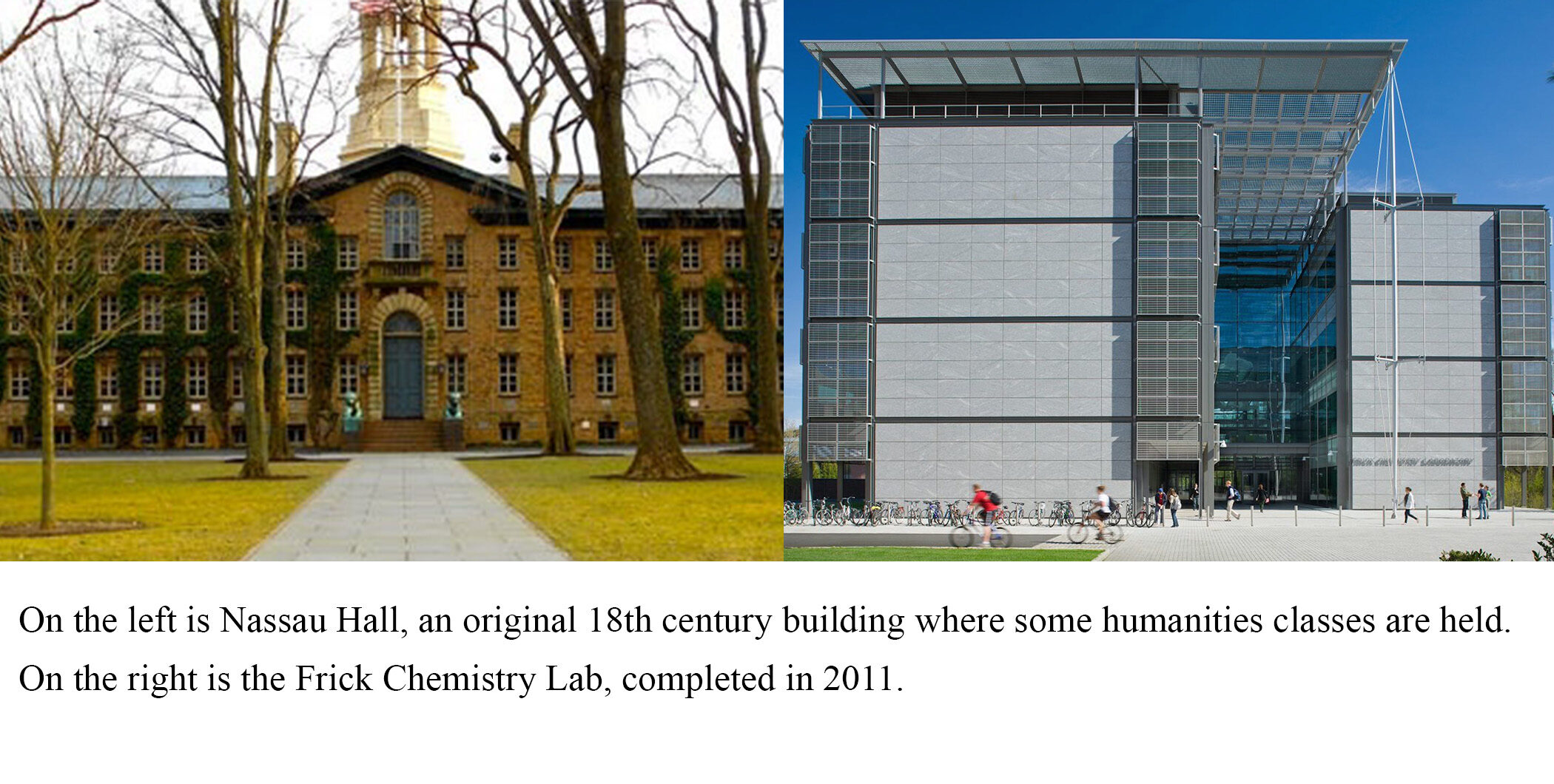
While the Princeton Computer Science program will be getting a shiny new home, many humanities classes take place in the campus’s original buildings from the 1700s.
This is a pattern that is seen across the country. Universities are putting more and more money into science and technology programs, leaving the humanities to be largely forgotten about.
“STEM fields are more capital intensive.” Mr. Fisher said. “You need equipment to do these experiments. You need computers to do all these activities and software.”
The increase in investment and a technology-centered world have resulted in this sentiment that the humanities are no longer important. People feel that they need to pursue degrees and areas of study that translate to a large paycheck.
This is in part due to the obscene cost of higher education. Private universities like Princeton can cost upwards of $80,000 per year, and even public universities like the University of California system can cost over $40,000 per year for California residents.
To many, it feels like a waste of money to spend hundreds of thousands of dollars to earn a degree in something like English because it simply doesn’t feel useful. This mindset is clouding so many students that they choose not to study their passions because of the pressure from society, their family, or even themselves to make money.
Sometimes this pressure is just too great.
“I’ve always enjoyed being creative,” senior Emanuel Zagata-Jacobson said. “At the end of the day, I need to do something that would make me money.”
Emanuel will be going to UCLA in the fall, where he will major in Pre-business Economics.
“If everything was taken care of, “Emanuel said, “everyone would choose to be an artist.”
While many colleges and universities have embraced the new age of STEM, some have held onto the importance of the humanities.
Columbia University’s Core Curriculum, which all students have to take regardless of major, covers literature and art ranging from Homer and Plato to Toni Morrison and Andy Warhol. The Core is for students to grapple with the joys and challenges of what it means to be human.
Studying the humanities presents ideas that are valuable in all disciplines. Emmy Addison is of a diminishing number who understand this.
The sole Classics major in the Pitzer College 2018 graduating class is currently working on her Ph.D. in Classics and Ancient History at the University of Warwick in Coventry, England.
“[The] Humanities allow us to explore beyond each of our individual ideals and accept that values change across time and cultures,” Ms. Addison explained. “It’s the study of empathy.”
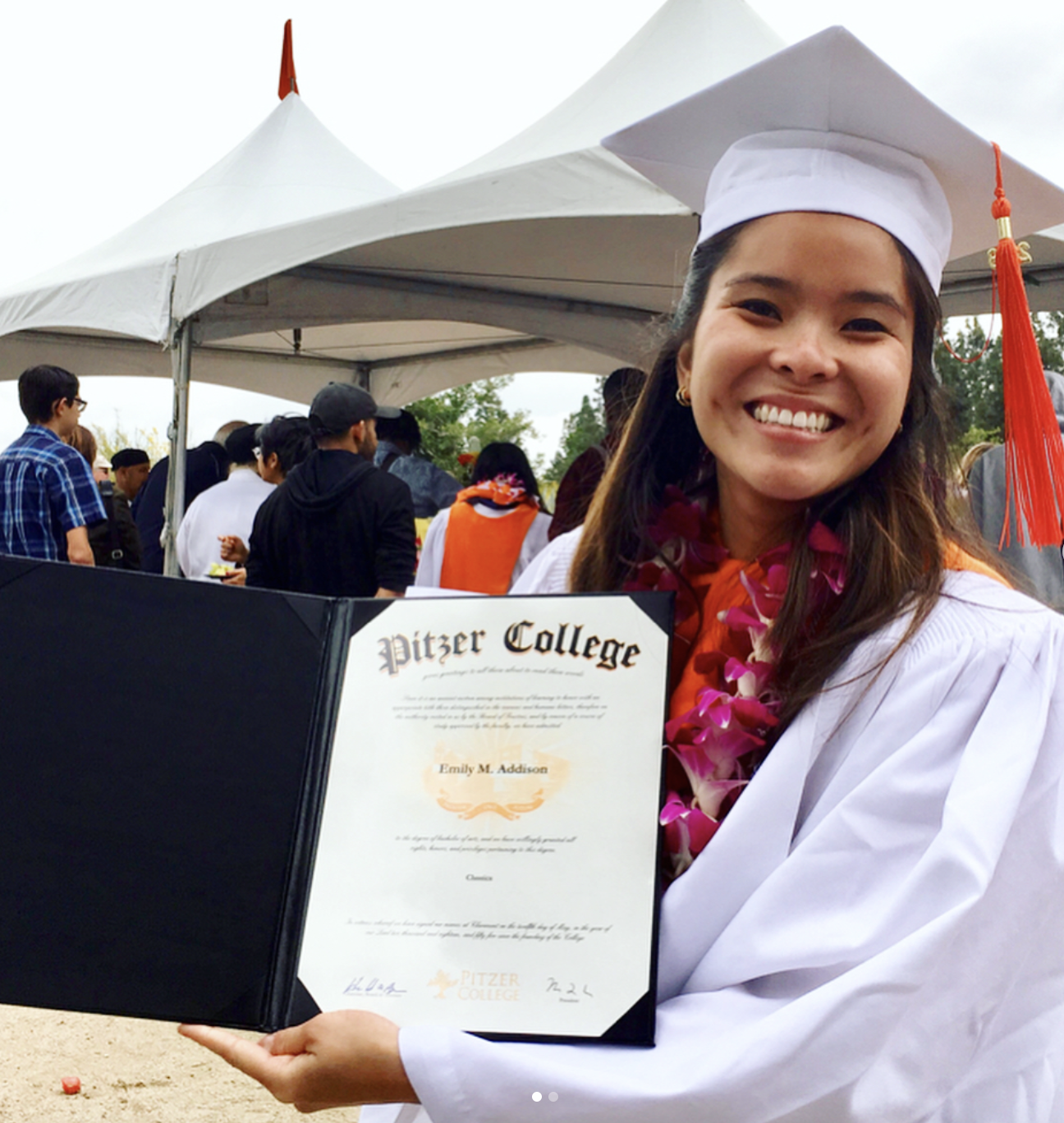
“The lack of Humanities being taught in school is the single most significant tragedy in education today,” according to OVS alum and Classics connoisseur Emmy Addison (L11, U14).
When we engage with art, literature, and history, and hear different stories and perspectives, we begin to develop this ability to be able to differentiate right from wrong, and good from evil.
It is commonly said that knowledge is power, and studying these topics can give us the power to understand each other on a human level, to be able to, as Ms. Addison said, feel empathy, and that is one of the most powerful things a human can do.
If we stop studying the humanities, how will we know the difference between good and bad, how will we know not to repeat the same mistakes we’ve made throughout history, we won’t.
We will lose what has served as a guide for hundreds of years and helped us reach the point we are at today. We will enter a George Orwell-esque dystopian world.
The most beautiful parts of human life are derived from the humanities, to be able to think for ourselves, to be able to tell stories and communicate, to be able to feel joy and sadness for ourselves, but also for others. This is what makes us human.
“To fill the soul is an incredible thing,” Mr. Alvarez said.
Losing touch with the world we live in is detrimental to our society. How can we expect to understand the major global problems we face, if we can’t even understand each other.
In a time where people are more divided than ever, the ideas that the humanities present us with could not be more important, and using this empathy and understanding we have gained from studying art, literature, and history, is how we can reunite.
So I ask you, go read a book. Go look at some art. Connect with it. Process it. Question it. Learn from it.
“None of us walk through this world alone,” Mr. Alvarez said. “We’re all connected in some way.”