
Being situated on a hill, miles from the center of town, it is easy to think of OVS as its own private community – a bubble floating above Ojai, California, and even the USA. However, Student Council President Eugene Fisher and several faculty members are working to expand the school’s influence: “It’s important to get involved in bigger projects than just [those] in our little bubble,” said Eugene.
The perfect opportunity for this arose in the form of the National Women’s Suffrage Monument Foundation. This month, OVS Student Councils at the Upper and Lower Campuses agreed to donate to the organization, whose mission it is to build a monument in Washington, D.C. honoring the early women’s equality movement.
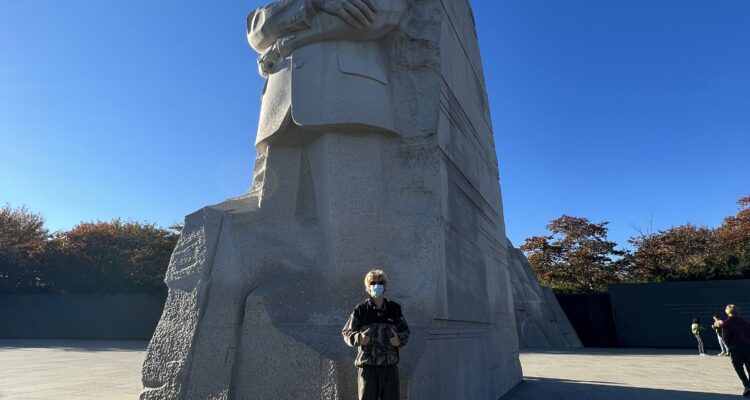
Back in 2008, Upper Campus academic dean Laurel Colborn received an email from the National Park Service soliciting donations to build a memorial in honor of Martin Luther King Jr. Feeling inspired to contribute, Mrs. Colborn, who was the advisor for Upper’s Student Council at the time, met with John Rowan, who served as the advisor on Lower Campus.
“We put our heads together and we said wouldn’t it be really cool… to have each student council donate money to put towards that memorial?” Mrs. Colborn recalled.
The Student Council members themselves expressed great enthusiasm at the suggestion and both campuses ended up putting in $250 each, for a grand total of $500.
The project was completed in 2011. In light of the donation, the Park Service sent a thank-you letter to the school, which was kept on display until the Thomas Fire swept through Ojai and took the letter with it.
Regardless of the loss, Mrs. Colbron recalls the values of the project, and the pride that came with taking OVS eighth graders to view the MLK monument on their annual fall trips to Washington, DC.
So last month, when Mrs. Colborn came across the website for the National Women’s Suffrage Monument Foundation, she saw another opportunity to have OVS students participate in the founding of another monument.
Mrs. Colborn is no longer the student council advisor on the Upper Campus, but still brought the idea to Eugene. Once again, a lot of enthusiasm was generated and student council at Lower Campus agreed to match the $250 donation.
“I love it because one of our pillars at OVS in teaching history and life skills is inclusion,” said Mr. Rowan, who still serves as Lower Campus Student Council advisor. “And that’s just the epitome of what Martin Luther King Jr. was working toward – getting everyone equal justice to law and equal justice to services… That really could be the same answer for the suffragette memorial.”
But this matter of inclusion extends beyond the teaching of MLK and suffragettes. The memorials, in and of themselves, are working towards inclusion in a nation, which predominantly recognizes white and male historical figures.
Currently, fewer than 5% of all outdoor monuments in the US honor women and an equally miniscule percentage commemorate people of color. Even in DC, which is teeming with statues and memorials, there are very few dedicated to members of minority communities.
“[It] is kind of shocking for the nation’s capital,” said Eugene. “It’s like we’re not representing such an important part of our history.”
But the NWSMF is working to change this fact. The foundation was designated by Congress in 2020 to establish a monument that shares the history of the early movement for women’s equality in America. The former First Ladies serve as the honorary chairs.
Anna Laymon, executive director of the organization, told USA Today: “Every little eighth grader who comes to DC on her eighth grade American history field trip, she walks the National Mall and she doesn’t see herself – in anything, in any way… It isn’t even like we’re there a little bit. We’re not there at all.”
This matter of representation is especially relevant for OVS, as the school does in fact host an annual capitol trip for the 8th grade, led by Mr. Rowan himself. Here, the students get to see for themselves the student council-funded projects.
“I’ve been on that DC trip a few times and it just makes you feel good,” Mrs. Colborn said. “Like you’ve been a part of something really cool.”
Eugene paid a visit five years ago, when he was in the 8th grade.
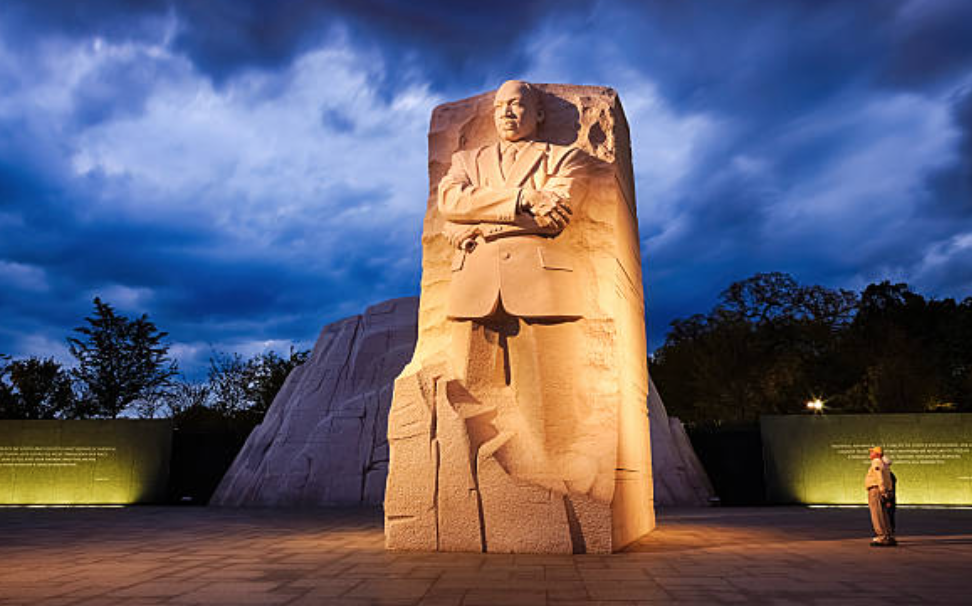
“It was a really powerful experience to be at that [Martin Luther King Jr.] monument, especially with the way it was lit at night,” he said. “We… all just took the time to really take it in.”
Eugene spoke to the value of memorials.
 “A lot of people go to DC and visit all these monuments and they become a symbol of the history of the US,” he said. “I think that it’s cool to say that we helped contribute to something that represents a large part of our history.”
Mrs. Colborn echoed that sentiment.
“I just think that those memorials are important so that we as a society… don’t forget the sacrifices that people have made before us,” she said. “And they’re beautifully done. I think the park system does an amazing job of soliciting ideas for memorials; they use different architects; they bring a lot of diversity into their selection process.”
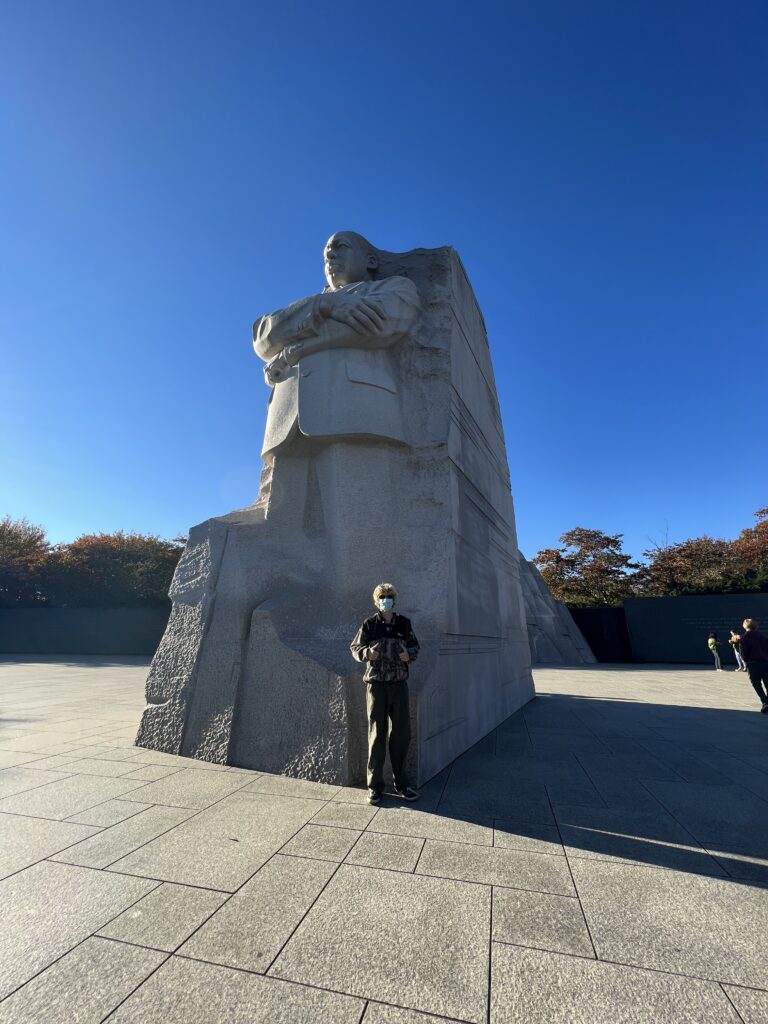
The Martin Luther King Jr. Memorial, for example, is a white bust of King measuring 30 feet tall.
“The way they designed the memorial is that it is unfinished,” Mrs. Colborn said. “And that’s supposed to symbolize that the work for civil rights is unfinished and we have to keep going.”.
Eugene spoke to the sheer size of it: “It… represents how MLK made a massive impact on the US.”
The National Women’s Suffrage Monument is still in its preliminary stage, so the architecture of the piece has not yet been settled. However, Laymon envisions a sculpture garden to tell the stories of different suffragettes, including Susan B. Anthony, Madam C.J. Walker, Elizabeth Cady Stanton, Sojourner Truth, Harriot Stanton Blatch, Ida B. Wells and Alice Paul (Hackney, USA Today).
But as OVS continues to support these projects in DC and elsewhere, the question becomes: how can it support the messages of MLK and the women’s suffrage movement beyond philanthropy and actually integrate them into our school environment?
Mrs. Colborn asks these questions of herself too.
“We continue to look at how we teach diversity, equity and inclusion in our curriculum, but what more we can do?” Mrs. Colborn said. “How do we bring more diversity to our teaching faculty? How do we bring more diversity to our student body?”
At the end of the day, the school can burst the bubble that is OVS and get involved with operations outside the school community – but at the same time, the school must look inward and make sure its exterior values are reflected inside our school.
“It can’t just be Washington DC….Everything has to circle back,” said Mrs. Colborn. “It has to be continual conversations that we have, whether it’s in school with our classes, whether it’s outside school with our own family and friends… it’s important.”