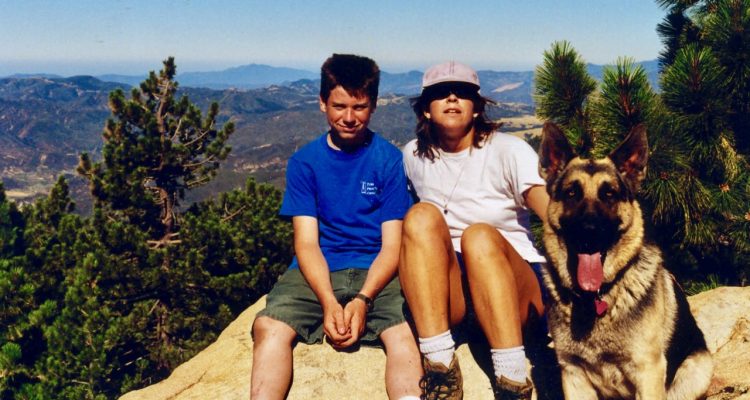
When OVS English teacher Crystal Davis lost her nephew and Navy veteran, Jarett Jones, to suicide six years ago, she had no idea that one day she would be taking action in his name.
This fall, Ms. Davis was browsing social media when she came across Mission 22, a non-profit dedicated towards supporting veterans and their families through a range of outreach, events and programs.
She saw that every month they host a nationwide exercise challenge in order to provide a fundraising platform. September’s event was the 48 Mile Walk Challenge. It felt like a call to action.
“When I saw this opportunity to raise money, but also to raise awareness, I thought I’m going to do this for Jarett,” Ms Davis said. “So I did it for Jarett.”
Mr. Jones joined the US Navy at the age of 19 and, according to Ms. Davis, didn’t have a clue what he was getting into. He was deployed in Kuwait, Guam and Afghanistan before returning five years later. Like all veterans, he then faced the challenging transition from military to civilian life.
To the outside world, it appeared this transition was going smoothly and that Mr. Jones had made a fresh start.
He graduated from a tech school in Arizona, was working a stable job, adopted a dog from a shelter, and was in a solid relationship. So, when Mr. Jones’s family received the news that he had taken his own life, it came as a great shock to them all.
“I didn’t know how much he was struggling,” Ms. Davis reflected. “It’s one of those conversations where if you could, you would turn back the clock… and do it again. I would have dug a lot harder.”
While Ms. Davis had her own regrets, she also recognized that mental health services offered to veterans in the United States are lacking.
Mr. Jones’s case is individual, but tragically, is not unusual. A recent study by the US Department of Veterans Affairs revealed an estimated 22 veterans commit suicide every day. This figure was heartbreaking to Ms. Davis.
“Try as these people did to create a life that would be meaningful and purposeful and full of love… this thing reached out and took them back,” she said about those who took their lives.
Thomas Shelvin, as the director of the Recovery and Resilience Program at Mission 22, explained why the numbers are so high.
“Society has kind of forgotten about our veterans. I believe our country should help provide for them, but unfortunately, those resources aren’t being created,” he said.
“Currently for veterans there isn’t a… well planned out way of transitioning from the military service sector into the civilian sector,” he continued. “You have to worry about where you’re going to sleep, what you’re going to eat, you need to find a job… And that’s why, more often than not, you actually see homeless veterans – because they can’t adapt to that transition.”
Aside from the logistics of the transition, the biggest challenge that the ex-military face is dealing with their trauma, whether it be PTSD, anxiety or depression.
Oftentimes, when a veteran consults with a psychologist or psychiatrist in regards to their suffering mental health, they are prescribed medication. For some, this can be extremely beneficial, but others, like Mr. Jones, require something more.
“Essentially, you’re putting a bandaid on an open wound,” said Mr. Shevlin. “There isn’t real healing occurring, and what Mission 22 does is help the veteran, the spouses and the family members get back on track by building a community.”
Socializing can be extremely difficult for veterans, primarily because they feel disconnected from ordinary civilians.
“They believe that others won’t understand what they’ve gone through… so they isolate themselves,” Mr. Shevlin explained.
Ms. Davis spoke from the other perspective – that of a civilian trying to empathize with her veteran nephew.
“All of us have lost an animal… or we’ve had a breakup. We all have these human commonalities that almost everybody experiences. But this experience is singular,” she said. “No matter how much I love a person and want to guide them through their struggle, if I have no experience of that struggle, it handicaps me.”
What makes the Mission 22 community special is that the team does have experience of that struggle, being largely made up of veterans.
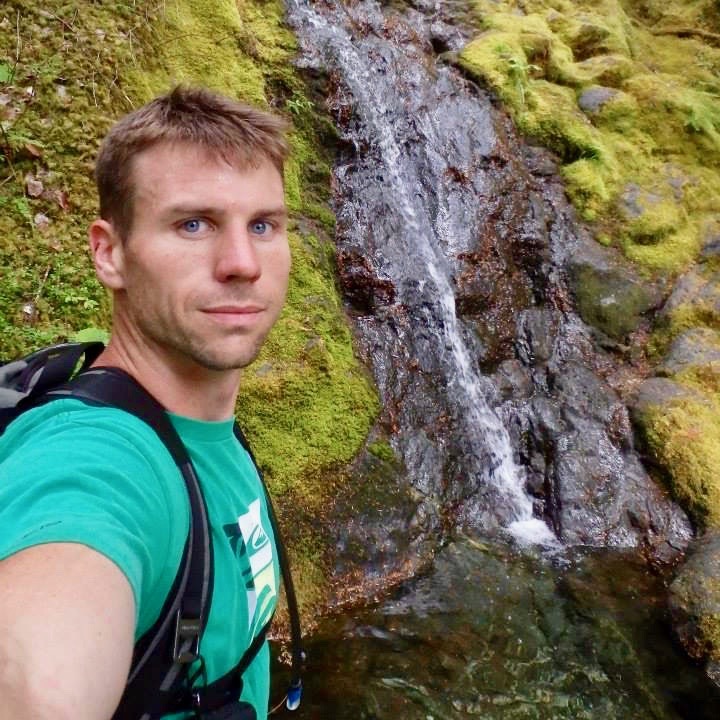
For example, Mr. Shevlin himself served as an infantryman in the Marine Corps, following in the footsteps of his father. He, like Mr. Jones, enlisted just after high school.
Ms. Davis was appreciative of this veteran-to-veteran relationship.
“I think they’re uniquely suited to know what kind of services and what kind of support is going to be of the most benefit for people who are struggling,” she said.
Beyond building social connections, the organization provides literature and other resources, as well as meditative technologies, such as NuCalm or HeartMath. Meditation has been proven extremely effective in reducing stress in all people, but especially in veterans.
“We have many stories of individuals that have been down in the lowest points of their lives. Hearing that their whole life was turned around because of what Mission 22 provided for them is just a really inspiring thing to see,” said Mr. Shevlin.
For instance, one patient started to ovulate again after participating in the program. She had always wanted to have children, and when this became feasible, it meant the world to her.
Ms. Davis was inspired by the work of Mission 22 and these success stories.
She signed up for the 48 Mile Challenge online, had a Go Fund Me page set up for her, and tracked her miles on an Apple Watch. Ms. Davis hiked frequently, but said that she probably would have done the same had she not participated in the challenge. What changed was the sentiment behind every step.
Ms. Davis said that she and Mr. Jones had always shared a love for the great outdoors. “[Hiking] was just a way that we connected before and a way that we connect now.”
By the end of September, she had walked not 48, but 94 miles, raising a total of $600 for Mission 22. Friends and family were her main contributors.
While Ms. Davis usually vocalizes her fundraising projects, such as the cancer-fighting Relay for Life, in this case, she chose not to broadcast her involvement more widely. The OVS staff and students were kept unaware.
Clearly, it was a sensitive topic. But there was another key factor that was holding her back.
“It made me feel very vulnerable to be making this story public because the one thing I would never want to do is make [this] about me,” she said. “The grief is mine, the misgiving, the regrets – all that is mine. But the story is really about Mr. Jones and about other men and women who are fighting this battle against mental illness that has followed them after their time of service.”
Despite Ms. Davis’ insistence that this isn’t her story, it is possible to argue the opposite. This is Ms. Davis’ story, just as it is Mr. Jones’s, just as it is Mr. Shevlin’s. This is the story of those who are struggling and those who step in and offer their support wherever possible.
In the words of Mr. Shevlin: “We only have one life and… we as human beings, need to help each other out.”
The best part is, oftentimes, support systems come full circle. Ms. Davis, by helping the veteran community, received something in return.
“It was healing because I got to connect with all these other stories and feel the similarity in the grief of these other people,” she said. “Maybe it was as much therapy as philanthropy.”