Drenched by rain, shriveled by sunshine, trampled by the shoes of an occasional careless student, and buried under mulch, tiny milkweed seedlings on campus have endured against all odds.
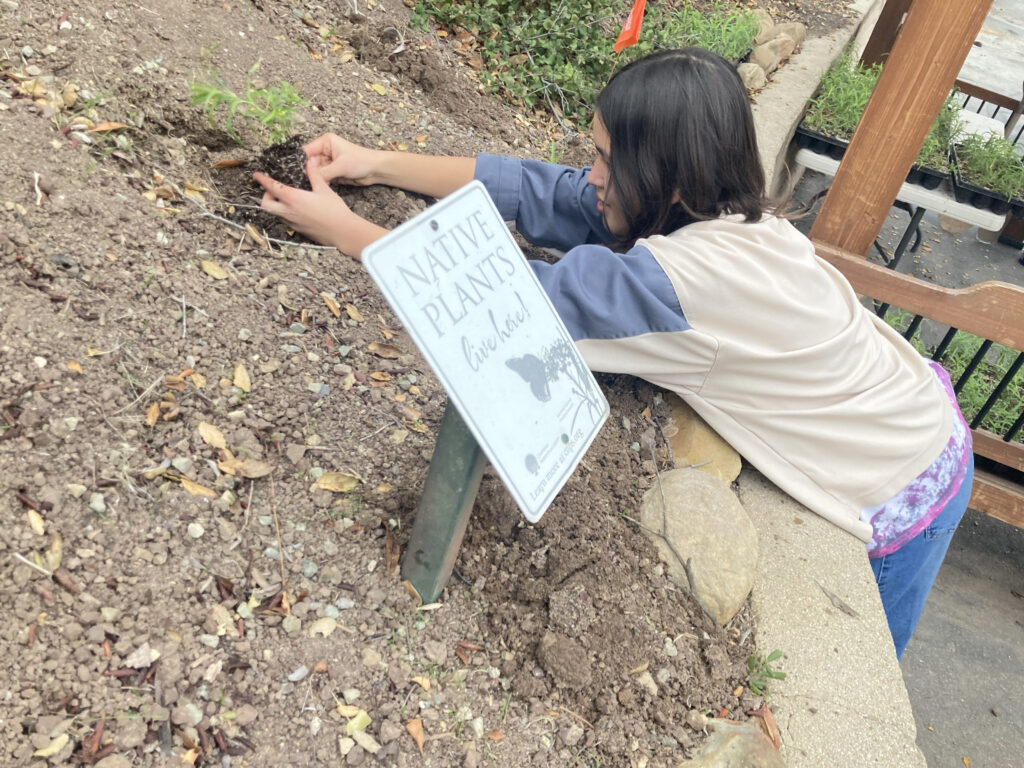
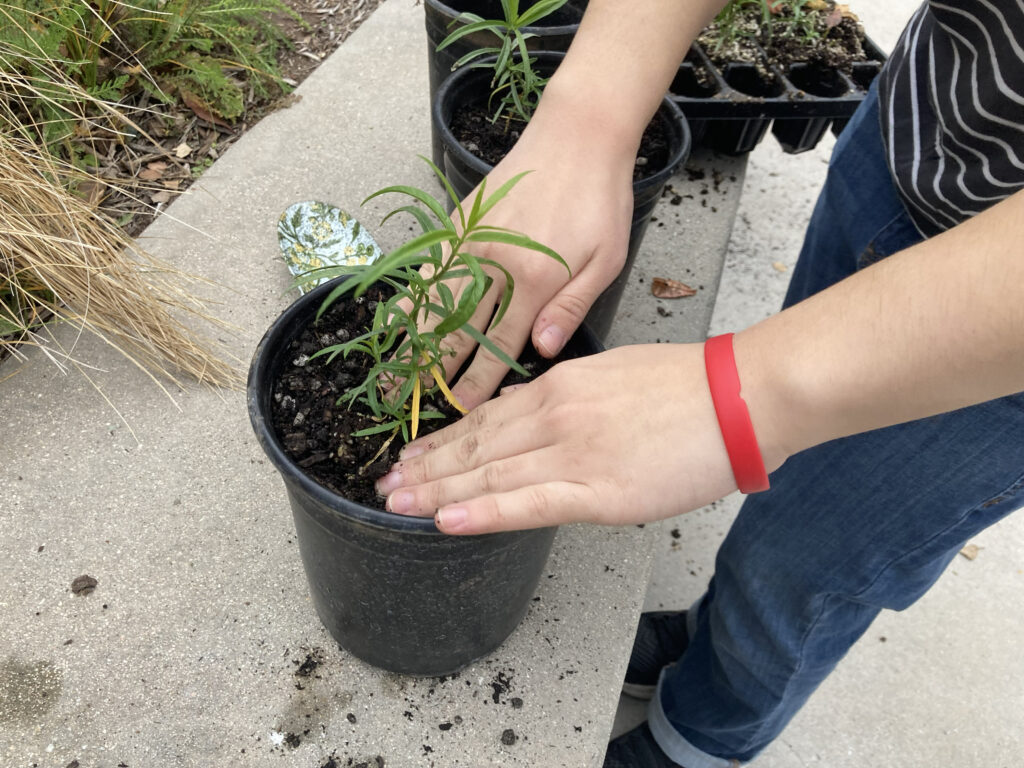
The milkweed was planted last November as part of an initiative led by English teacher and Assistant Head of Upper Campus Crystal Davis, and carried out by a team of students. The seedlings were donated by Native Monarchs, a local nonprofit dedicated to helping restore habitat for the monarch.
Ms. Davis is thrilled to see the garden thriving – hard work has paid off.
“I think we’re going to have a really strong population [of milkweed], at least in several places around campus,” she said. “It’s really exciting.”
The reason why this success is so exciting is because these plants provide a habitat for the endangered monarch butterfly.
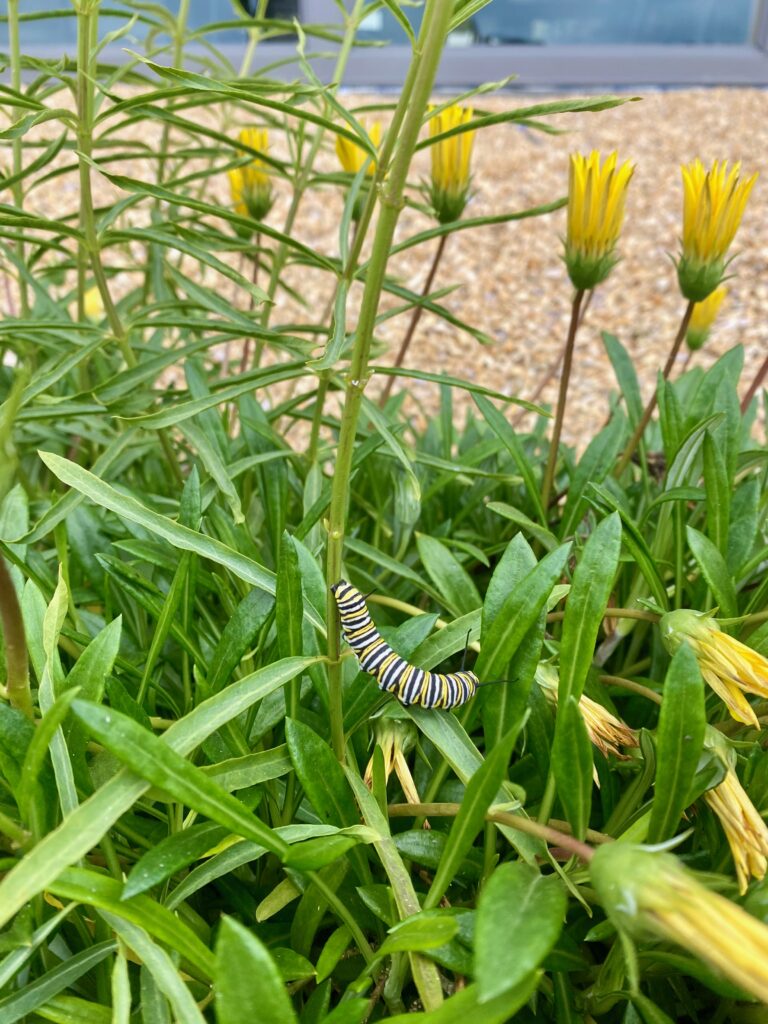
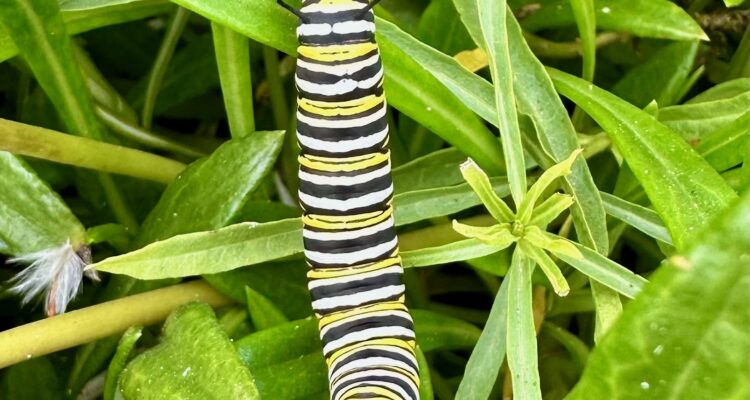
This spring, the Upper Campus is experiencing a surge of monarch caterpillars, which feed on the milkweed, anchor their chrysalises to buildings and bushes, and eventually emerge as beautiful butterflies.
The entire lifecycle of the monarch butterfly is dependent on milkweed – female monarchs lay their eggs on the underside of milkweed leaves, and milkweed is the only plant on which monarch larvae feed.
Going back more than a decade, OVS had a large, thriving population of monarchs, as the campus community – including students, teachers, and other staff members – dedicated itself to the protection and proliferation of these delicate creatures.
Unfortunately, the milkweed habitat was lost in the Thomas Fire in 2017, which destroyed half the Upper Campus, including the science and technology building where a majority of the milkweed thrived.
For the time being, a growing number of monarch larvae can be spotted only on preexisting milkweed that germinated spontaneously in locations where it had been before the fire.
The Monarchs will expand into the newly-planted milkweed next year, which is actually better, Ms. Davis explained, because if a single butterfly were to lay its eggs on one of the young plants, caterpillars would completely defoliate it within a day.
“They’ve been coming back every year, but in very small numbers because there hasn’t been a milkweed population to support larger numbers,” Ms Davis said. “And now there is, or there will be.”