
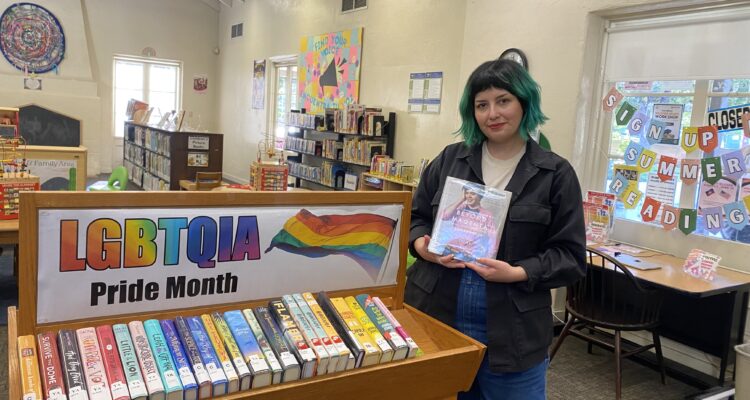
Last year, book ban attempts in the US reached a record high, according to the American Library Association, and those numbers have continued to surge. As select books fall subject to these attacks, librarians often choose not to purchase them for fear of the controversy they could ignite – a preemptive form of censorship.
Banned Books Week, first initiated in 1982, runs October 1st to 7th.
While book-banning hasn’t yet directly impacted Ojai, local librarians and English teachers share a concern to safeguard intellectual liberty in the face of this rising movement.
Books are most commonly challenged for sexual or mature content, or for explicit or offensive language, according to the American Library Association (ALA).
“Somebody will say, ‘I’m just challenging it, because I don’t want obscenity in a children’s library.’ And as a librarian who works with young adults, I also don’t want that,” said Alex Brown, the librarian at Thacher School.
Having devoted a lot of time and money into their degree in librarianship, Brown said that they understand how to properly evaluate material for high school readers.
“I’m not buying inappropriate content. I’m buying content that is challenging, and that some people might find… difficult to engage with,” Brown said. “But that’s part of the learning process, it’s part of going to school, and it’s part of being in a society.”
The most challenged book in 2022 was Maia Kobabe’s Gender Queer: A Memoir, the ALA list revealed. This hit especially close to home for Brown, who identifies as gender queer themselves.
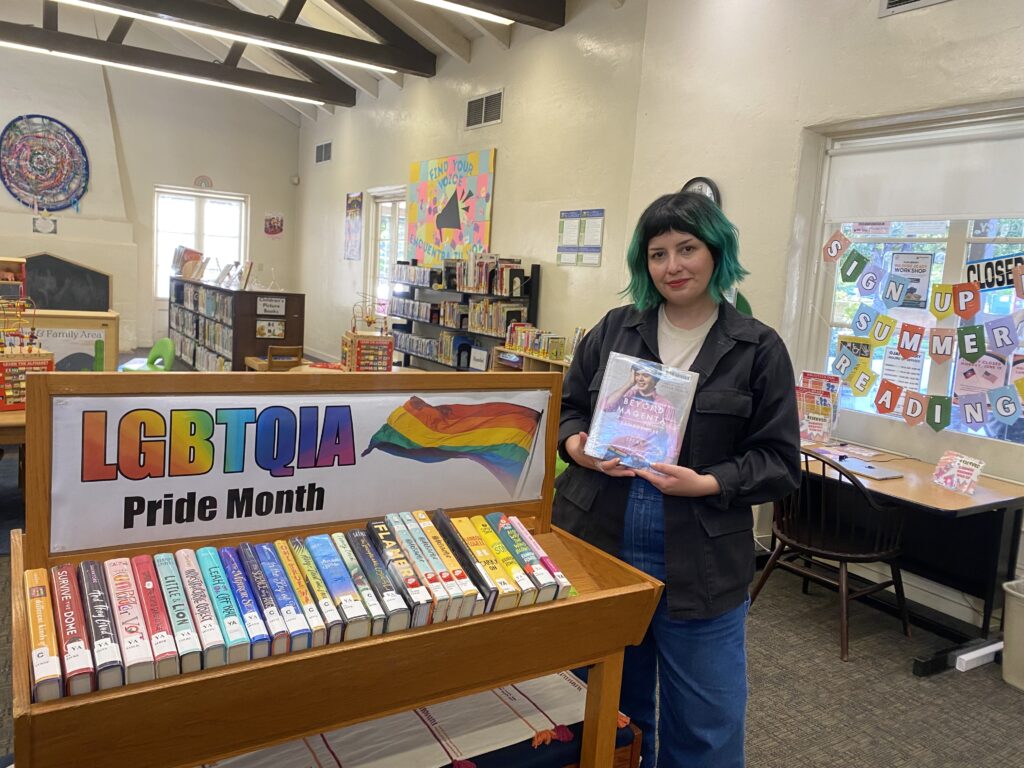
Challenged books are often written by LGBTQIA+ community members and/or BIPOC, and tell stories related to these identities (ALA). In a society that, broadly speaking, is growing more progressive, people who don’t share these views or condone a message within a book may seek to place limitations on access to the work.
“I think people get scared of what they don’t understand, and rather than exploring and getting a little uncomfortable, they want things to stay the way they are and to… maintain a certain perspective,” said former Oak Grove School English teacher Erin Bennett. “I think it says more about whoever’s banning the book than the book itself.”
In her advocacy against censorship, Bennett had her senior class study the banned book Beloved and her junior class study Maus last year at Oak Grove School. Her 11th graders then went over the transcript from the conference in which Art Spiegleman’s graphic novel, about his father’s experiences as a Polish jew and Holocaust survivor, was banned.
“It was… eye opening to see how those kinds of decisions get made, and the lines of reasoning or lack thereof,” Bennett recalled.
Ojai Valley School librarian Devyn Reynolds once had a parent challenge a war novel that her child had checked out of the library on account of its violence. After some d
iscussion, the book was kept in the collection.
“It’s a parent’s right to decide what their children read, but not when it comes at the expense of everybody,” she said.
Blanca Ramirez, who is the new children’s librarian for the Ventura County Library, agreed with this sentiment.
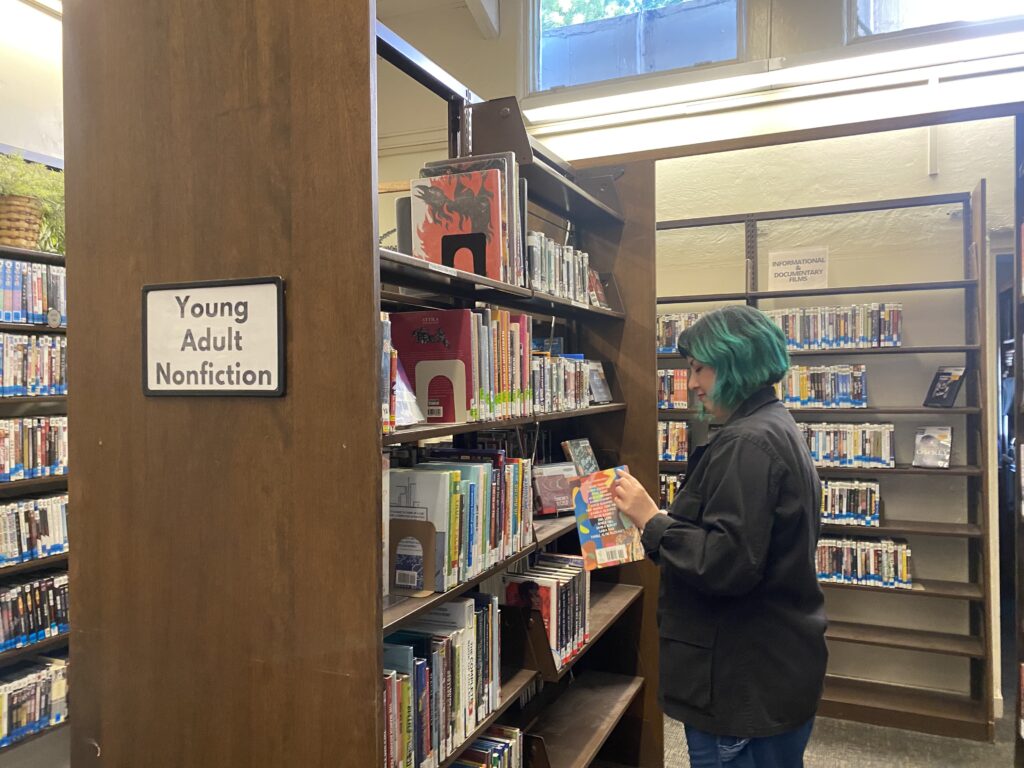
“I want everyone to have access to the information that they are seeking,” she said. “It doesn’t mean that I agree with all the information that’s out there, but if you want a certain book, I want to help you find that book.”
Dr. Rudine Sims Bishop, a professor emerita at Ohio State University and a researcher of American children’s literature, once wrote that books should serve as windows, mirrors, and sliding glass doors. In other words, they should open one’s eyes to new perspectives, reflect one’s own life and experiences back at them, and allow one to empathize with or step into new identities they are exposed to.
Banning books closes these windows, shatters these mirrors, and slams these doors shut, Dr. Bishop suggests. Ojai librarians and English teachers are determined to protect their libraries from these consequences of censorship.