
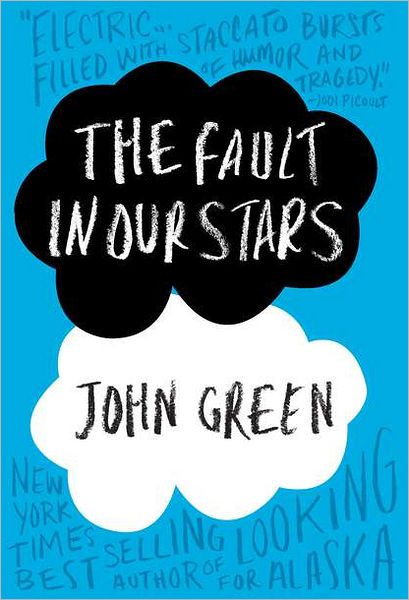
“Cancer books suck,” says the 16-year-old protagonist Hazel Grace Lancaster in the wildly popular novel by John Green, The Fault in Our Stars.
While true, OVS librarian Casey Brough and English teacher Brad Weidlich chose this particular “cancer book” as the summer reading assignment for the entire school.
Other schools, however, have taken a different approach to the popular novel. The Riverside Unified School District has banned it from their middle school libraries, due to profanity and sexual content.
“I understand kids under 12 not needing to read about sex, and there is profanity and sex,” said Jenna McIntosh, an OVS senior. “But most 13 and 14 year olds should be learning about sex and are probably already swearing. I feel like there’s no reason to ban a well written novel with a good plot because of sexual content.”
The Fault in Our Stars, written by John Green, tells the story of two teenagers, Hazel Grace Lancaster and Augustus Waters, who are both fighting for their lives against cancer.
Since it’s release in 2012, the coming-of-age novel has gained increasing traction among young readers. Just this past summer it was made into a blockbuster movie, and was ranked #1 in its opening weekend.
It was because of the popularity of the novel that Mr. Brough and Mr. Weidlich settled on The Fault in Our Stars as the summer reading requirement for the Upper Campus.
“We were tasked with the idea of picking out a book that the whole school would enjoy,” said Mr. Brough. “We chose Fault in Our Stars because it’s just a great book. It deals with topics that I think a lot of people can relate to, such as being a teenager.”
Mr. Brough feels that because of the popularity of the book, and because the book was more suited to all reading abilities, more students read the book than other summer reading books in the past – an admirable feat.
“I liked The Fault in Our Stars because it was relatable,” said OVS sophomore Natasha Freudmann. “Not that I have cancer, but I’ve been around experiences that relate to cancer, so I think I was able to connect with it on a more emotional level.”
But despite the popularity of the book amongst teens, the Riverside Unified School District book reconsideration committee has banned the book from its middle school libraries because of profanity and sexual content.
The push to ban the book came from at least one parent, Karen Krueger, who felt that the morbid and sexual content, along with the profanity in the text, was inappropriate literature for her children.
“I just didn’t think it was appropriate for an 11-, 12-, 13-year-old to read,” she said in an interview with the Press Enterprise newspaper. “I was really shocked it was in a middle school.”
When a fan on Tumblr asked John Green for his reaction to the ban, he responded sarcastically: “I guess I am both happy and sad. I am happy because apparently young people in Riverside, California will never witness or experience mortality since they won’t be reading my book, which is great for them.
“But I am also sad because I was really hoping I would be able to introduce the idea that human beings die to the children of Riverside, California and thereby crush their dreams of immortality.”
Usually, when someone wishes to ban a book, a committee is formed. The committee then proceeds to read the book and discuss the reasons behind the push to ban it. After the discussion, the committee votes on whether or not the book is appropriate for a scholastic audience.
The committee at Riverside was made up of teachers, parents, a librarian, and a principal, who voted 6-1 to ban The Fault In Our Stars. Three copies of the novel were removedfrom the Frank Augustus Miller Middle School library, it’s inclusion in other middle school libraries with in the district is forbidden, and any future donations of the book will not be accepted.
As for Mr. Brough, he is against the banning of books, and has observed that people who push to ban a book have usually not read it in its entirety. They pull passages from it and present them as evidence against the book, he said. However, the passages are often taken out of context.
“I don’t get it. I’m obviously not for banning books; I’m for the freedom to read whatever you want,” said Mr. Brough. “If you’re old enough to read it and understand it, then I feel it’s appropriate. I feel that people who ban books usually end up on the wrong side of history.”