
It was just after 7 p.m. on a January evening when Misty Hall, the associate director of admissions at Ojai Valley School, found herself sharing the road with an unexpected neighbor: A mountain Lion.
Hall managed to capture a 30-second video of the big cat as it sauntered around the road ahead just below the Upper campus, completely unfazed by her presence.
“I’m in a regular sedan vehicle and it was just strolling down the road in front of me,” Hall recalled. “It was not bothered by me at all.”
The OVS’s Upper Campus sits in a remote and very wildlife-heavy part of Ojai, so this encounter wasn’t completely out of the ordinary. The school has emphasized the importance of learning to coexist with the animals.
“I think we do a good job, but of course we are always learning more and finding better ways to be more responsible stewards of the land,” Hall said.
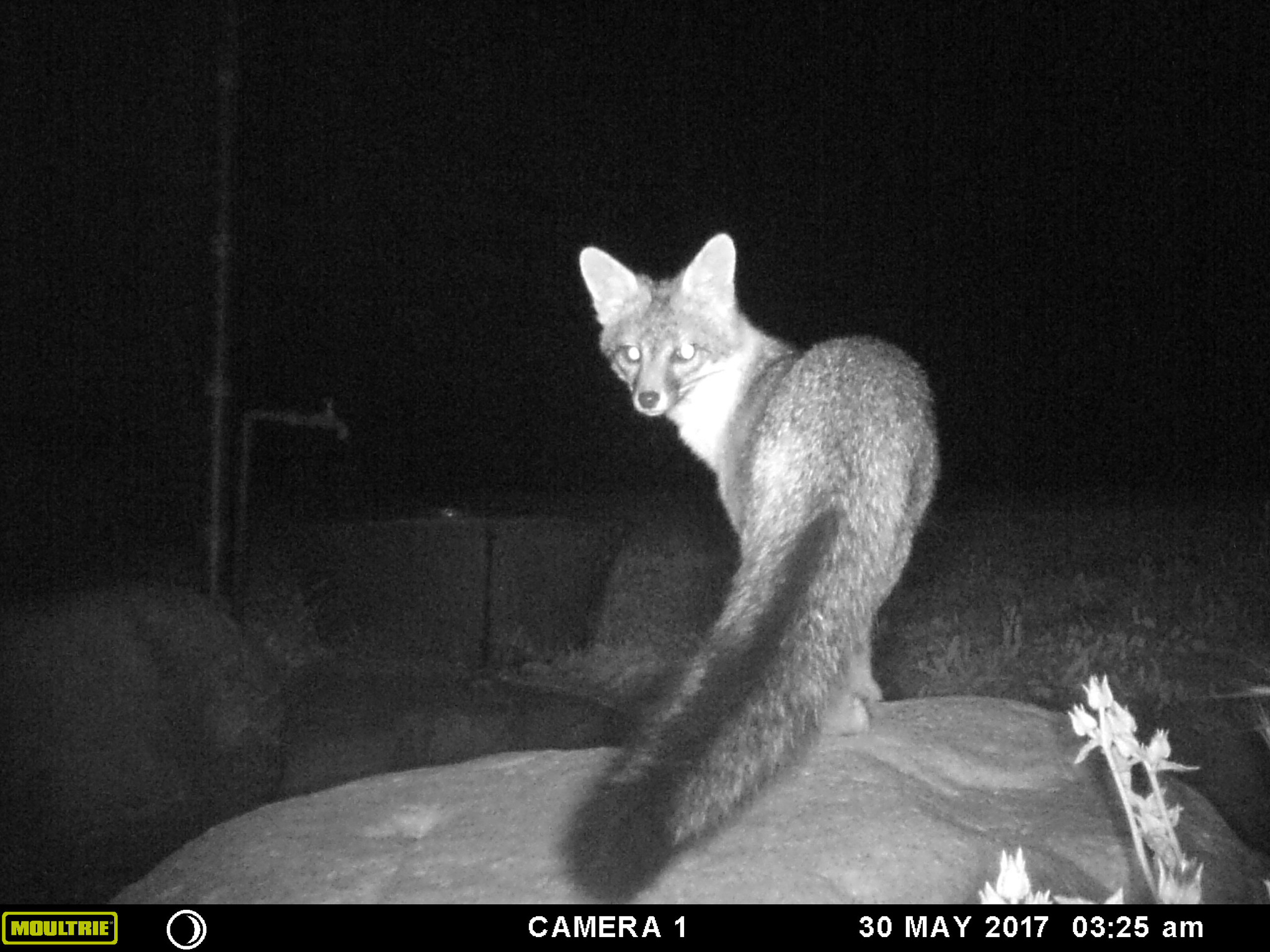
Mountain Lions are not the only visitors. Snakes, deer, hawks, foxes, and skunks are all familiar faces of the campus.
And in recent weeks, there has been a spectacular visitor. A mother bear and her cubs have been making nightly visits to the residential dormitories, overturning trash cans and scattering garbage across the grounds.
The school’s non-animal proof trash cans have been punctured, scratched, and even dragged into the road.
Boarding student Dologora Danzanova witnessed one of the acts up close.
“It was searching in the trash for food when I first saw it,” she said. “It made eye contact with me, then grabbed the trash can and tossed it into the road.”
The experience, she admitted, was quite frightening.
As the back-to-school rush settles down, more animals seem to be appearing, getting comfortable with the campus life. Students studying late in the library have even seen bears strolling through the halls.
After the Thomas fire, OVS created what faculty now call the “bear protocol.” The fire destroyed much of the bears’ natural food sources, and more of them began wandering onto campus, drawn by easy meals from the school’s trash cans.
To fix that, the school set strict rules around trash disposal. No food garbage can be put out after 3:30 pm, once the maintenance crew finishes for the day.
“When we followed that rule consistently, we went from having as many as six bears wandering through at night to almost none,” said Crystal Davis, director of the high school. “It was healthier for the bears, and it was more stable for us as a community.”
Ms. Davis said that while the wildlife encounters can be surprising, they’re also meaningful learning experiences. She believes they tie naturally into OVS’s outdoor education and land-and-climate programs, which teach students to care for the environment and understand how their actions affect it.
“I think dealing with the bears gives us a chance to teach ourselves how to be better stewards of our local environment,” she said. “It’s not just about the fun of being outside. It’s about recognizing our impact on the outdoors, and on the wild animals that live here with us.”
For Ms. Davis, coexisting with wildlife isn’t just about policy — it’s about integrity.
“I hope we’re teaching our students not to hide from things that make them uncomfortable,” Ms. Davis said. “Instead, I want them to learn to step up responsibly and meet the world as it brings itself to them.”