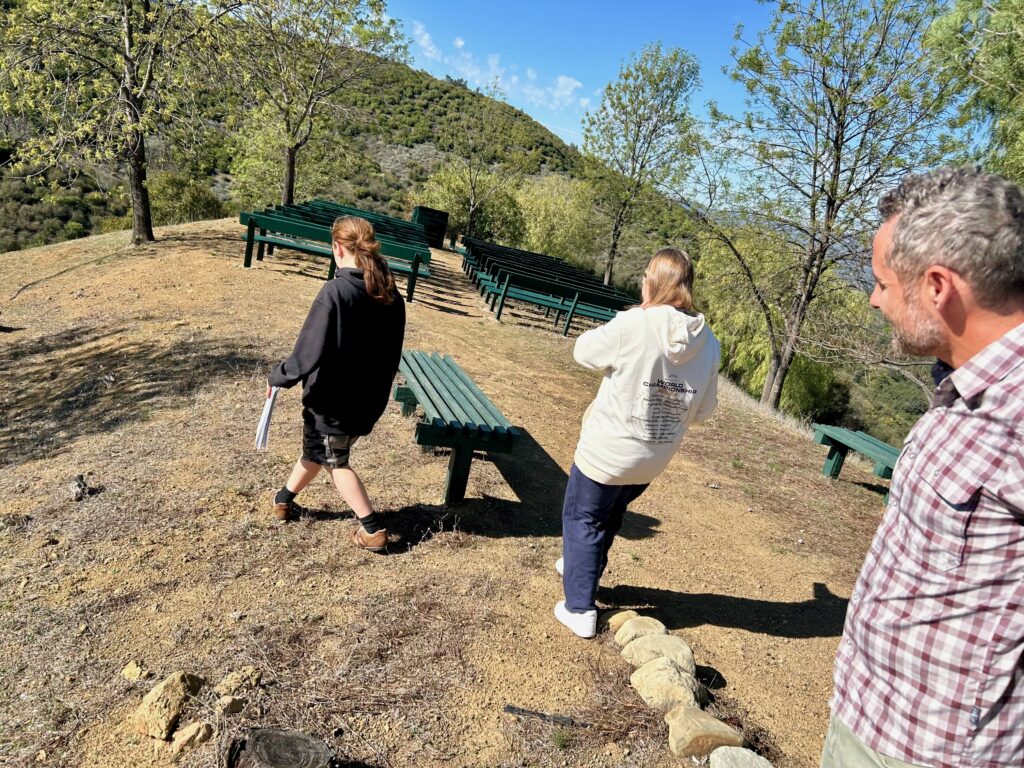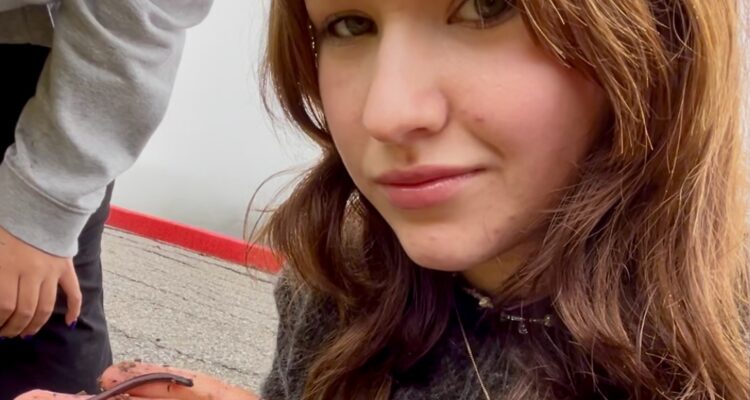
The herpetology class at the Upper Campus appears to break the mold of the other H-blocks.
For one, it’s technically a science class, studying the biology of amphibians and reptiles. It also only has two students attending, junior Aspen Nybakken and sophomore Celeste Ayala. Most H-blocks are made to be a break from the academic day, so what makes herpetology different from the core subjects?
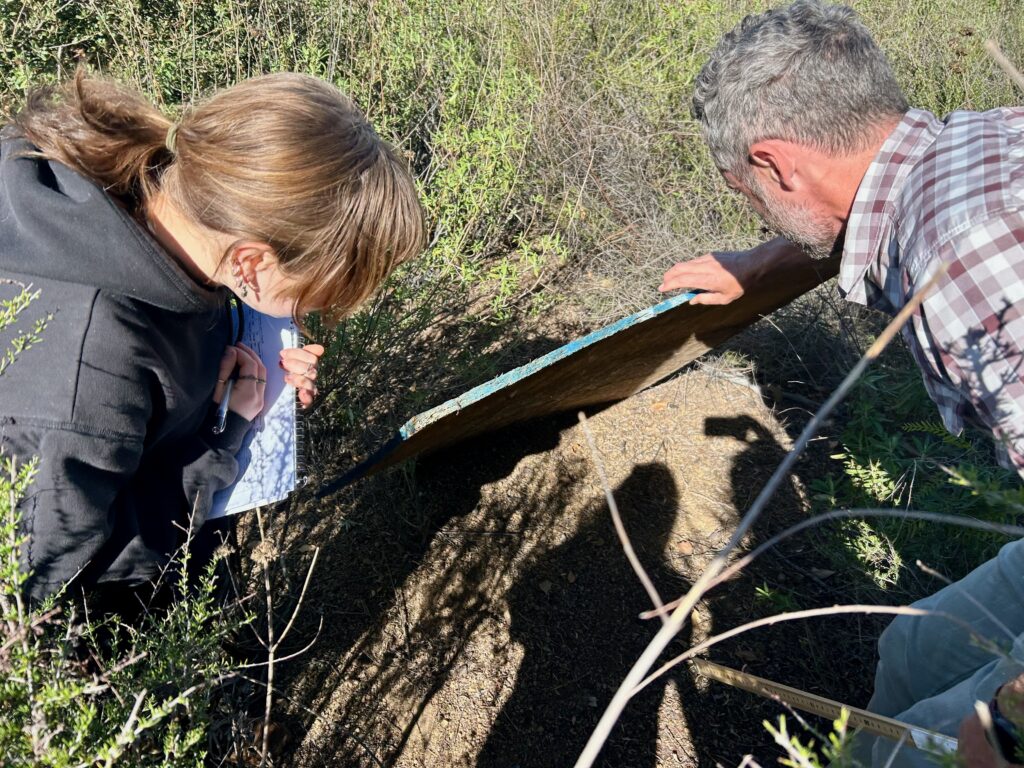
Maybe the difference can be seen in one of the herpetology class’s field days. In the midst of pouring rain, the duo left the biology classroom in search of salamanders, digging in the mud and climbing along the earthen terraces.
They didn’t find any salamanders in the end, but several unusually long earthworms instead. They logged their lengths just the same. This period might approximate what field studies is meant to encourage of OVS students, as one of those groups joined herpetology for this activity specifically.
“Honestly, today might be the most memorable moment from herpetology so far,” Celeste said. “Or else it might be the frog dissections we did.”
Biology teacher Leland Fulton, the mind behind H-block herpetology, has more interesting plans for this class, aside from the swims and disembowelments he already ordered of Celeste and Aspen. Now that rattlesnakes are emerging for the spring, they’ll be setting up traps for them, then Mr. Fulton will measure their size with specialized snake sticks.
“I’ll just ballpark their sizes, since I’m the one who’s catching them,” said Mr. Fulton, as the responsible teacher he is. “We’re not handling them directly.”
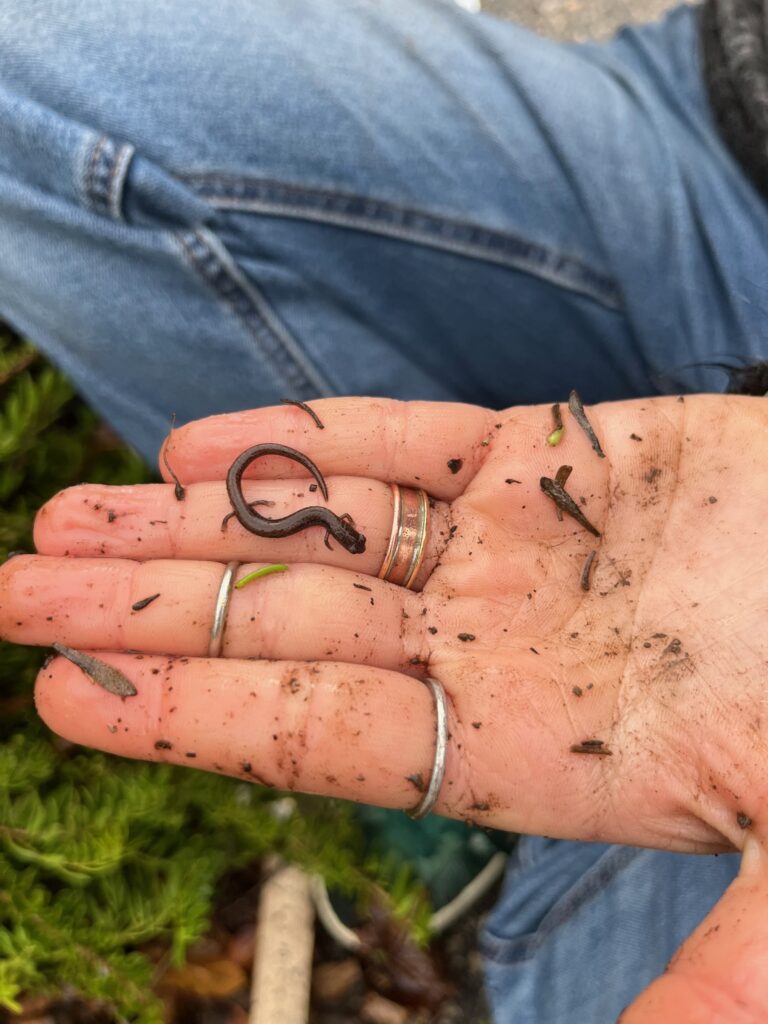
According to him, reptiles and amphibians are some of the most ideal organisms to study around the Upper Campus. They, even rattlesnakes, are relatively easy to handle and study. And the campus is surrounded by wildlife, including species that aren’t found in Ojai itself.
“It’s a prime place to learn about reptiles in their natural habitat,” Mr. Fulton explained. “Plus since herpetology is an H-block, we aren’t bound by academic rigor necessarily. We can go on field studies like today, study surveys or data. In short, we don’t need to read out of books.”
Celeste says she enjoys herpetology for this reason, and a few others.
The fact that the class is so small is a bit funny to her, but it makes the experience more personalized. Herpetology also teaches her scientific knowledge that, even if she wasn’t familiar with reptiles before, it still fits her academic interests.
“I’ve always been very passionate when it comes to the environment and science,” Celeste said, after bringing the field day’s earthworms out of the rain. “I missed the field work we did in biology last year. So today, I’m glad to still be able to do this, without worrying about any tests I’d have to take.”