
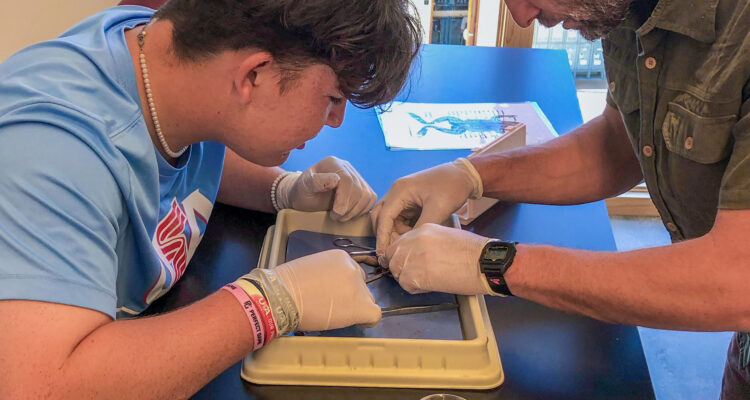
With gloves on and a scalpel in hand, freshman Leia Lenz-Ahron leaned over the table, her brow furrowed in concentration.
Before her lay an African clawed frog, an invasive species around the Ojai Valley. As she carefully made the first incision, Leia was not just dissecting a frog but diving into the world of conservation biology. As she began to slice and saw the insides of the frog, she was both disgusted and intrigued.
“I was nervous and a little scared at first,” Leia admitted. “But then I realized I was doing real science, something that could actually make a difference.”
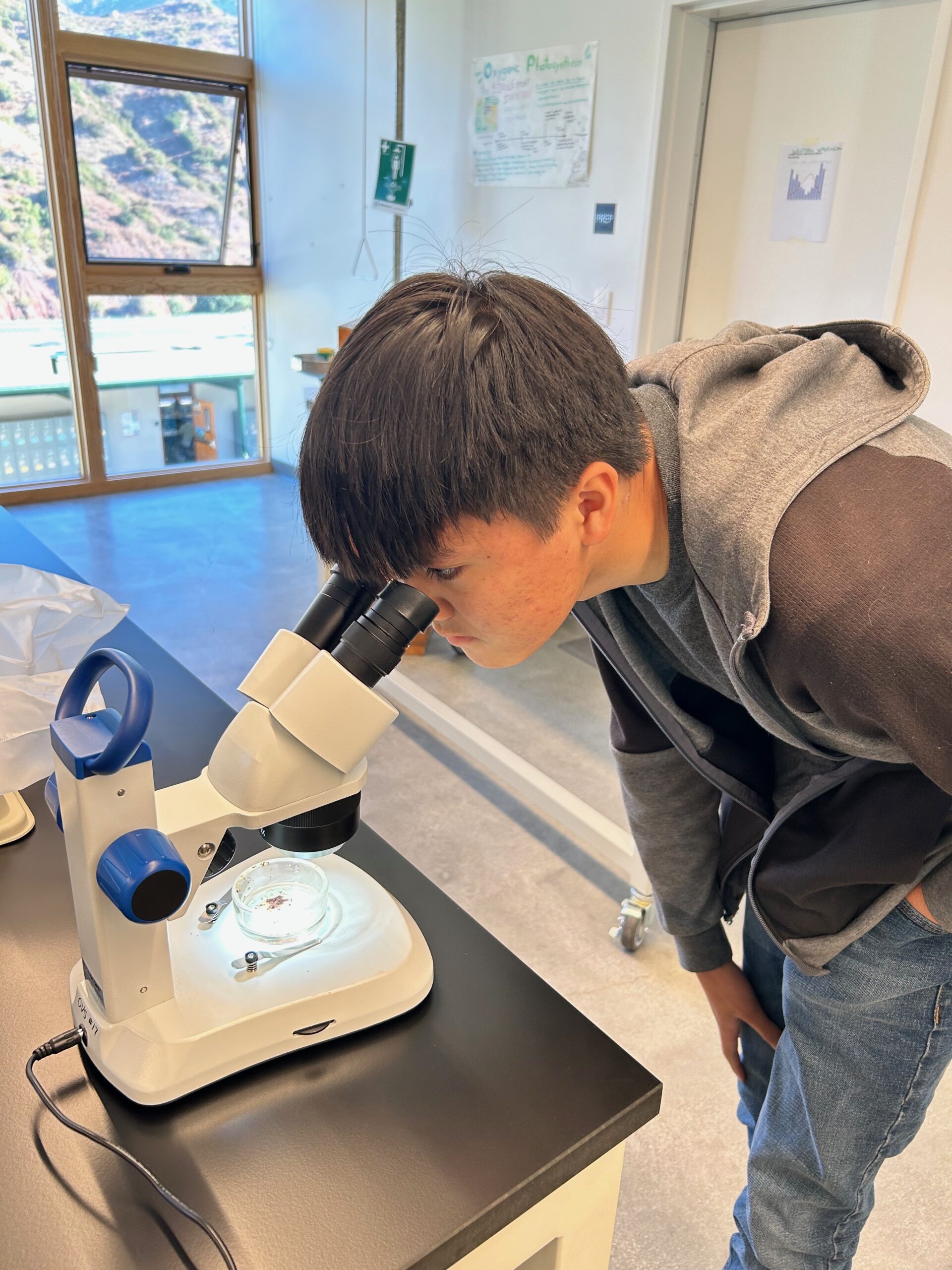 OVS has embarked on an exciting new partnership with the Ojai Valley Turtle Conservancy, aiming to blend education with hands-on conservation work. This initiative, led by Mr. Munding-Becker and Mr. Fulton, has already begun to make an impact on the school’s biology curriculum.
Mr. Munding-Becker reached out to the Turtle Conservancy a little over a year ago to explore opportunities for volunteer and educational collaborations. “They connected him with their education director and one of their scientists,” Mr. Fulton explained. “Then he connected that scientist with me, and we met and talked about some of the projects he was working on and how we could get involved. That led to this specific project with the frogs, seeing how these frogs may or may not be impacting the populations of the rare Western pond turtle in the area.”
The connection began over a year ago when Mr. Munding-Becker befriended Bryce, a member of Good Film–a production company with ties to the Turtle Conservancy. What started as casual conversations about turtles evolved into a collaborative effort to introduce students to fieldwork. The first excursion to the Conservancy occurred with OVS and Besant Hill students last year, where they learned about endangered turtles and tortoises.
Mr. Munding-Becker then met Nathaniel, a conservancy biologist studying Western pond turtles. Nathaniel mentioned an exciting research opportunity involving African clawed frogs, an invasive species often caught as bycatch during his turtle trapping efforts. The frogs are suspected of competing with the native turtles for resources. Mr. Munding-Becker suggested that OVS students could help study and dissect the frogs to analyze their gut contents to better understand the impact of the invasive species on native turtle populations.
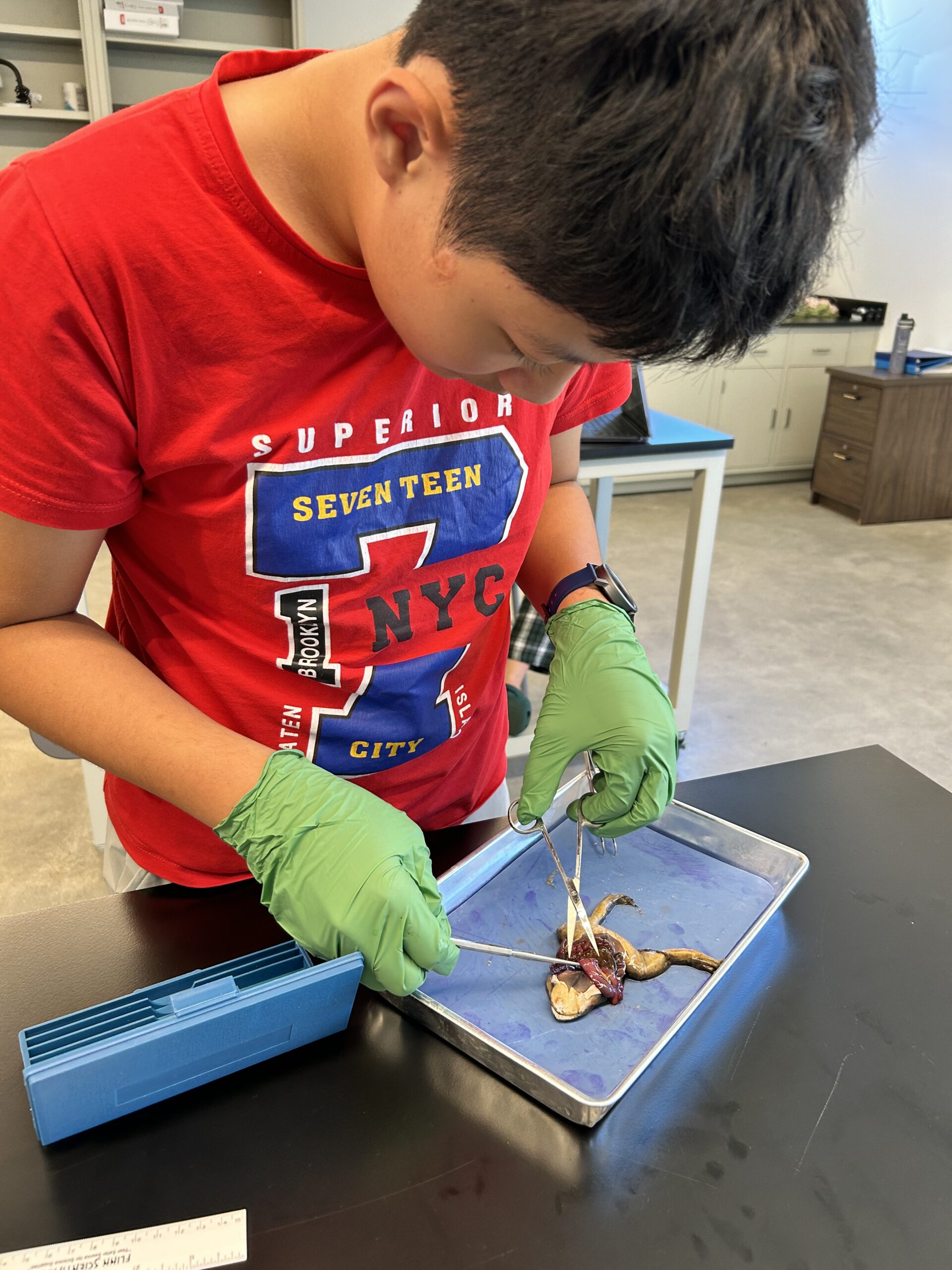 Although the partnership is still blossoming, it actively provides first-year biology students a chance to make an impact and learn hands-on. Every biology class at OVS will visit the Conservancy at least once this year. “In the spring, I’m hoping to get out into the field and do a little bit of data collection with the scientists who trap and catch turtles,” Mr. Fulton said. “The plan is to go out to the Santa Clara River and also up to the Sespe to do that.”
The ultimate goal is to provide students with a more engaging and impactful learning experience. “I hope they learn the biology curriculum while doing something meaningful and hands-on,” Mr. Fulton said. “They’re contributing to an actual scientific study, and the work they do could be used and published by scientists studying the rare pond turtle and looking for new ways to protect it. They can learn about ecology, anatomy, physiology, and genetics while dissecting frogs and collecting data. It’s hopefully more meaningful and will get them more interested in biology as a result.”
Leia further reflects on her experience, sharing her excitement as well as other feelings about the new project. “It’s cool to be part of something that can actually make a difference,” she said. “We get to learn about these turtles and help scientists protect them. I feel like going out into the field and doing real research is way more interesting than just reading about it in a textbook. At the same time, I find dissecting the frogs a little disgusting, but it is still really interesting.”
This collaboration between OVS and the Turtle Conservancy enriches the student’s educational experience and contributes to conservation efforts, making it a win-win for everyone involved.