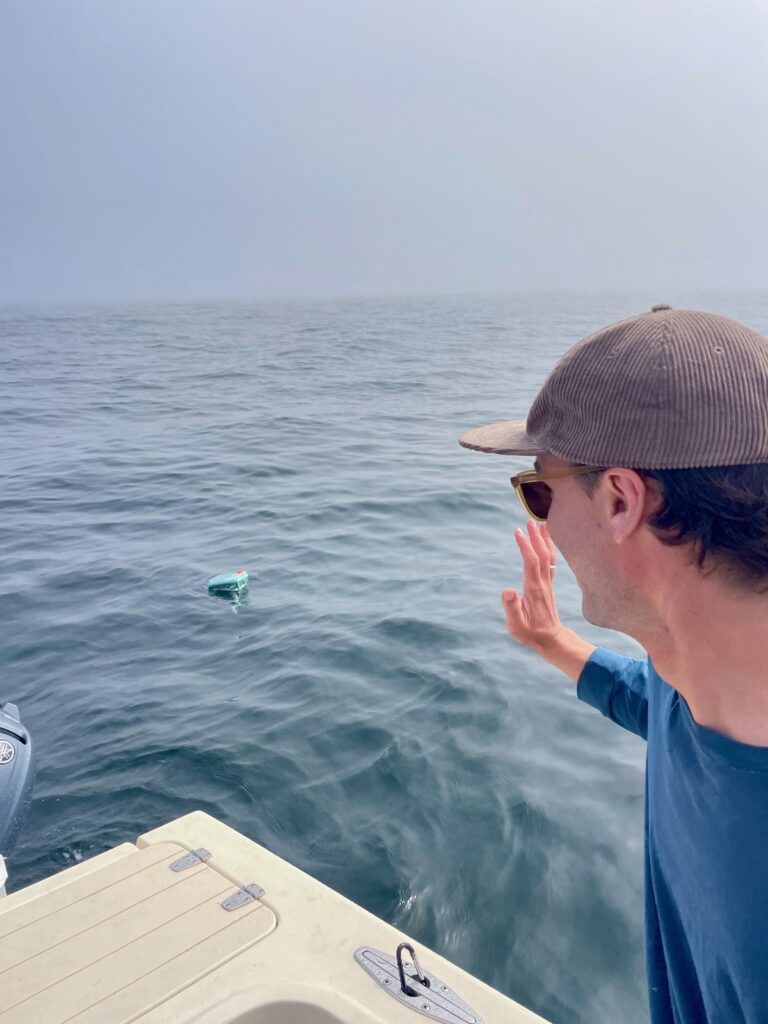
Early one morning, out on the foggy Pacific Ocean off the coast of Ventura, a new ripple was made in the water.
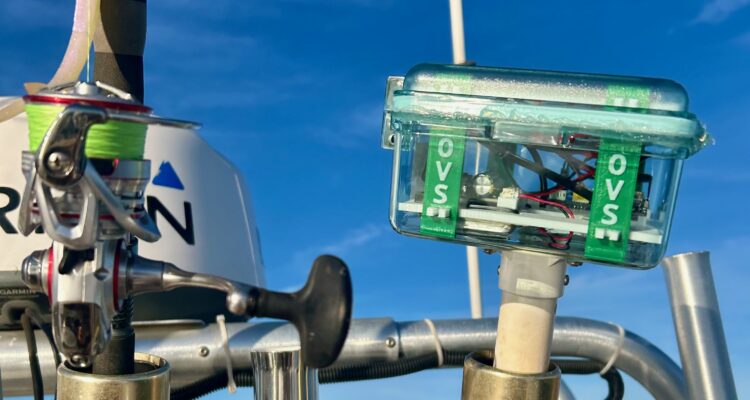
On a fishing boat a few miles off the coast, Ojai Valley School’s first tracker buoy was released in mid-March, a bobbing, blue-green box of tracking technology designed to measure ocean currents, water temperature and other environmental conditions.
What started as a class project can and will become another data point on a world map of tracker buoys.
AP Environmental Science teacher Miles Munding-Becker began researching buoy builder kits to deploy around the Channel Islands to use as a part of his Marine Science class. Once he found a manufacturer, he acted quickly and bought one for the class.
The buoy was purchased from a small company called Maker Buoy, founded by Wayne Pavalko who makes them himself at his house.
“You can do it, and it can be done, even from just a basement,” Mr. Pavalko said.
The class started with rotating groups making posters, researching, and building the buoy. Junior Vincent Bell was the head student in the whole project, specifically focusing on the building of the buoy.
“I was mostly helping with the building and managing the whole process of the buoy construction,” said Vincent.
Mr. Munding-Becker released the buoy with the help of a family friend. Unfortunately, a few days later something went wrong and the buoy broke. Luckily, Mr. Munding-Becker was able to reach out to Mr. Pavalko and get a new pre-built one, which they affectionately named Tuoy.
The students practice predicting and analyzing Tuoy’s trajectory at the beginning of each class. Students learned it was a great hands-on way to learn and track the coasts ecosystem and currents.
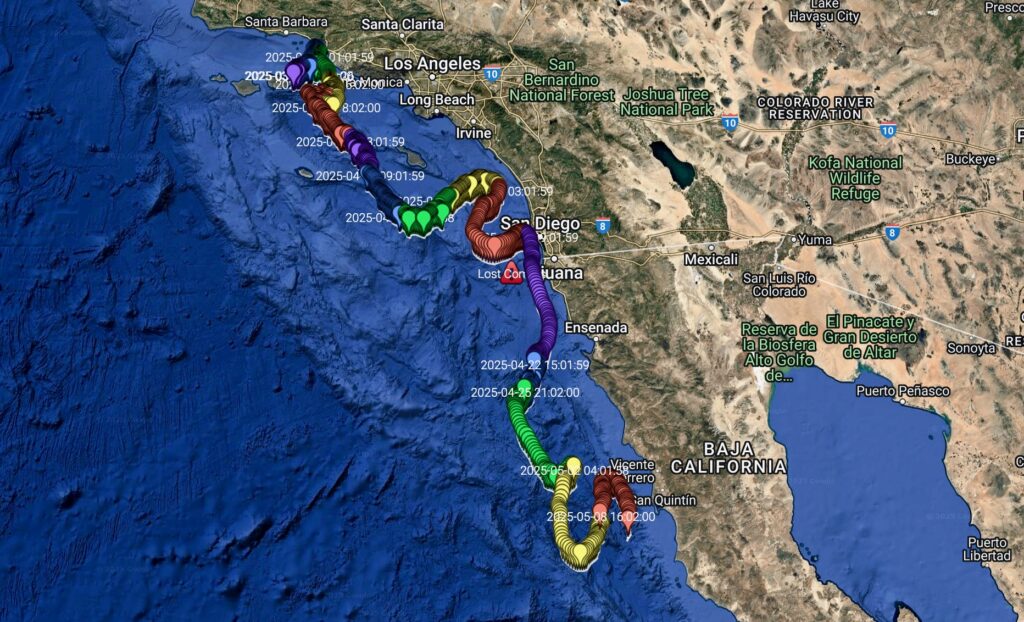
After being released Tuoy drifted towards the coast, frequently getting caught in jettyies, causing it to circle for some time, then being released. It is now on a path heading towards the southern tip of Baja California (click here to track Tuoy’s progress).
“My favorite part has been the field trips and bringing that data back and research back to the classroom,” Vince said.
Mr. Munding-Becker has shared some of the class’s data with students at UCSB for them to use as well, and he also plans to publish Tuoy’s path and data to an online buoy site that tracks thousands of buoys around the world.
Looking forward, Mr. Munding-Becker said he hopes to continue tracking Tuoy for as many years as possible, potentially releasing another buoy within the next few years to compare and contrast data.
“Overall it’s cool for the students to do,” Mr. Munding-Becker said. “It’s interesting and the students are engaged.”