

It used to be that the start of the school year centered on creating lesson plans and planning field trips, but in recent years, some of that focus has taken a troubling turn.
As the opioid epidemic has tightened its grip on communities nationwide, at least a portion of opening schools across the country is now dedicated to teaching faculty and staff how to administer Narcan, the overdose-reversing drug.
What was once primarily used in the ER is now becoming a critical resource for school nurses and staff, including those at Ojai Valley School.
With the rising increase in overdoses nationwide, OVS has set out to educate teachers on how to administer Narcan so that, if necessary, they can render potentially life-saving aid. OVS Head of Upper Campus Craig Floyd said he hopes no student ever falls victim to fentanyl, but that it is important for the faculty to stay prepared and ready just in case.
Mr. Floyd said that preparedness is especially important at the Upper Campus, as it can take as many as 20 minutes for emergency personnel to reach the high school because of its remote location.
“We’re not going to be naive to think that our students don’t do anything,” Mr. Floyd said. “We hope they don’t, but if they do, and by chance, they’re a victim of fentanyl, at least by us having Narcan and being able to administer it, we’re able to help that child.”
The troubling rise in opioid use among teenagers has raised concerns among faculty and administrators across the country, leading to schools storing Narcan in their health centers and classrooms.
OVS nurse Alyssa Ball, who previously worked in the operating room and Pediatric Intensive Care Unit at the Ventura County Medical Center, has seen many drug overdoses firsthand where Narcan was administered to resuscitate victims.
Ms. Ball reported that there were a lot of opioid overdoses in the emergency room. Doctors frequently had to perform surgeries in the operating room on patients who had extremely severe chronic wounds from long-term opioid use, or who had suffered potentially fatal injuries while driving under the influence.
Drug overdoses are becoming more common among teens because lots of “party” drugs people might think are “safe” are often laced with fentanyl, thus causing a huge push to have Narcan widely available. It is important to have in schools because teens often experiment with drugs, which could happen at any school, according to Ball.
“It’s important to teach people because no one thinks they’re going to have to do it until they see it done or are talked to about it, ” Ms. Ball said. “The need for education about this ongoing crisis and how to possibly reverse an overdose is crucial. Knowledge is power.”
Since the start of the pandemic, fentanyl-related overdoses among children ages 12 to 17 have doubled.
The states of Maryland and Virginia align with the upward trend in opioid-related deaths across the country, which previously mainly affected adults. In 2022, 45 teens succumbed to opioids locally, a number roughly equal to the previous three years combined, data shows. Incomplete data from 2023 exhibit no sign of a reduction in the number of young people in the crisis, according to the Washington Post.
For many, the crisis has hit close to home.
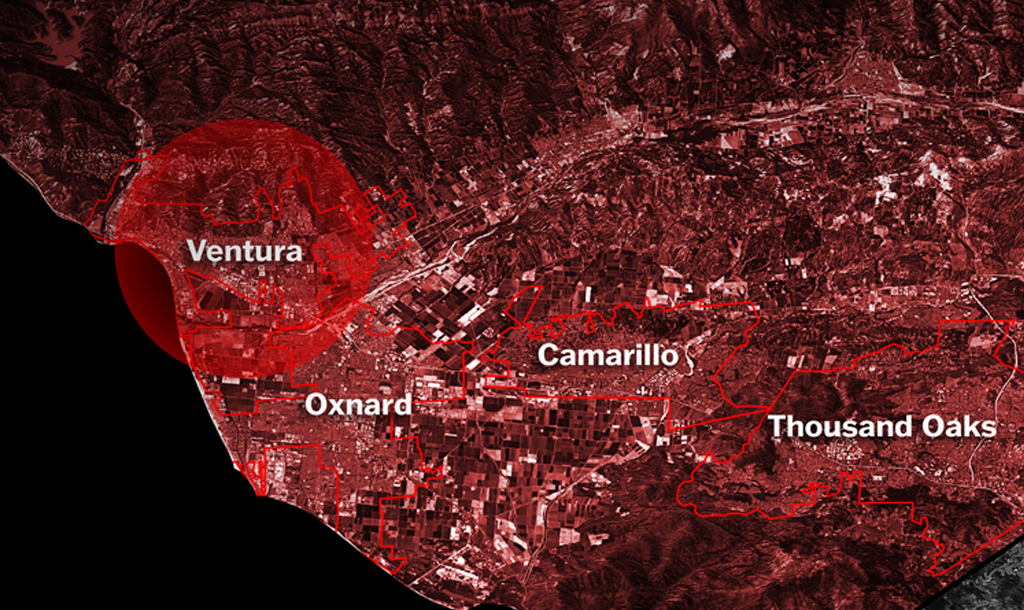
The County of Ventura has recently launched an anti-fentanyl campaign aimed at spreading awareness about the deadly fentanyl crisis in Ventura County. Eight out of 10 drugs taken off the street in Ventura County tested positive for traces of fentanyl, according to the thinkagainvc.com website. This is five times higher than what was reported five years ago.
Moorpark resident Lori Englander, a member of the awareness campaign, was appointed to assist in the effort. Her 25-year-old son Jared unexpectedly passed away from an accidental overdose two years ago.
Since then, Englander has been an active member in many anti-fentanyl organizations.
Dealers and manufacturers nationwide are working together to lace everything with fentanyl, Englander said, and it just takes a few sprinkles to kill a person. They dust counterfeit pills with fentanyl to ensure consumers become addicted and become lifetime customers.
Englander has spent years traveling to schools and juvenile reversion facilities to spread awareness. She has worked with many programs like Not One More and C.O.A.S.T. that aim to educate people–particularly teens–about the dangers of street drugs laced with fentanyl.
“If you want a thrill, climb a mountain,” Englander said. “There is no good path to doing drugs. Some kids make it out just fine, but how many are we willing to give up?”
Narcan was approved in 2015 for nasal inhalation, allowing people who aren’t medically trained to administer it.
Because of “Good Samaritan” laws, all civilians can administer it if they’re trying to help someone. There are multiple free resources from state to state that make it easily accessible. California began giving away naloxone kits for free in 2018. State officials say the Naloxone Distribution Project has given out 4.1 million kits, which have reversed a reported 260,000 opioid overdoses, according to Ball.
Not taking any chances, some parents have taken safety measures and have provided their children with Narcan. One OVS student even keeps Narcan in his room for preventative measures.
“My parents bought it for my sister and I to have just in case of emergency after the kid died last year from an overdose,” the student said. “I’ve never had to use it, and I’m not around people who do hard drugs, but I think it’s a good thing to have just in case.”
In a quiet town like Ojai, the move to introduce Narcan has raised awareness about just how far the opioid crisis has spread. OVS has received a generous donation of Narcan, which is stored in the health center. Though school officials have yet to experience an overdose, and hope they never do, administrators and faculty want to be prepared.
An abundance of awareness has been raised in Ojai since the fatal overdose at a local high school last year. OVS counselor Robert Brunelle has noticed a common mindset among teens regarding drug use and overdose.
“Adolescents think they’re invincible, but when a peer just like them experiences a tragedy, we realize we are human,” Mr. Brunelle said. “All we can do when it comes to tragedy is be preventive, share the information we know, and create a safe space for people who need it so they can use it.”