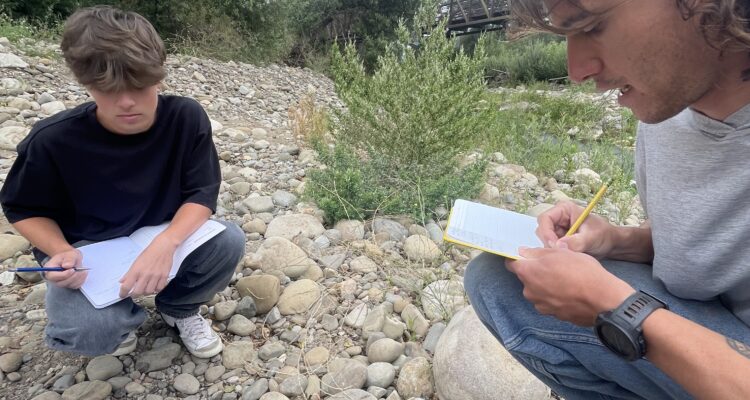
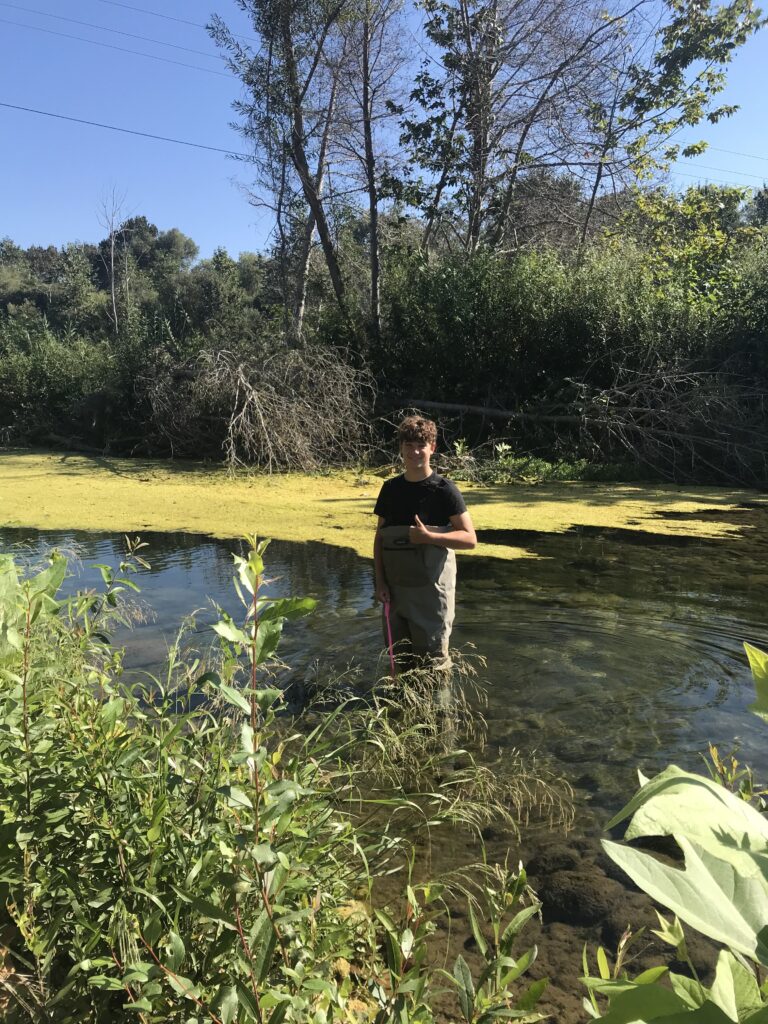
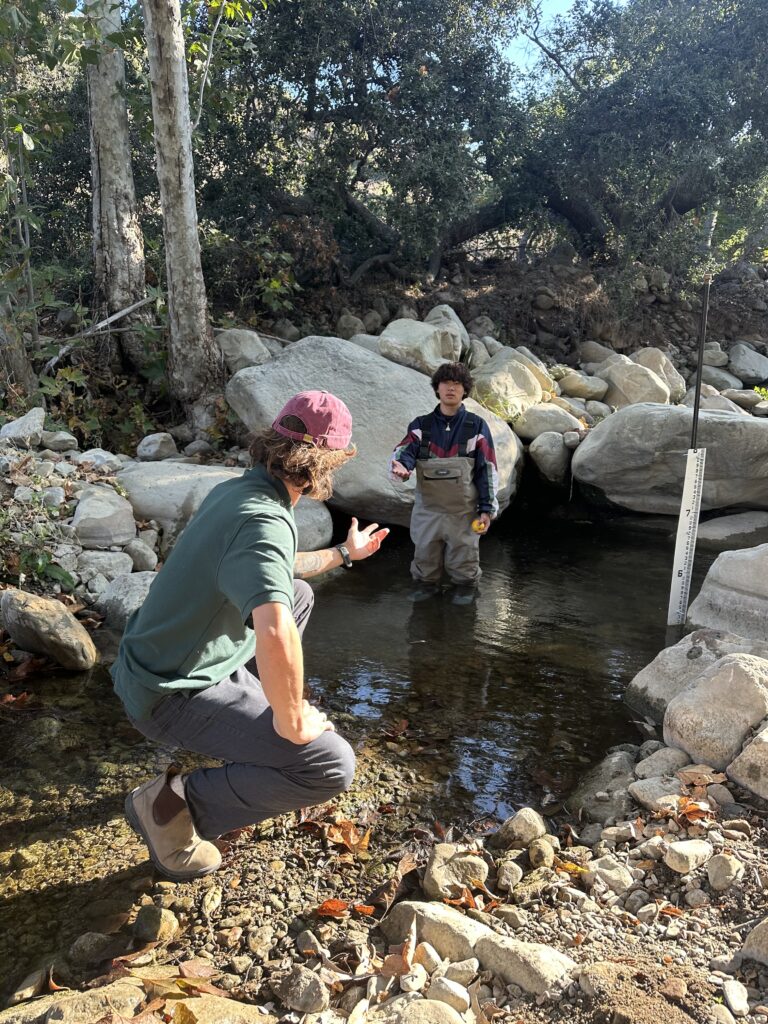
Submerging the thermometer in the sun-warmed water, OVS junior Rory Liu measured the temperature of a local river as part of an effort to help monitor the health of the freshwater ecosystem.
Although Rory might have some bias as the Outdoor Representative, she learned a lesson that plenty of other OVS students have learned over the years: getting outside is much more fun than sitting at the classroom desk.
“We learned about how different factors affect the temperature of streams, which then affect fish in there,” Rory said. “So that was really cool.”
 Similar comments have come from other students who have taken part in the school’s new Field Studies program. Launched this year, the program taps into the long-held OVS ideal that students learn best when they are outdoors, exploring the natural world around them.
As Field Studies Coordinator, Upper Campus science teacher Miles Munding-Becker is responsible for creating and maintaining partnerships with local organizations to advance the school’s Land & Climate curriculum, supporting teachers with field studies opportunities, tracking field studies units across the curriculum, and showcasing student work — from grades pre-Kindergarten to 12 — over the course of the year.
One of the questions Mr. Munding-Becker asked himself when creating the program was “What can we do and learn in a day?”
The answer is – put on a pair of work boots, take a shovel or a pH scale, and together with a group of students go get themselves dirty.
During his undergraduate study at the University of Redlands, Mr. Munding-Becker, went to Peru, where he studied dendrite climatology.
“And that was a really fun way to learn versus just reading a book or being lectured,” he recalled. “That’s something that we wanted to bring into the school.”
 Inspired by this experience, he decided to incorporate field studies into the school’s Land and Climate vision.
Currently, there are three projects being run by different teams:
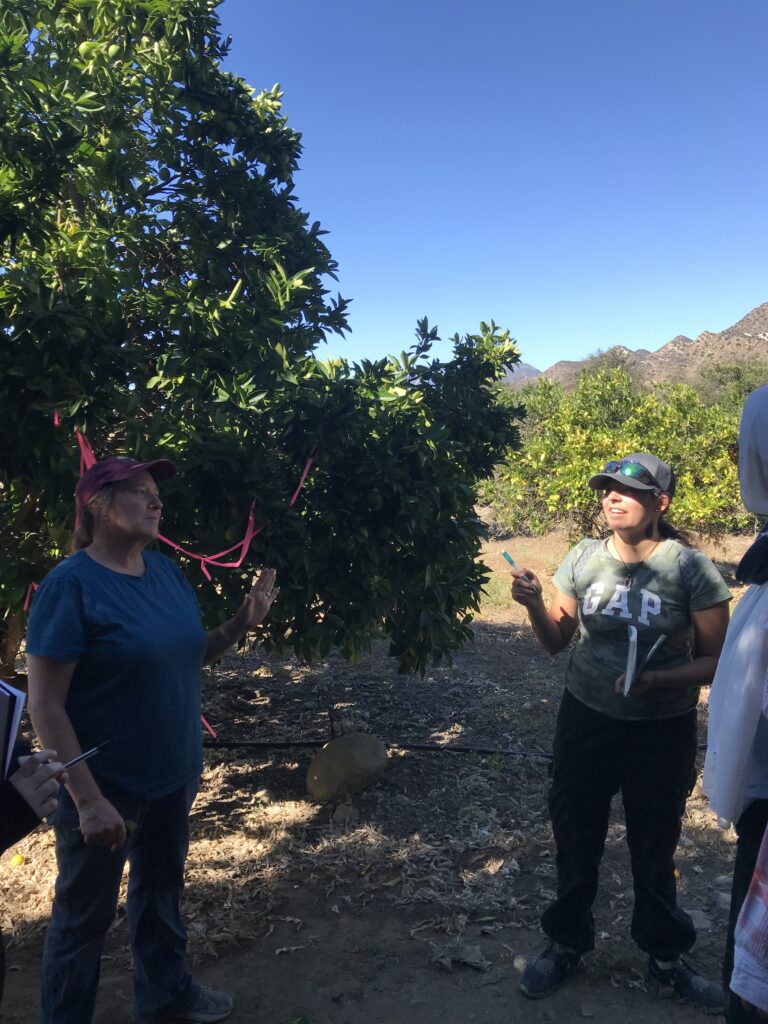
One of them is water quality monitoring with the Ojai Valley Land Conservancy. The group’s job is to visit preserve sites and measure the dissolved oxygen, pH, and stream temperatures.
The second project includes learning to take discharge measurements (how much water volumetrically moves through the stream in a given period) at the Reefs Creek and recording the invasive species present.
The final project is a sustainable agriculture program with multiple layers to it.
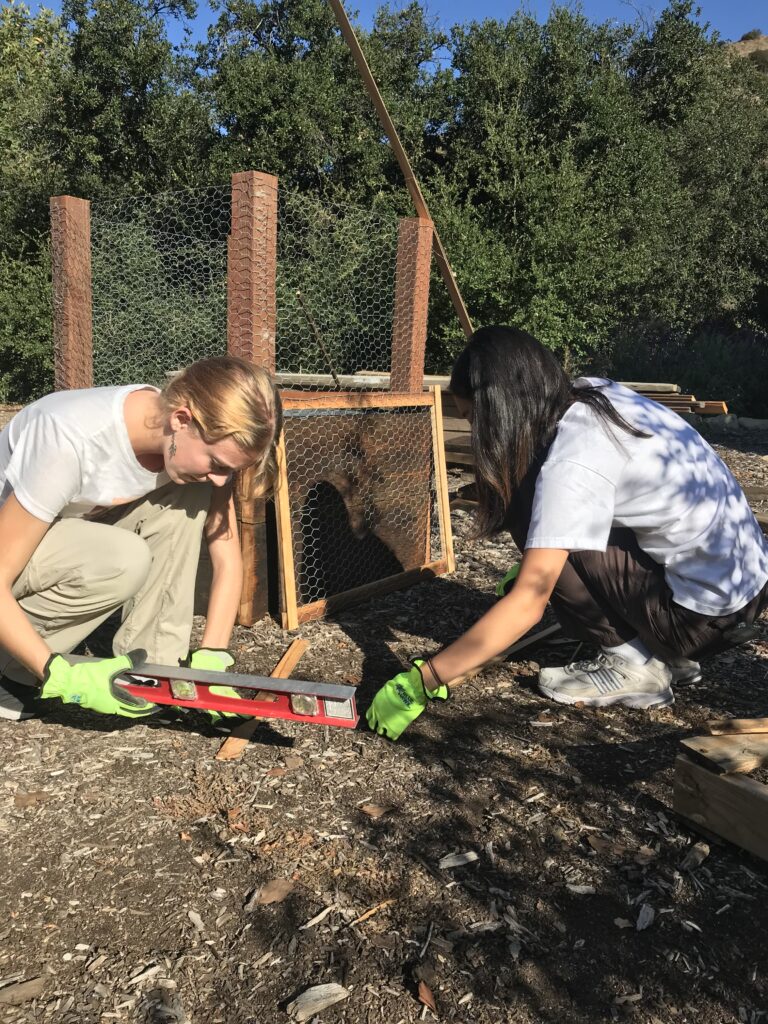
Mr. Munding-Becker’s students have been building raised beds that will be dedicated to annual and perennial native California plants. Next, they are planning to make soil on campus.
 However, the ambitions lie beyond that.
“With the space available, OVS could be growing some of its own food,“ Mr. Munding-Becker said.
The plants can be incorporated into the kitchen as a base for tea or as an ingredient for salad.
“You’re not removed from the underlying processes, and then you have a greater appreciation for what’s going on,” he said
Mr. Munding-Becker recognizes that this experience is not for everyone, but encourages the use of this unique opportunity to learn and have fun.
“Some people will be like, oh, man, like I’m not really interested in water, or like I’m not really interested in agriculture,” Mr. Munding-Becker said. “But they’ll still be exposed to something different. So I want students to try to use it as an opportunity to just learn something new just for learning sake.”