
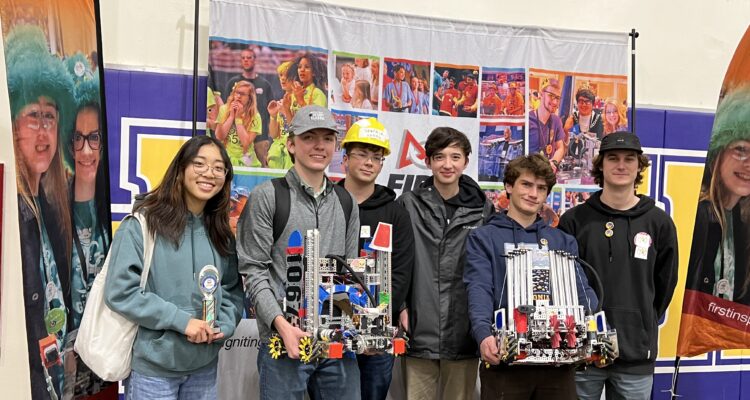
The Ojai Valley School Robotics teams just ended with a season of extraordinary achievements.
They competed with other teams inside and outside of the league, and students learned and grew together as a team.
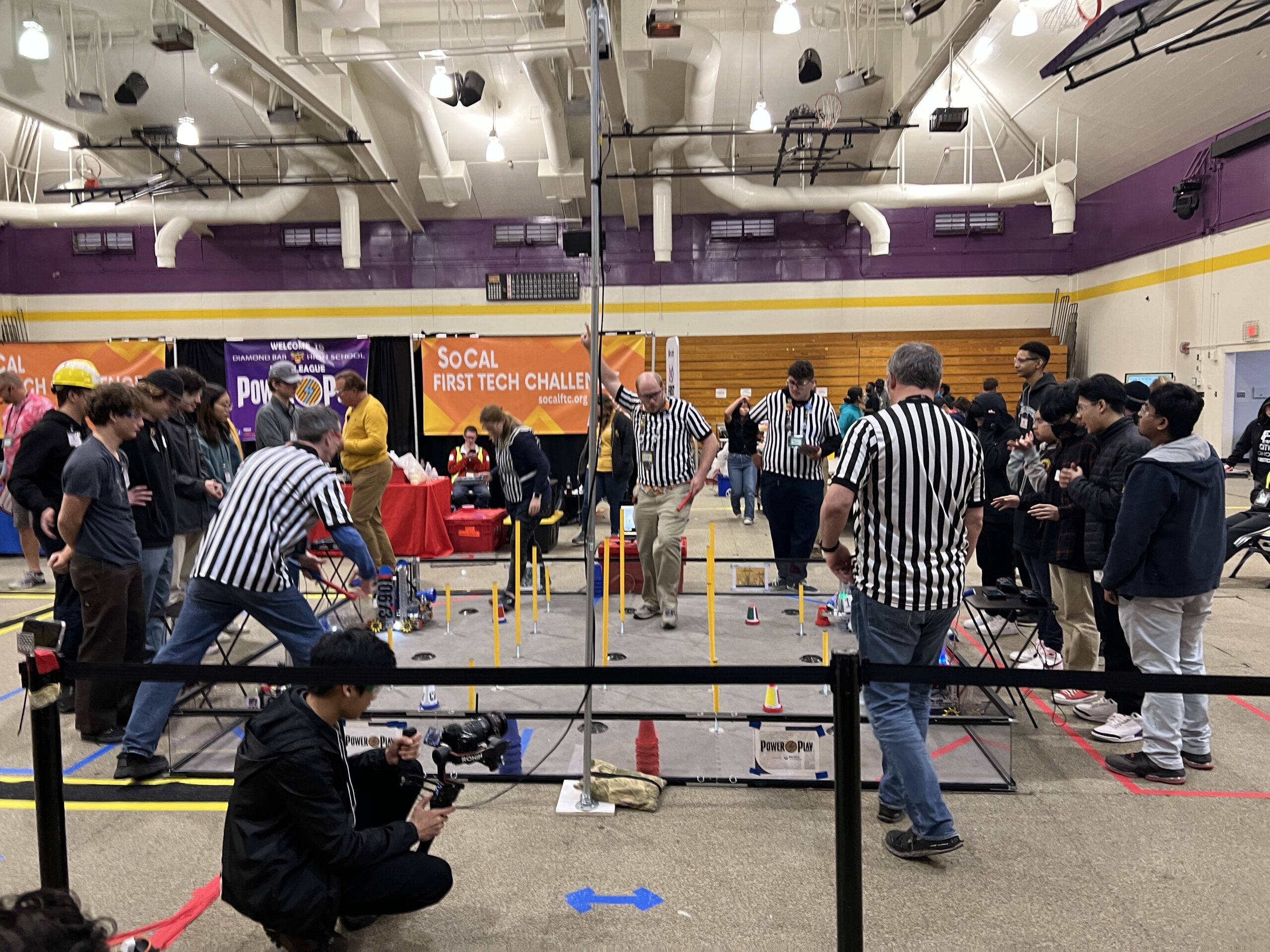
This year’s success was a combination of strongly dedicated team effort and individual talent. Under the philosophy of “one team, two robots,” the team had innovative ideas not only for their robots but also for the organization of the teams.
The teams selected student captains as a new structure. These captains helped to organize the team structure and keep track of each team member’s task. This change promoted student-led enthusiasm and encouraged student participation.
Team Spudnik and Team Spudbot each have their own robots. They competed independently in matches but worked with a lot of cross-team effort during the preparation period. The two teams each use their own knowledge to help the other team.
“We have a lot of across-the-board talent in different areas for each team,” said OVS robotics advisor Chris Westcott. “They make it a very successful year because of all the contributions of each individual on the team.”
Caleb Carver, a senior and captain of Spudnik, has been part of robotics since his freshman year. He values his experience of working with people and solving problems with friends, and he finds camaraderie and group dynamics especially exciting.
“Robotics got me really interested in computer science and computer engineering,” said Caleb, who will continue his passion for technology in college as a Computer Science and Engineering Major at Oregon State University.
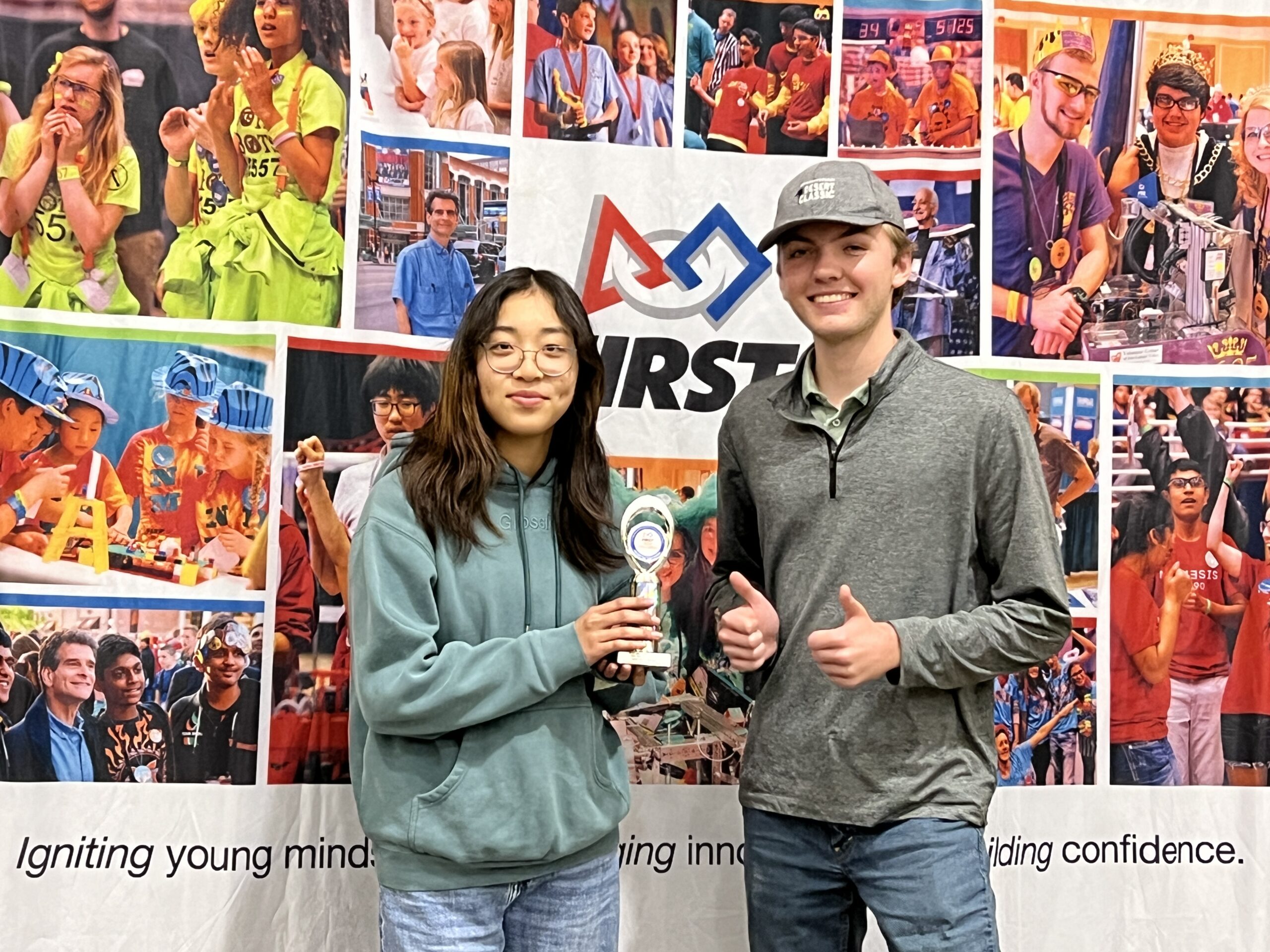
The Spuds produce some of the top robots inn the field. The Spudbot team won the Innovative Award which celebrates a team’s ability to bring “outside of box” thinking to life, and the Spudnik team was a runner-up with their innovation.
 Spudbot’s robot featured a unique highlight, and surprisingly, it was the result of an issue they faced.
While testing the robot, the team ran into a problem. The claw of the robot was too tall and heavy, and the body was not heavy enough to stabilize it, so the robot would tip over because of the loss of balance.
To solve this problem, the Spudbot team resorted to a highly dense metal—Tungsten. A one-inch-by-one-inch metal tungsten cube can weigh 0.66 lbs (0.30 kg), is is capable of providing sufficient weight within a small volume. Four tungsten cubes on the chassis helped the robot to lower its center of mass and therefore remain stable.
The Robotics program at OVS was founded by Chris Westcott, computer science and robotics chair and teacher, in the 2014-2015 academic year.
Spudbot and Spudnik competed in every season for the past eight years, except a year impacted by the pandemic, striving through the Thomas Fire and Covid-19., to remain a consistently strong draw for students.