
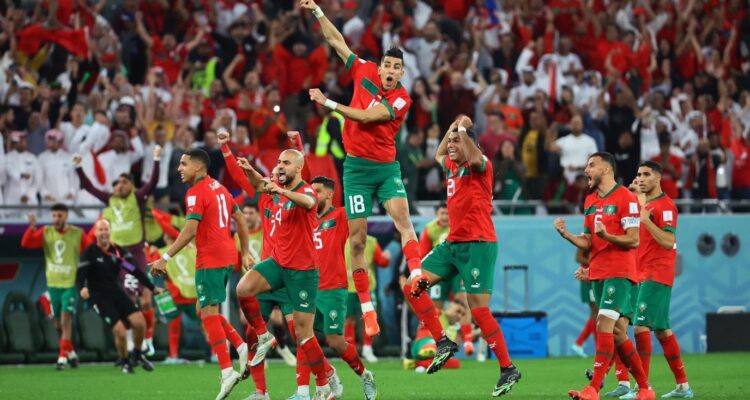
As the 2022 World Cup is well underway, the action on the field is shadowed by its horrors of it.
On December 10, 2010, Qatari representatives stood in front of a shocked crowd as they were announced as the hosts of the 2022 FIFA World Cup. What transpired over the next twelve years was something that many had never seen before, but in reality, it’s just another addition to a long saga of sports washing.
Sportswashing, while a new term, is not a new concept. It describes when sports are used to improve tarnished reputations, most commonly by governments.
This goes back to when Hitler’s Nazi Germany the 1936 Olympic Games. Hitler wanted to show the world the superiority of the Aryan race. An American Black man named Jesse Owens humiliated him and won four gold medals.
Another example happened at the 1978 World Cup in Argentina, taking place only two years after President Jorge Rafael Videla and other military leaders came to power because of a coup. Videla ruled a brutal dictatorship where basically anyone who opposed the government would be “disappeared.”
Innocent people were thrown in prison, or even some were taken and pushed out of a plane and left to fall to their deaths in the ocean. There was also an infamous torture chamber that was so close to the stadium where the games were being played that those inside could hear the cheers from the crowd.
And President Videla’s guest of honor at the tournament was none other than U.S. Secretary of State Henry Kissinger.
These are just two of the many examples of sports washing, so with a history littered with these types of events, why were we so surprised with what happened in Qatar?
It is because we as humans have a tendency to hope that things will change for the best, yet we also have a tendency to be incapable of learning from our biggest mistakes.
Going back to 2010, after Qatar was awarded the World Cup ahead of the United States, there were rumors that Qatari officials paid over $3 million in bribes to win the bid.
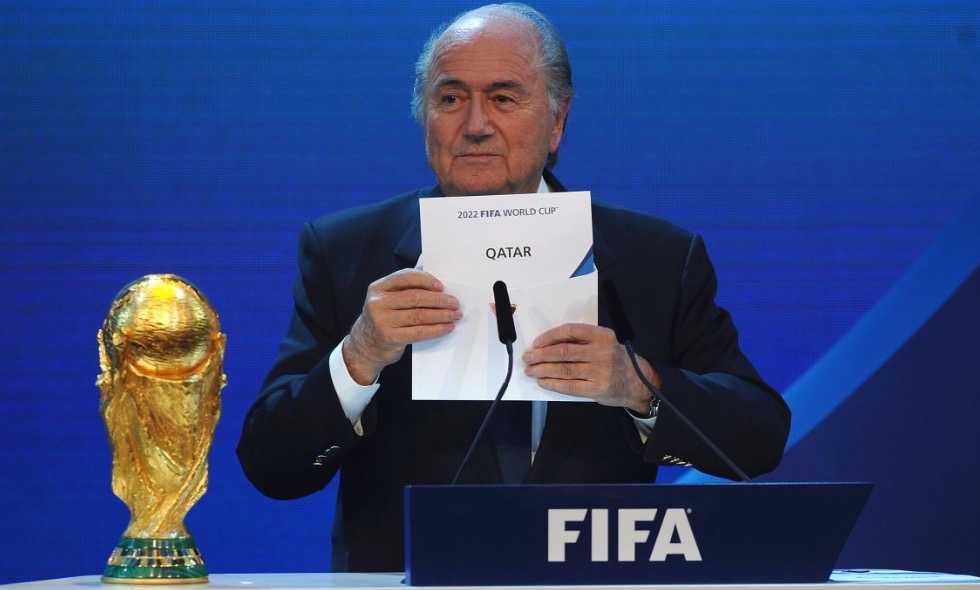
Sepp Blatter, President of FIFA at the time of the selection in 2010, even stated that choosing Qatar “was a bad choice,” but money talks.
Qatar, a country smaller than every state except Rhode Island and Delaware and with a population less than Kansas, simply did not have the infrastructure to host a World Cup.
BBC states that in the build-up to the tournament, Qatar had built seven stadiums and over 100 hotels, and even a new city. The total project cost is between $220-$300 billion.
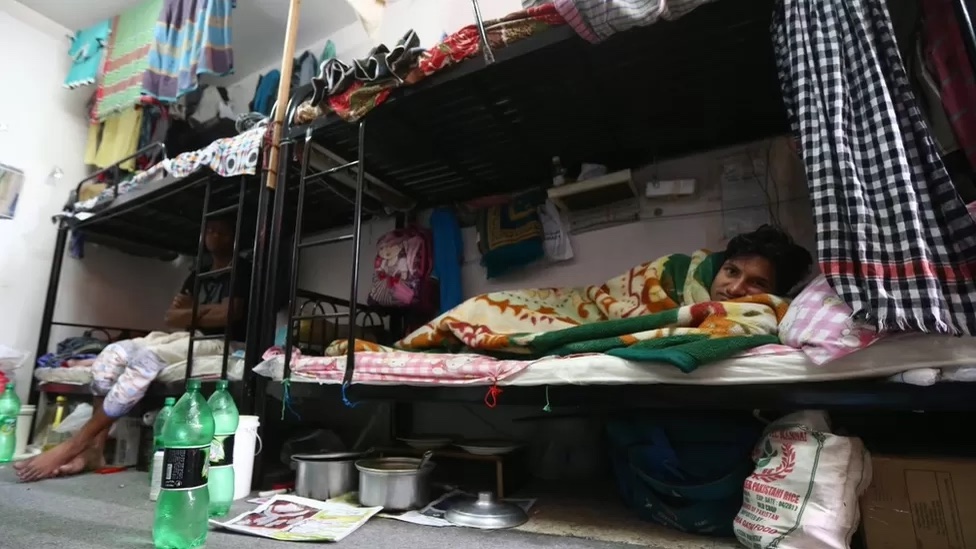
The people who built these stadiums and hotels were largely migrant workers. 88% of Qatar’s total population are foreigners and 95% of the workforce are migrant workers. These workers were put through brutal conditions.
For five months out of the year, temperatures in Qatar exceed 100 degrees Fahrenheit. The heat as well as squalor working conditions took a toll on many of the workers. Some workers only earned what is equivalent to $1 a day.
The Guardian calculated that over 6,500 migrant workers had died in the build-up to the tournament. These workers came from India, Pakistan, Nepal, Bangladesh, and Sri Lanka. That figure does not include workers from countries like Kenya or the Philippines which also send large numbers of workers to Qatar.
Qatar is not accurately reporting the deaths. For example, a 43-year-old Indian man, with no preexisting health issues, who was found dead on his dorm room floor was reported as having “natural causes.” The gulf country also stated that there were only 37 deaths in the build-up to the World Cup.
Qatar is known for its poor treatment of women and those in the LGBTQIA+ community. Women have little say in their education, work, and health care, and same-sex relations are forbidden.
Players had decided to wear “One Love” armbands during the tournament, but FIFA said that any player who decided to wear one, would be penalized during the game.
Current FIFA President Gianni Infantino said the teams should “focus on the football.” Just like how Fox News analyst Laura Ingraham told Lebron James to “shut up and dribble” after he discussed President Donald Trump’s racist comments.
The 2022 World Cup was a mess before it even began. Not only for the disgusting human rights issues but also for a complete lack of organization. Qatar had 12 years to get everything perfect, and they didn’t.
To start, the World Cup has always been a summer event, but because of the extreme temperature in Qatar, it was decided AFTER they were awarded the tournament that it would be played in the winter, something that would have been obvious if those voting weren’t blinded by the money slipped to them under the table.
Qatar had also stated that they would allow fans to drink beer at the stadiums, which is significant for a country in which alcohol is heavily regulated. But, a mere two days before the tournament began, FIFA confirmed that no beer would be sold at the stadiums.
Budweiser pays around $75 million each world cup to be the official beer sponsor. After the decision, they tweeted “well, this is awkward” along with a picture of a warehouse full of the beer that was supposed to go to the stadiums. The post was quickly deleted.
Games on the field seem to pale in comparison with what has happened off the field, this World Cup has delivered some memorable moments.
Saudi Arabia beat Lionel Messi’s Argentina, 2-1, in one of the greatest upsets in tournament history. Japan upset Spain and Germany, Number two ranked team in the world, Belgium, crashed out on the group stage in an embarrassing fashion. Morocco became only the 4th African team ever to make it to the Quarterfinals, and there’s still plenty of games to go.
Qatar put in objectively the worst performance on the field of any host country in history, losing all three of their group games to Senegal, Ecuador, and the Netherlands. After this tournament was supposed to be the moment to show that they were the real deal, it was nice to see them be blown away.
There are few things more beautiful than a World Cup. Cultures come together, players don’t play for themselves, but for the pride of their compatriots back home. You see the Argentinian fans bowing down to Messi as if he was a God, but to them, he is much more than that. You see Morocco defying the odds and carrying the torch for all of Africa and the entire Arab world.
This is why it’s so sad that something so beautiful is tarnished by corruption. But, hopefully, we can finally learn, and use this World Cup as an example. What has transpired with Qatar should never happen again.
World Cups are about so much more than just sport. They are about human nature. They show humanity at its purest, the joy, the agony, and everything in between.
As we begin to turn our attention to the 2026 World Cup in Canada, the United States, and Mexico, I hope that we can show how beautiful World Cups can truly be.