
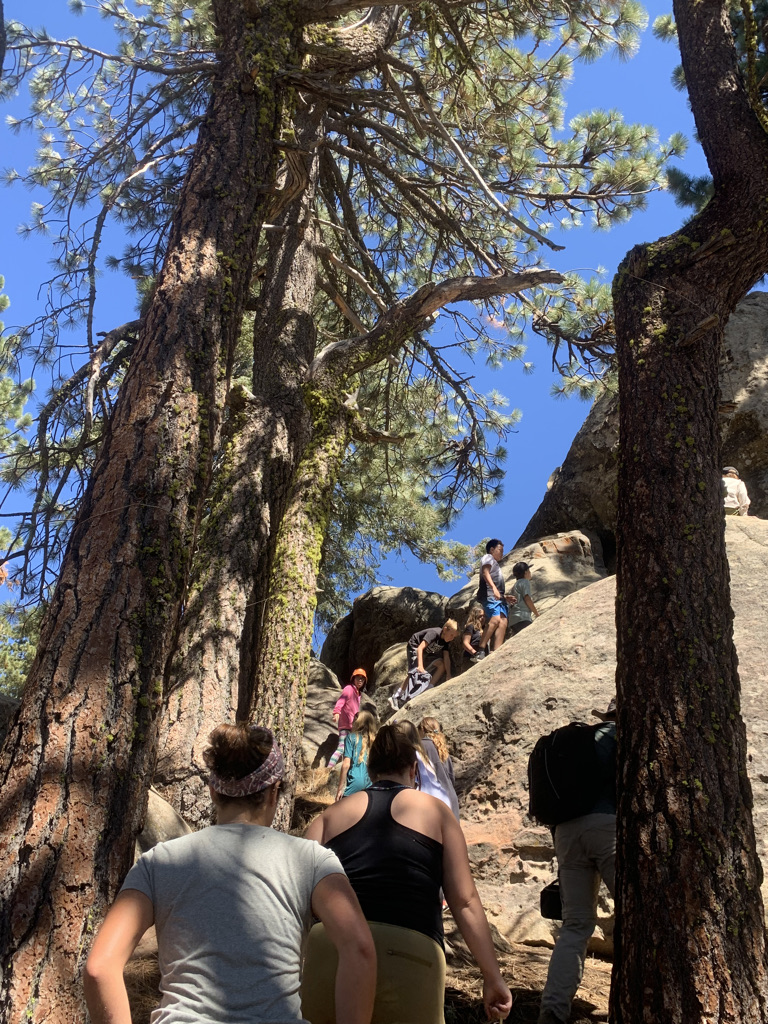
The army of sixth-grade students scrambled like ants, surprised by a downpour of rain as they ran, without direction, through the rocky wonderland of Pine Mountain searching desperately for an adequate place to construct their survival structures.
Luckily for them, they were well prepared.
“I learned that you have to have good protection from the wind and the rain,” said Charlotte Manning.
Her friend Brooklyn Novak agreed.
“I learned that it’s easier to build a shelter off of a cave so you only have to block one side,” she said.
 The yearly sixth-grade watershed field trip series starts at the top of the Ventura watershed – Pine Mountain.
The trips will follow the water, over the course of the year, from the top of the dividing ridge, through river conjunctions, agricultural use, the waste treatment center, and finally, end the school year at the Ventura River mouth.
“This is the 10th year we have been running this trip,” said OVS Lower Campus woodshop teacher Ryan Lang.
“Made it to the decade!” Mr, Lang said. “Even though I’m not teaching the science class anymore, I could never give up this amazing trip series.”
The Ventura watershed is small.
On the drive to Pine Mountain, on a clear day, the students can see Santa Cruz Island from the van window, which is where they will end their watershed journey at the end of the school year.
These trips bring opportunities for newly transitioned middle school students to take a day, leave campus and see and experience what they’re learning about in the classroom. The Pine Mountain trip not only gives an opportunity for experiential learning within the sciences but the kids learned about the history of past cultures who inhabited the lands and got to put themselves in similar circumstances as characters in their summer reading book.
New sixth-grade science and social studies teacher Anna Henning has focused a large part of her master’s degree, which she is currently in the process of earning, studying experiential learning and how it deepens the pathways of knowledge between student and content.
“Instead of just being in the classroom and talking about it, it creates memories and experiences, which helps ingrain what kids learn in a classroom exponentially,” Ms. Henning said.
Over summer the sixth-grade class read Hatchet, which featured 13-year-old Brian Robeson, who is stranded in the wilderness of rural Canada after a plane crash. Brian had to use skills of survival and self-awareness in the wilderness if he had any hopes of surviving.
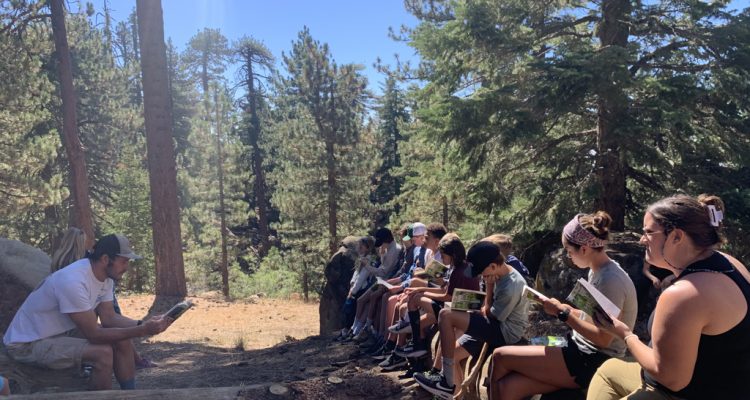
On Pine Mountain, the sixth-grade class perched, books open, on a twenty-foot log began popcorn reading a passage from Hatchet.
“Just the lakes, and it came to him that he would have to use a lake for landing. If he went down in the trees he was certain to die,” Jessa Fields read aloud. “The trees would tear the plane to pieces as it went into them.”
Mr. Lang then proceeded to point up to the towering, sturdy pines that loomed above where the class sat.
“What would you rather land a plane in?” he asked. “These thick stalks of wood or water?”
Nodding their small heads, the students unanimously decided that landing in trees like the ones above them would surely lead to death.
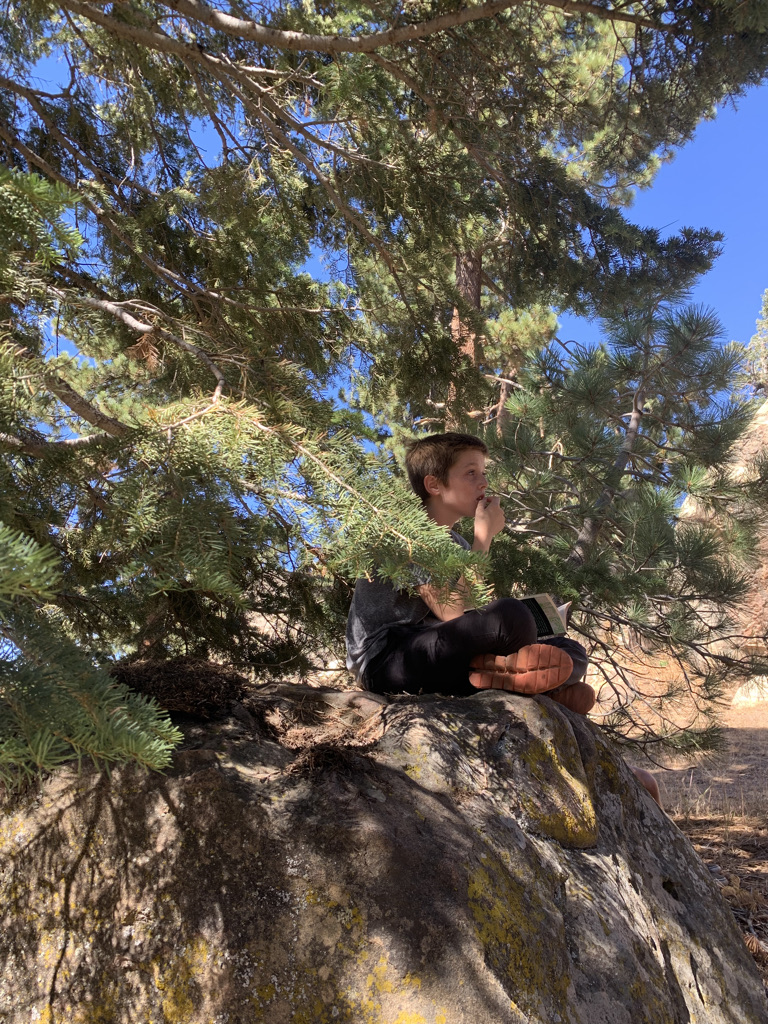
Like the 13-year-old boy in Hatchet had to do, the kids proceeded to scavenge the land in groups of three for fallen wood, rocks, and insulating pine needles in hopes to build a structure as good as Brian’s.
After an hour of construction, each group of students explained their strategies behind different aspects of their survival structures. Once their labor was celebrated, the kids were happy they didn’t have to catch their own food and then crawl into their structures for the night.
The class had lunch on the dividing ridge, which is the pinnacle of two watersheds. Mr. Lang explained to the class that depending if a raindrop falls on the left side or right side of Pine Mountain the water will either enter the Ventura watershed or the Santa Clara Watershed.
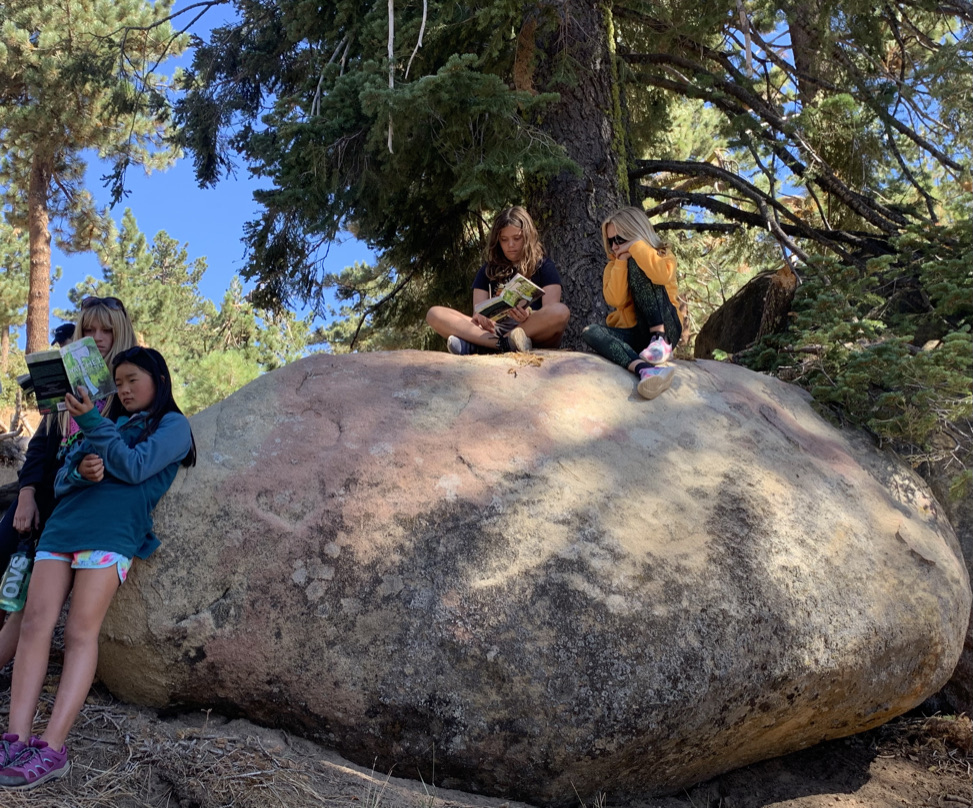
“I didn’t know that the ridges would separate the rain into different watersheds,” said Jasper (Hawk) Feldman. “Also [the storms] come from the ocean and so it will rain more in our watershed than the one past pine mountain.”
For Mr. Lang, sitting on the top of the Pine Mountain divide ridge, sandwich in hand, a warm sun in the sky, and a group of blossoming and curious middle schoolers around him is the only acceptable way he would like to spend his Friday.
“The backcountry is rooted so deeply in our school,” Mr. Lang said.
“Back in the day we would have been on horseback and now we’re in vans but were going to the same places,” he added. “The goal is the more you go to them, the more you appreciate them the more you want to conserve and keep them from being destroyed.”