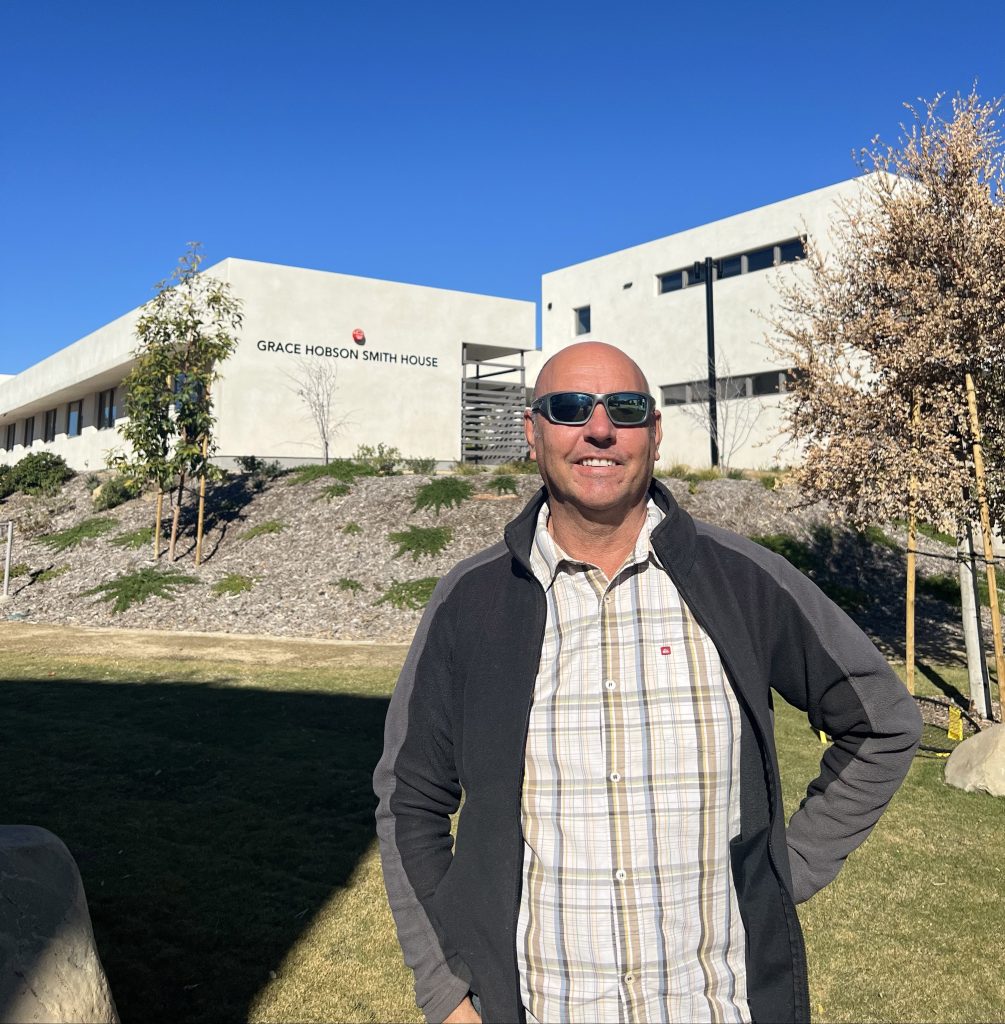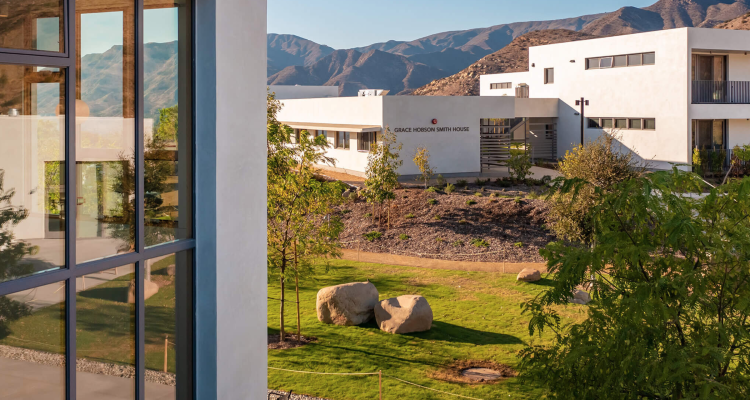
It’s hard to see what makes the new buildings at Ojai Valley School state of the art. But take a deeper look.
In constructing the three buildings that opened at the Upper Campus at the start of the school year, OVS installed a Battery Energy Storage System (BESS), built solar-ready roofs that cut down on the “heat island effect,” and lessened waste from construction by 20%, all while using sustainable materials, reducing water usage and conserving open space.
The three buildings — the Aramont Science and Technology Center, the Grace Hobson Smith House girls dormitory, and the Littlefield Student Commons dining and library complex — were created with LEED Gold certification in mind.
LEED certifications, governed by the U.S. Green Building Council, certify a variety of building projects — from the design and construction of large-scale projects to the development of neighborhoods — as being sustainable, inclusive, and green.
There are tiers of LEED certification: Silver, Gold, and Platinum. Each corresponds to the level of sustainability met, though a building has to be extremely sustainable and up to LEED code to be even considered for LEED certification in the first place.
“There’s teaching green, which we do, and then there’s really making sure that your entire infrastructure reflects that,” said Tracy Wilson, the school’s director of admission and advancement. “It was an opportunity to say, we’re going to live our philosophy, and we’re going to build in a way that is consistent with our values.”
It should come as no surprise that sustainability was at the center of the new building project, as the school has long sought to employ sustainable practices, according to Upper Campus Head of School Craig Floyd.
Mr. Floyd recounted how 10 years ago the school started conserving water with electronic systems on its athletic fields with devices that measure what amount of water each part of the field needs.
“We started conserving water before the concerns kicked in that we had to conserve water,” Mr. Floyd said.
So in December 2017, when the Thomas Fire destroyed several key buildings at the Upper Campus, there was no question whether sustainable practices would be incorporated into the rebuilding effort, which began almost immediately.
At the forefront of that commitment to sustainability was the commitment to build to LEED Gold standards.
“The criteria is very black and white,” said Peter Clark, the school’s newly appointed director of facilities and grounds who served as the project manager for the rebuild.
“Once the school elected to go with LEED, everything there is in the design,” Mr. Clark said. “So once it’s been designed according to LEED … it comes down to construction management processes.”
The construction management processes proved to be one of the most difficult aspects of this project, as the school had to jump through numerous hoops during what would have typically been a straightforward building process.
For example, the school had to have an arborist watch over the protection of native species and how the new buildings would affect and include them. In addition, thousands of pounds of construction waste was sorted to be recycled to meet a LEED standard that at least 20% of waste had to be recycled.
Landscaping irrigation and other water systems were designed to meet “Water Sense” standards, which employ a series of innovations aimed at significantly reducing water usage. Every aspect of these buildings had to be sustainable – even the lumber had to come from a specific sustainable forest.
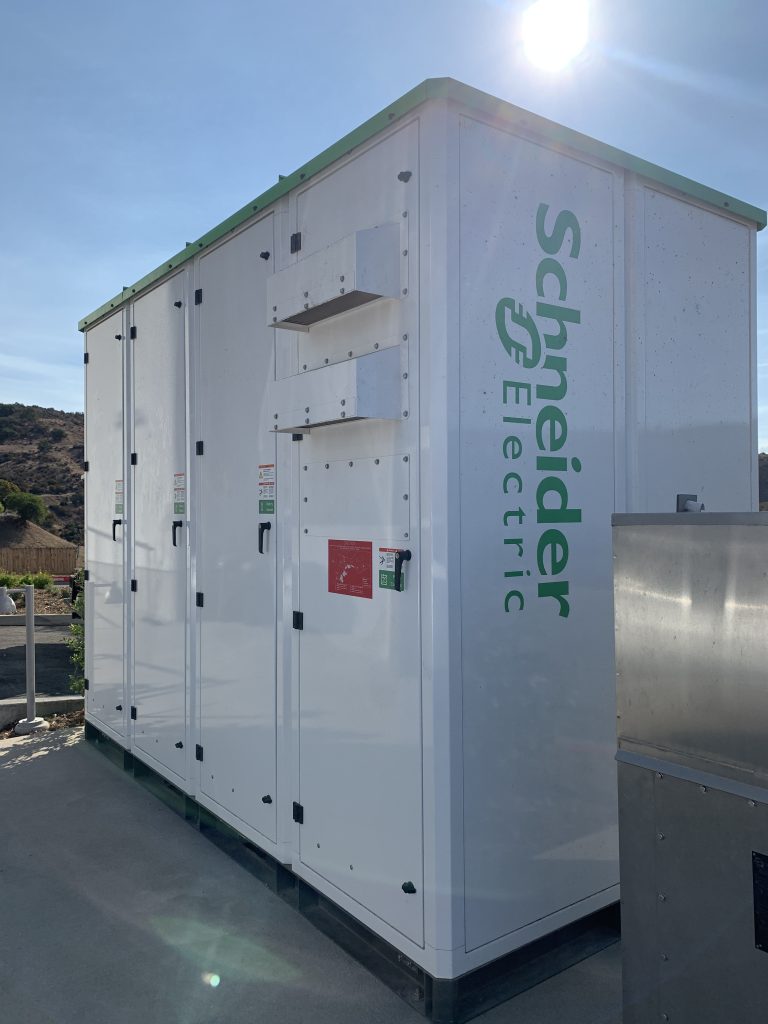
One of the biggest additions to the campus, as far as sustainability is concerned, is the Battery Energy Storage System (BESS).
BESS allows for excess energy produced from the school’s solar panels to be stored and then used at a time when consumption outstrips renewable output, reducing the consumption of grid power at peak times. In the evening, when the solar panels are no longer producing power, the school is able to use the energy stored in the BESS to run the Upper Campus
Taken together, the initiatives put into place in designing, building and operating the Upper Campus project are anticipated to achieve LEED Gold status. But Mr. Clark said it’s important for the school to continue looking for ways to become even more sustainable.
“I think that it also begs the question, ‘Okay well what’s next?’ ” Mr. Clark said. “What more can we do to reduce our carbon footprint as a school, and as individuals within that school?”