
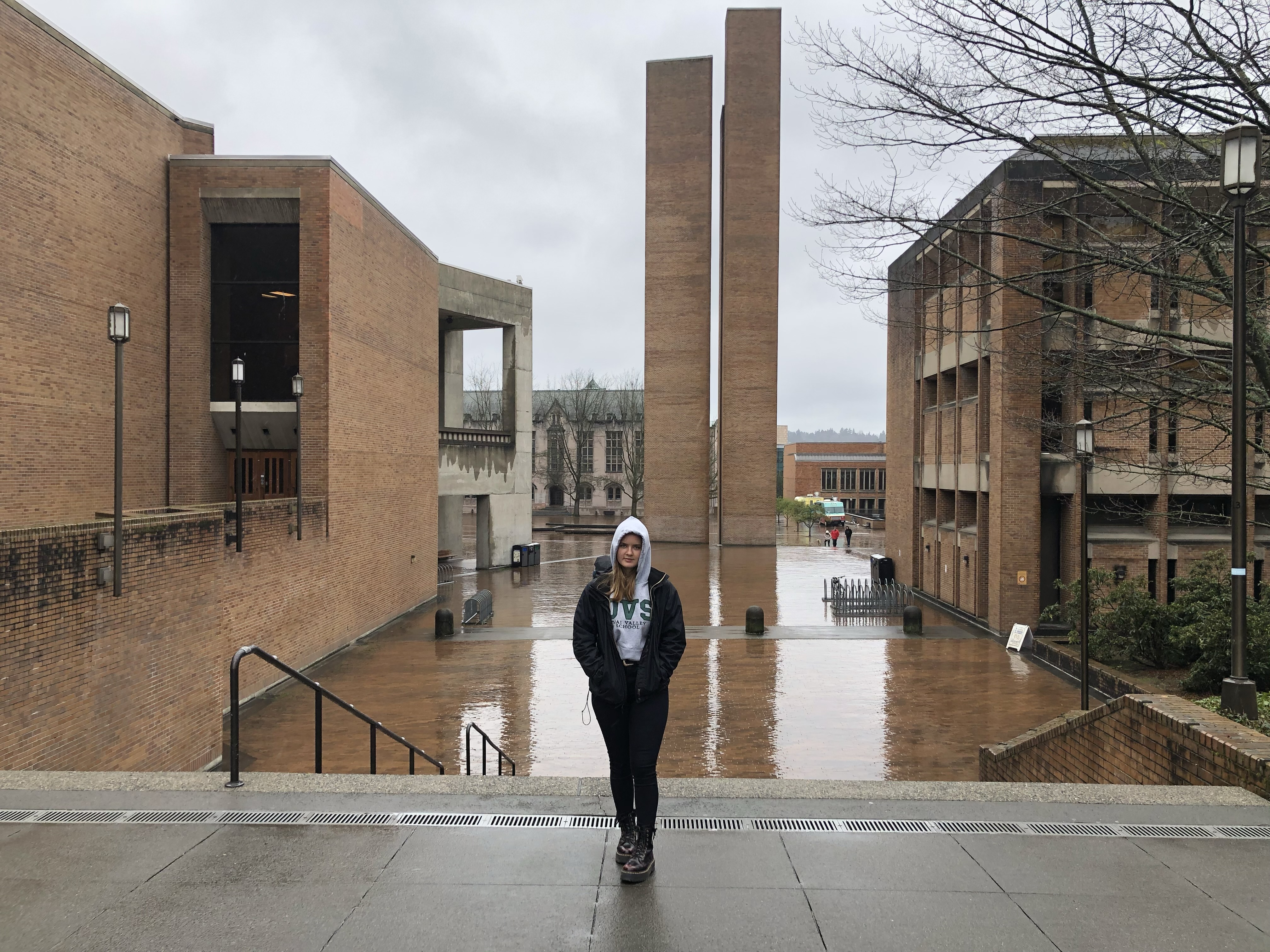
For students at University of Washington, where OVS alumna Lilli Trompke is now a freshman, life has changed drastically and quickly. As of the morning of Friday, March 6, UW has canceled all classes that meet in person and has suspended school until the end of the winter quarter.
The University of Washington was the first large university in the country to suspend classes due to the virus, and since then, colleges across the country have moved to online classes indefinitely.
The Washington State Department of Health published that the state has 162 cases of COVID-19, a number that has shot up from just a few earlier this week. Washington also has had 22 confirmed coronavirus deaths.
“It has been kind of tense but some people have been joking a little about it,” Lilli said. “But people definitely talk about it a lot and people are walking around with masks, to protect themselves or others. Usually the center of campus is packed with people but this morning there [are] maybe 50 people here. I don’t think closing the campus is an overreaction because Seattle is so close and they have had the most deaths in the US.”
In the wake of the coronavirus spreading to the United States, schools of all levels are taking precautionary measures to prevent further contraction of the illness. While most security measures include revisions of food service policies or simply campaigns for better personal hygiene, some schools have gone as far as cancelling all in-person classes until further notice.
Although there is only one confirmed case of travel-related coronavirus in Ventura County, the virus is on many people’s minds. The virus is especially worrisome to boarding schools in the area. With close quarters and students returning from breaks abroad the virus could spread rapidly.
But Ojai Valley School understands these threats and has been taking precautions in all parts of student life, including an overhaul of food service. OVS is lucky to be in Ventura County which has as of March 10th tested 34 people for coronavirus with 33 negative results.
In response to the threats many schools have been taking even more drastic measures. High schools throughout the area as well have been training faculty and staff in teaching online courses in case it becomes necessary. OVS has been planning for worst case scenarios that might include remote classes.
UCLA has also canceled all in person classes.
“For me, It was less-so nerves about my own health being on a college campus for an outbreak, because I think the college demographic would burn through the virus,” said OVS alumna and current UCLA sophomore Joy Campbell. “What made me nervous being on campus, is that I don’t want to be a possible carrier bringing it home on break.”
What has been so difficult for Joy is the uncertainty of the situation. UCLA canceled classes a week before finals and numerous teachers are unsure of how they will be able to administer tests to classes of 200 students. Information is dispersed through emails and plans are changed constantly.
A day later, on March 5, Stanford University also canceled classes, then on March 8 Columbia University followed suit. Monday the ninth saw UC Berkeley and Fordham University also close. New York Law School, USC, and UC Irvine among many others have closed as of Tuesday Mar 10.
Many students at the Cal State Universities, as well as an array of colleges across the nation, have had their study abroad programs canceled.
Emma Gustafson, another OVS alumna who is a sophomore at NYU, began her semester abroad studying at NYU’s London campus..
“[At the start of the semester] NYU had postponed their Shanghai campus,” Emma said. “As the weeks went on they closed the Florence campus; they emailed the kids in the middle of the night saying basically ‘you need to get out–you need to get out in 48 hours’ because they were all about to get quarantined in. So that really put everyone in the global sites on edge.”
For NYU students, information that dictates their living situation is dispersed in emails–emails that try their best to account for the fear mounting in their student body, emails tasked with explaining to nervous parents and uncertain students the ever changing intricacies of a global pandemic. In a time when information and disinformation are so instantly available, responding to a global pandemic is massively difficult.
Emma explained that when NYU made the decision to ask all students abroad to return home, they didn’t include a statement about refunding housing costs. What ensued was a small panic of students and parents feeling like they were out around $10,000. NYU, of course, rectified their oversight. But regardless, these small crises exacerbate an already massively difficult situation.
“I think they have handled it as well as they possibly could have,” Emma said. “Especially with the culture of panic and misinformation right now, it’s just like everyone saying different things and they’re just trying to handle it as well as they can with the ‘facts’ that they’re given.”