
A bobcat prowls the soccer field at the Upper Campus of Ojai Valley School, shifting its gaze late at night at any slight crunch of the brush.
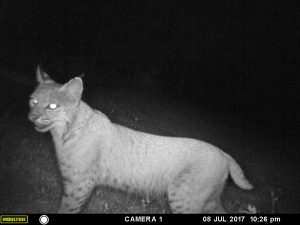
Photo by OVS Game Camera
A fully grown black bear plops into a water trough at the nearby baseball field to cool off after an active, hot summer day.
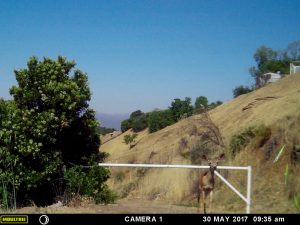
A young deer casually strolls up to a gate on a dirt road that doubles as the high school cross country course, sniffing the flowers sprouting up alongside the road.
With the large number of noteworthy animals that call the Upper Campus home, you’d think the high school students who live and go to school here were tending a zoo. However, all of these animals roaming what is affectionately known as “The Hill” are part of a different kind of exhibit.
Instead of being live in front of smiling faces, they’ve been captured by game cameras set up in recent years by Advanced Placement Environmental Science students. The game cameras add an innovative aspect to the AP curriculum while pioneering a new way to see wildlife on campus.
Most who study and work at the Upper Campus will never see half of the creatures captured on the cameras, so these photos provide a taste of what happens in the outdoors when nobody is around and nobody is watching.
Advanced Placement Environmental Science teacher John Wickenhaeuser set up the first camera two years ago as a way of extending and augmenting his curriculum after the AP test. His students would record the species caught on camera and research the animals further, creating a new area of exploration to end the year.
Since then, three more cameras have been added, and the images have been integrated into the AP curriculum as a weekly assignment.
Just this past summer – in addition to the bobcat and the deer and bathing bear – the game cameras captured curious coyotes, coveys of quail and a whole collection of crows and carnivores that were as cute as they were awe inspiring.
“The most exciting [animal] was a mountain lion,” said Wickenhaesuser, recounting a spectacular nighttime shot of a fully grown cougar cruising past the Senior Chapel, which overlooks Meditation Mount.
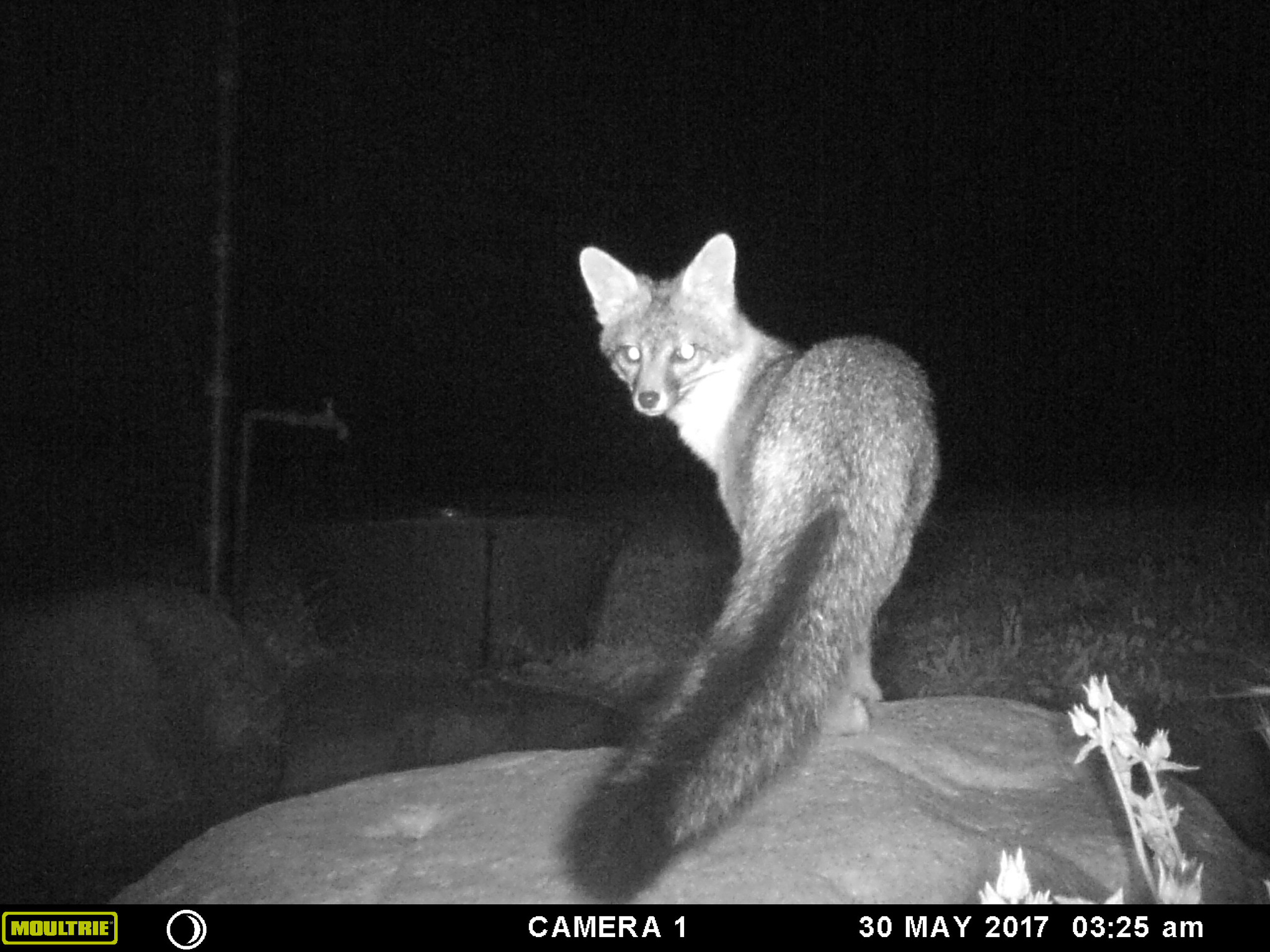
“But the fox was probably the coolest thing we have pictures of,” he added, “because it’s so cute and it does funny things like walk around the edge of the water trough and pose for the camera.”
The cameras, located at wildlife corridors around campus, are set off by motion, taking a burst of photos when animals cross in front of them.
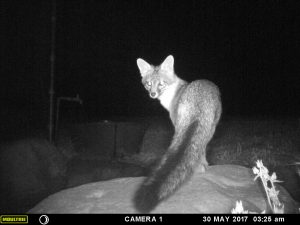
Photo by OVS Game Camera
Last year, the four AP environmental science students – dubbed “the Fearsome Foursome” by Mr. Wickenhaesuser – would take class outings to look through the cameras, pouring over hundreds of images of Upper Campus wildlife while getting the chance to track where the animals roamed.
One member of the foursome, Gavin Floyd, remembers his favorite assignment: a photo of what appeared to be the back end of the cougar. The angle made it hard to determine the species of the animal. Later, the class found another image with the front end of that same cougar looking directly into the lens.
“We took time to examine the photo of the first cougar [we saw],” said Floyd, now a freshman at the University of Alabama. “[We] went online and searched for a couple days to see if there was something certain that could prove it was a cougar we caught.”
Last year, the game cameras were a supplementary assignment to the curriculum, but this year they are serving a more vital and science-centered purpose, allowing students to record yearlong changes in the animals that roam campus.
Four groups of students will each be assigned one of the camera’s photos to look through, rotating at the start of each week.
Junior Maya Mullins, one of ten students in this year’s AP Environmental Science class, looked through a week’s worth of photos from one of the four cameras, chronicling the animals she saw as an introductory assignment to the class. Those animals, like crows landing after flight or a family of bears huddling together in a water trough, shocked her, as she had no idea there was so much wildlife activity on campus.
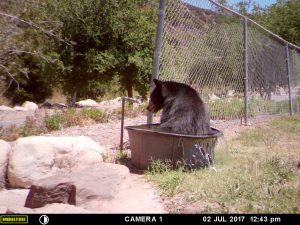
Photo by OVS Game Camera
“I’m excited to see what happens when the temperature changes and the seasons change,” Mullins said. “It’s really interesting to see what animals are living with us here in Ojai.”
For the future, Wickenhaeuser hopes to install a live feed on campus, so that more members of the campus community can follow the wildlife adventures.
“Before we were just looking for cute animals, but we’re now making it more scientific,” Wickenhaeuser said. “We can get an idea of what animals are out at what time, what they’re doing, and what their seasonal variations might be.”
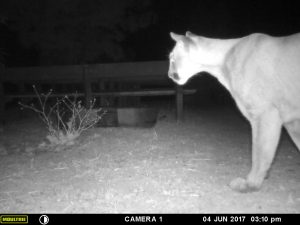
Photo by OVS Game Camera