

Spring has sprung, and so have the monarch butterflies at Ojai Valley School.
Once again, the Upper Campus is experiencing a surge of monarch caterpillars, which feed on milkweed planted around the school, anchor their chrysalises to buildings and bushes and eventually emerge as beautiful butterflies.
OVS has been home to a sizable monarch population over the past decade, prompting teachers and students to take measures to protect this endangered species.
According to a petition filed with U.S. Fish and Wildlife Service, monarch numbers have dropped more than 80% over the past 20 years for a variety of reasons, chief among those the loss of habitat and the use of the herbicide glyphosate, a key ingredient in Roundup.

A number of environmental groups filed the petition in 2014, and last year the fish and wildlife service agreed to study whether monarchs should receive federal protection under the Endangered Species Act, a move that would limit destruction of milkweed plants – the monarch’s sole food source and habitat.
“It’s important to protect monarch habitat because we can!” said English teacher Crystal Davis, who as Outdoor Education director took on the responsibility years ago of identifying the milkweed locations on campus and creating an education program to protect the habitat.
“The tragedy and beauty of our environment is that once you start looking closely you learn these kinds of relationships are more the rule than the exception,” Davis added. “We, humans, are thoughtlessly tinkering with, disrupting, and obstructing them all the time.”
The school’s monarch preservation project started more than 10 years ago, coinciding with the arrival of the Upper Campus’ science and technology building in the mid-2000s.
At that time, Davis discovered the emergence of milkweed plants around the new building, and launched an awareness campaign that included creation of signs aimed at educating people about the milkweed habitat and preventing it from being uprooted.
Over the years, Davis has had students help with this effort by selectively weeding out invasive weeds and replacing the sun-faded signs designed to encourage conservation and protection of the species.
Within a few years, monarch caterpillars had found the milkweed and eventually a thriving butterfly habitat was created.
Once Ms. Davis realized the amount of butterflies on campus had grown exponentially, she started increasing these preservation efforts, such as enlisting summer camp students enrolled in the environmental studies camp to help her create additional signage.
In the spring of 2015, a flood of caterpillars and monarchs emerged on campus, resulting in even more intense preservation efforts.
One day, Assistant Head of School Laurel Colborn noticed that many monarch caterpillars were being unintentionally stepped on near the science and technology building, prompting an all out push to use traffic cones and caution tape to keep the monarch population from being trampled.
“I like butterflies and I want to see more of them in the world,” Colborn said about her efforts to create the butterfly barrier. “We should care about all creatures large and small, and these in particular have chosen our campus as their home, so I feel like we should help them as best we can.”
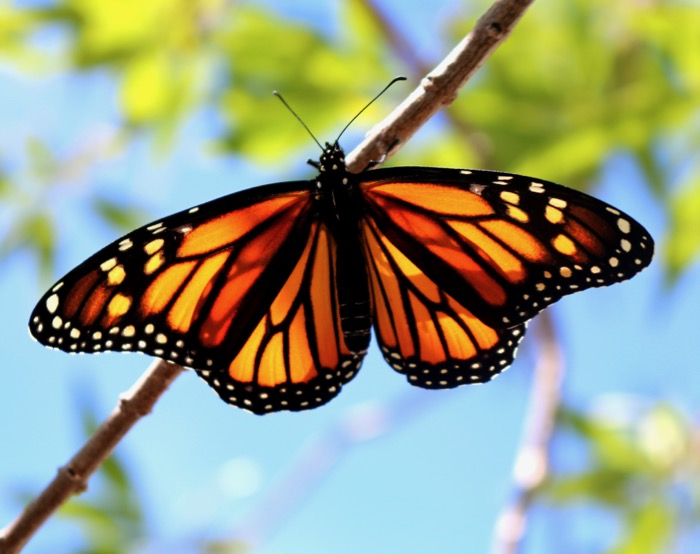
The race to protect these monarch butterflies have increased over the years, as the number of monarchs are decreasing.
According to a World Wild Life report, “The latest survey of monarch butterfly’s winter habitat in Mexico is a stark reminder that these butterflies are in need of protection: The area occupied by the butterfly colonies has decreased 27% compared to last year’s survey.”
One of the main reasons for the intense decrease of monarchs is loss of habitat. Many famers use herbicide on milkweed, killing off the monarch’s main food source and habitat. Also, the country’s rapid urbanization of wild areas – such as cutting down trees, construction, and pollution – ruin the habitat monarchs need.
Davis encourages the school community, and others, to advocate for the monarchs, and other endangered species, as it is a challenge in which everyone can participate.
“By encouraging wildlife habitat and conservation projects at Upper, it transforms our campus into a living laboratory,” Davis said. “Students stop by to look at and follow the progress of chrysalises, marvel as they watch the butterflies unfold their wings for the first time. As teachers we can shape our spring projects around scientific and philosophical notions that are concretely demonstrated in our monarch habitat.”